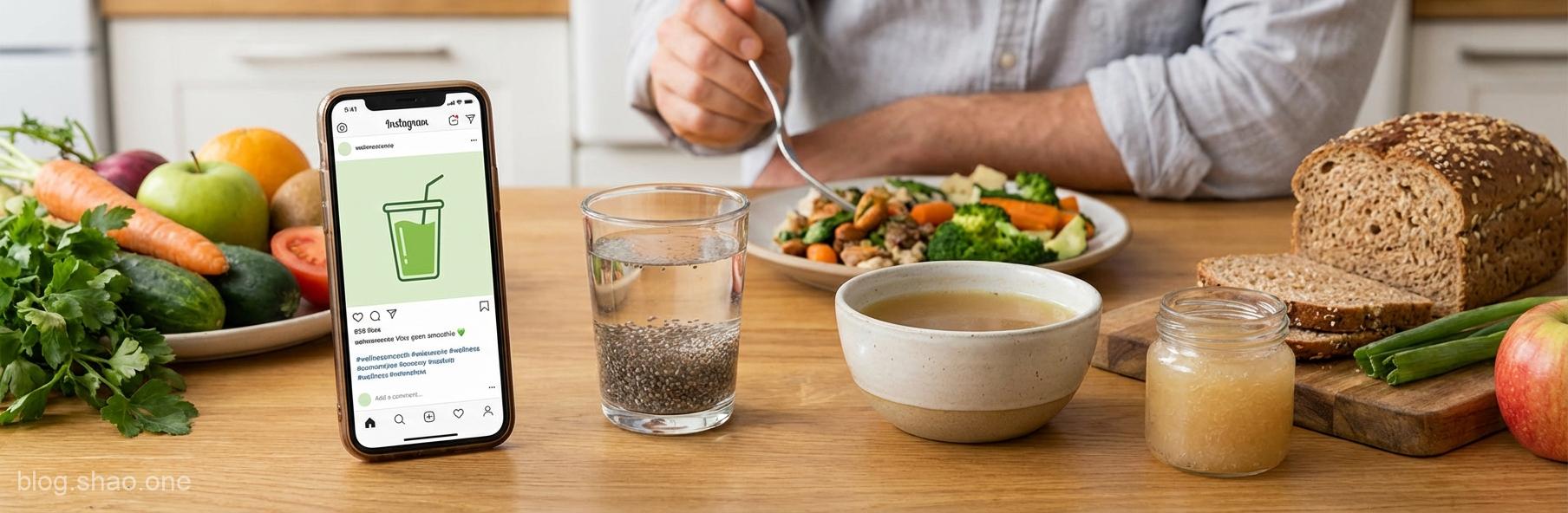
🌟 Introduction: When ‘Health’ Becomes a Social Media Traffic Code
In this era of information explosion, scrolling through Instagram or TikTok every day, we always see various diets claiming to be ‘transformative.’ From a morning glass of ‘Internal Shower’ (chia seed water) to ‘Bone Broth’ that supposedly repairs the gut wall, these wellness trends, fueled by influencers, are described so vividly it’s as if they are the cure-all for everything. But behind these trending foods, is there science based on solid evidence, or just beautifully packaged ‘pseudoscience’?
A recent BBC report conducted an in-depth analysis of these trends, reminding consumers that while many viral foods have nutritional value, they are often over-deified. Today, let’s talk about these ‘superfoods’ that have been put on a pedestal: are they truly as good as their reputation, or just overhyped?
💧 Chia Seed Water: A True ‘Gut Cleanse’ or ‘Intestinal Traffic Jam’?
Chia seeds (Chia Seeds) are hailed as ‘intestinal scavengers’ on social media. Many videos claim that drinking a glass of soaked chia seed water on an empty stomach can effectively relieve constipation, detoxify, and help with weight loss.
- Scientific Truth: It is beyond doubt that chia seeds are rich in dietary fiber and Omega-3 fatty acids. The gel-like substance they form after swelling in water helps increase satiety.
- Hidden Danger: However, experts point out that consuming too much fiber in a short time without adequate hydration can actually lead to bloating and even constipation—truly counterproductive.
- Tech Commentary: Social media algorithms tend to promote ‘visual’ content. The spectacle of swelling chia seeds fits the logic of viral spread perfectly, but it is by no means a panacea. Relying solely on a single food to solve digestive issues is often just treating the symptoms rather than the root cause.
🥣 Bone Broth and Sea Moss Gel: A Lifeline for Gut Repair?
Another hot topic is ‘Bone Broth’ and ‘Sea Moss Gel.’ Supporters claim these foods are rich in collagen and minerals that can repair so-called ‘Leaky Gut.’
- Scientific Truth: Bone broth does contain nutrients, but the collagen it provides is broken down into amino acids upon entering the body; it doesn’t directly ‘glue’ your gut wall back together. Many claimed effects still lack strong clinical evidence in the scientific community.
- Over-Marketing: Many merchants package it as a ‘gut repair agent’ with a high price tag. For healthy individuals, a balanced diet already provides sufficient nutrients; spending a lot of money on these products is sometimes just paying for peace of mind.
- Perspective Summary: This concept of ‘repair’ provides a psychological sense of security, but physiologically, gut repair requires long-term dietary and lifestyle adjustments; it is definitely not an overnight matter.
📱 Wellness Blind Spots in the Digital Age
Why are we so easily led by the nose by these trends? It is closely related to the current ‘Technology and Health’ environment:
<
ol>
ol>
💡 Conclusion: The Wisdom of Healthy Skepticism
Gut health is indeed the foundation of physical health, as the saying goes, ‘a healthy stomach leads to a long life.’ But facing the array of superfoods online, we must have the ability to think critically. Chia seeds and bone broth are not bad things, but if you view them as magic bullets, you will likely be disappointed.
True gut repair should be gradual: consuming a variety of vegetables and fruits, staying hydrated, exercising regularly, and getting good sleep. Instead of blindly following trends and buying expensive supplements, it’s better to return to a basic balanced diet. Remember, there are no shortcuts to health; don’t let those glib marketing terms blind you!
This Week’s Tech and Health Note: Technology can help us monitor heart rate and sleep, but when it comes to ‘what to eat,’ we still have to rely on the scientific knowledge in our brains. Don’t let your wallet and your gut become sacrifices for social media traffic.