“
🚀 Foreword: Things are getting serious! When measles meets an international airport
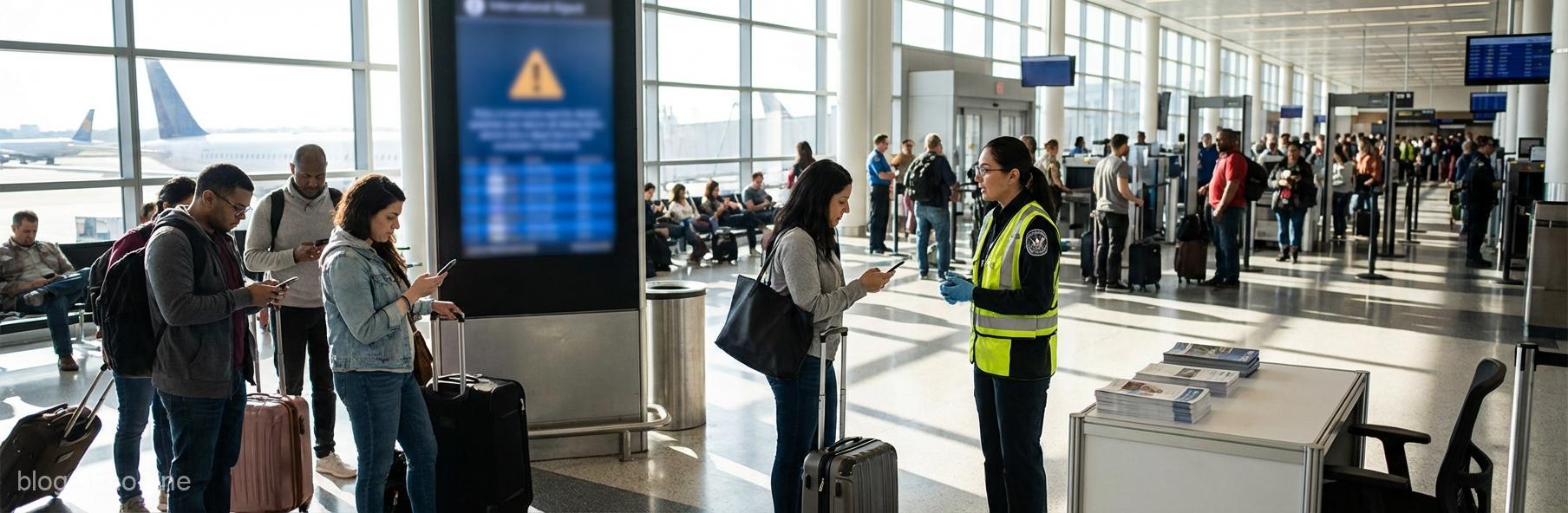
Friends in the tech circle, today we’re not talking about the latest graphics cards or what poems AI has written; we’re going to talk about a ‘hardcore’ issue that should make everyone stay alert. According to the latest report from The Washington Post, public health officials in Virginia have issued an emergency warning: a passenger with highly contagious measles recently walked right through Washington Dulles International Airport (Dulles Airport).This is no joke; the measles virus is so contagious it’ll make your knees weak. As long as you’ve been in the same space, those without antibodies almost can’t escape it. In this era of globalization where planes are as frequent as buses, this incident has undoubtedly sounded an alarm for the public health system. Today we’ll break down this news and see what role technology, this ‘double-edged sword,’ plays on the pandemic prevention battlefield.
📍 Event Tracking: The ‘Horror Story’ at Dulles Airport
Based on current information, the key points of this incident are as follows:
- Subject: A traveler confirmed to have measles.
- Affected Location: Washington Dulles International Airport (Dulles International Airport), one of the most important transit hubs in the US.
- Potential Risk: Officials state that any travelers or staff present at the airport during specific times are at risk of exposure to the virus.
- Official Action: The Virginia Department of Health is ‘hurrying’ to conduct contact tracing, attempting to find all possible victims to prevent the epidemic from spreading.
The biggest headache here is that measles has a long incubation period and is contagious even before symptoms fully break out. It’s like a ‘zero-day vulnerability’ in code—by the time you realize there’s a problem with the system, the virus has already been running in the background for a long time.
💡 Tech Perspective: The ‘Direct Confrontation’ between Data Tracking and Public Health
As tech observers, we shouldn’t just watch the spectacle; we need to see the underlying mechanics. This incident reflects how current public health surveillance systems still appear somewhat ‘strained’ when facing highly mobile populations.
1. The ‘Snail-paced’ Dilemma of Contact Tracing
Although we now have Big Data and GPS, in democratic countries, privacy rights outweigh everything. When an outbreak occurs, health officials often can only rely on traditional interviews and boarding lists to ‘screen’ people. This approach is simply too ‘sluggish’ for modern society. By the time officials find people, the virus might have already boarded the next flight to ‘compete abroad.’ While Taiwan’s ‘SMS real-name registration’ system developed during the pandemic sparked controversy, its efficiency was indeed legendary. How such tech tools can be internationalized without infringing on privacy is a key focus for future tech-based pandemic prevention.
2. AI Early Warning Systems: Can we ‘Nip it in the Bud’?
Many AI startups are already developing epidemic prediction models. If we could combine airport thermal imagers, flight booking systems, and global disease outbreak data, could we trigger a ‘red light warning’ the moment a patient steps into an airport? It sounds like sci-fi tech, but implementation is extremely difficult. After all, ‘you get what you pay for.’ The cost of building such a system and the difficulty of data sharing cause many governments to ‘back down.’
🧐 Deep Commentary: Is Tech Prevention a ‘Win-Win’ or just ‘Pie in the Sky’?
The significance of this news for the tech world is profound. We often boast about AI’s omnipotence, but when facing the most primitive and fierce biological viruses, technology often seems ‘to fall on deaf ears,’ unable to react in time.My view is:* Technology is not a panacea, but it is the strongest bulletproof vest: This incident exposes a gap in information transmission. If airline apps could push warnings to passengers on the same flight immediately, instead of waiting for newspapers to report the news, efficiency would be much higher.* The Tug-of-War between Privacy and Security: Every time something like this happens, people discuss whether to strengthen surveillance. But we must also be careful not to turn the entire society into ‘Oceania’ just to catch one measles virus. The balance in between isn’t something that can be solved just by writing code; it requires deep involvement of law and ethics.* No cure for the ‘Stubborn’: Although technology is advanced, the decline in vaccination rates is the true culprit behind the resurgence of measles. Technology can track viruses, but it cannot convince those who distrust science. This tells us that tech education is just as important as technical development.
🛡️ Practical Suggestions: How to ‘Self-Protect’ when traveling abroad?
Since we can’t control who shows up at the airport, we can only ‘be a bit more careful’ ourselves. Here are a few suggestions for tech geeks and travel experts:
- Digital Health Certificates: Keep a copy of your vaccination records (such as a digital version of the yellow card) on your phone. If something like this happens, you can immediately confirm if you have antibodies to avoid ‘being paralyzed by fear.’
- Make Good Use of Wearable Devices: Current smartwatches (Apple Watch, Garmin, etc.) have blood oxygen and heart rate monitoring. While they can’t diagnose measles, if you find your resting heart rate spiking for no reason, that’s your body sending a warning. Better go ‘see a doctor’ quickly and don’t be ‘stubborn’ about it.
- Subscribe to Real-time Alerts: Follow official social media accounts of departments like the CDC or relevant health ministries. In the tech age, the timeliness of information is your protective amulet.
📢 Conclusion: Prevention cannot rely on luck; technology still needs more effort
This incident at Dulles Airport reminds us that in this ‘global village,’ any tiny loophole can evolve into a massive crisis. While technology cannot make us invincible, it can at least ensure that when facing threats, we are no longer like ‘blind men touching an elephant’ but can respond based on evidence.Dear readers, do you think stricter biometric monitoring should be introduced in public places like airports? Or do you feel that privacy is the most important line of defense? Welcome to leave a comment below and let’s ‘chat’ and exchange views!Finally, I wish everyone safe travels and may viruses stay away! Remember, physical health is what makes you the ‘chosen one’; everything else is just a passing cloud!”