“
⚠️ Prologue: Is the Grim Reaper Knocking Again? This is No Joke!
Hello everyone, technology enthusiasts and current affairs followers! While we chase the latest AI developments, foldable phone technology, or semiconductor processes every day, nature occasionally throws a ‘curveball’ to remind us humans that we are still very fragile in the face of tiny viruses. Recently, news from Kerala, India, has put epidemic prevention experts across Asia on high alert—that’s right, the dreaded Nipah Virus (Nipah Virus) has resurfaced.This outbreak has not only caused deaths locally in India but has also placed surrounding countries on high alert. Today, we will dismantle this crisis and see how technology and medicine seek a chance of survival in this ‘virus war.’
🧬 What is Nipah Virus? Why is the World Terrified?
Nipah virus is not a new face, but its ferocity is definitely ‘Demon King level.’ According to reports from ScienceAlert, the fatality rate of this virus ranges between 40% to 75%. In comparison, the fatality rate of COVID-19, which we fought for the past few years, is simply insignificant.
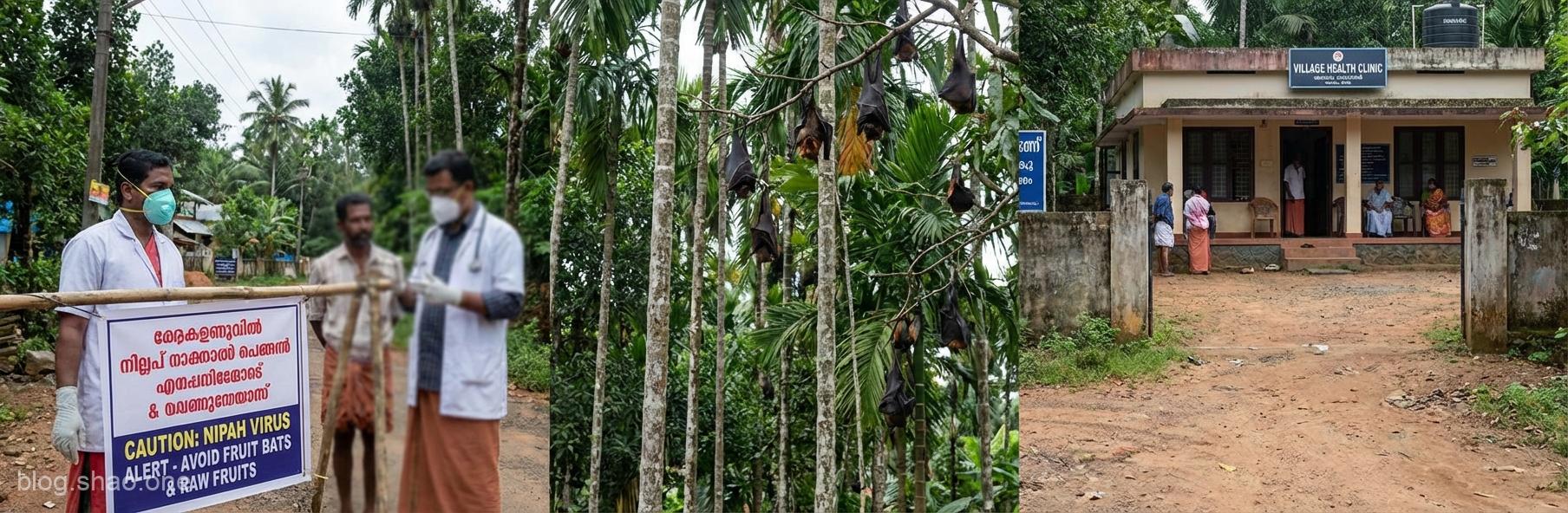
- Transmission Routes: It is primarily transmitted to humans through fruit bats (Fruit Bats), or through contaminated food (such as fruit bitten by bats), and further human-to-human transmission occurs.
- Symptoms: After infection, fever, headache, and vomiting will occur; severe cases can evolve into acute respiratory infections and even lead to fatal encephalitis. To put it simply, this virus is a direct assault on your central nervous system.
- Current Dilemma: There is currently no specific vaccine and no specific medicine. Medical personnel can only provide supportive therapy, which is why everyone feels ‘under immense pressure.’
🌍 Asian Countries ‘Shaking in Their Boots’: The Pandemic Frontline Tightens
Kerala, India, is not facing the Nipah virus for the first time, but every outbreak is as urgent as ‘fire singing the eyebrows.’ To prevent the virus from spreading like wildfire, neighboring countries like Thailand and Malaysia have raised their alerts one after another. This is not just someone else’s family matter; in the modern age of convenient transportation, any slip-up with a virus could lead to a tragedy where ‘if the lips are gone, the teeth will be cold.’
- Lockdown Measures: Local governments in India have quickly closed schools and offices in some areas and are conducting large-scale screenings.
- Border Control: Airports in various countries have strengthened temperature monitoring for personnel from affected areas, and epidemic prevention officials are ‘standing in full readiness,’ not daring to relax in the slightest.
💻 Technology vs. Pandemic: What Chips Do We Have?
As technology bloggers, we must consider: in such a critical moment, how can technology help? ‘To do a good job, one must first sharpen one’s tools.’ Facing the Nipah virus, the global tech community is striking from the following dimensions:
- AI Prediction Models: By analyzing big data on bat migration paths and climate change, scientists are trying to predict the ‘hotspots’ where the virus might jump to humans, striving to ‘prevent trouble before it happens.’
- mRNA Technology Transformation: Since mRNA shone brightly in the COVID pandemic, pharmaceutical companies (such as Moderna) are currently developing mRNA vaccines for the Nipah virus, hoping to ‘come from behind’ and build a defense line before a large-scale outbreak.
- Telemedicine and Monitoring: Monitoring the physiological data of potential infected individuals through wearable devices allows medical teams to grasp the situation in real-time, avoiding cross-infection caused by contact.
📝 Editor’s View: Prepare for Danger in Times of Peace, Don’t Let Past Lessons Go to Waste
Seeing this news, I have many reflections. In the post-pandemic era, we originally thought we could ‘rest easy,’ but the outbreak of Nipah virus reminds us that the public health protection net must be ‘watertight.’ This is not only a challenge for the medical community but also a trial of global supply chain and technology integration.
- Importance Analysis: If Nipah virus truly evolves into a global pandemic, its high fatality rate will deal a devastating blow to social operations. This is no longer a question of ‘what if,’ but a question of ‘when.’
- Personal Protection: Although we are not on the front lines, maintaining good hygiene habits, not consuming wild fruits of unknown origin, and staying focused on scientific information are basics everyone can do.
Conclusion: Are We Ready?
Facing the Nipah virus, we cannot just be ‘onlookers’; we must also understand the ecological warning signs behind it. When humans over-develop and encroach on wildlife habitats, the ‘boundary-crossing’ of viruses will become increasingly frequent. We hope that governments and scientific research institutions can ‘tighten their gears’ and win the initiative in this race against the Grim Reaper.What are your views on this Nipah virus outbreak in India? Do you think technology can completely prevent the next pandemic? Feel free to leave a comment below and share your insights with us!#TechNews #NipahVirus #IndiaOutbreak #PublicHealth #AIPandemicPrevention #Biotech”