“
💡 Introduction: Don’t Underestimate This “Insignificant” Bite
In today’s world of rapidly advancing technology, we often think humans have conquered nature, but reality often gives us a loud wake-up call. A recent report from Yahoo shocked many: David Hancock, a resident of Arizona, USA, went through a terrifying “brush with death” just because of a seemingly insignificant mosquito bite. This isn’t just an isolated case; it’s a wake-up call for public health.In this article, we won’t just look at this “heart-pounding” news; we will also analyze from a technological perspective why this threat is intensifying globally and how we can use modern technology to respond.
🦟 A Walk to Death’s Door: Hancock’s True Confession
Back in 2007, David Hancock, who lived in Glendale at the time, was living an ordinary life. However, a sudden fever completely rewrote his life’s script. At first, he thought it was just a common cold, but his condition deteriorated rapidly, and he was eventually diagnosed with West Nile Virus.Describing the experience, Hancock said: “I was already on the other side; one foot was already in another world.” These words are by no means an exaggeration; he experienced severe neurological damage and even symptoms of paralysis. This is a classic case of “things getting serious”—what was thought to be a simple itch almost ended his life.🔍 Key Commentary:The increase in such cases reflects the hidden ecological crisis in urban environments. Hancock’s “life and death moment” is not only an individual’s suffering but also reveals that the incubation period and pathogenicity of this mosquito-borne virus far exceed public imagination. In Taiwan, we have a similar reverence for Dengue fever, reminding us: when facing nature, we must never “let our guard down.”
📈 Data Warning: Why Are Cases “Steadily Rising”?
According to the latest reports, West Nile virus cases in the US are showing an increasing trend. This is not a coincidence but the result of multiple intertwined factors. As the saying goes, “misfortunes never come singly”—climate change and urban expansion have become catalysts for virus transmission.
- Global Warming: Rising global temperatures shorten the mosquito breeding cycle and expand their range northward. Regions that didn’t often see outbreaks are now starting to “hit a wall” (face unexpected challenges).
- Urban Heat Island Effect: Standing water containers and high-temperature environments in cities have become “luxury residential areas” for mosquitoes.
- Ecological Imbalance: A decrease in natural predators of mosquitoes allows them to breed wantonly.
🔍 Key Commentary:This isn’t just a health issue; it’s a large-scale “data challenge.” Public health departments now rely on complex environmental sensors and Geographic Information Systems (GIS) to track outbreaks. If we cannot gain the upper hand through data analysis, future outbreaks might become “impossible to defend against.”
🛡️ Technological Defense: The “Digital Armor” Against Mosquito-Borne Diseases
In the face of increasingly rampant threats, the tech world has not stood idly by. There are many “high-tech moves” now on the front lines against the virus:
- AI Prediction Models: By using machine learning to analyze meteorological data, satellite imagery, and historical cases, scientists can predict which areas might become outbreak hotspots weeks in advance, truly achieving “prevention is better than cure.”
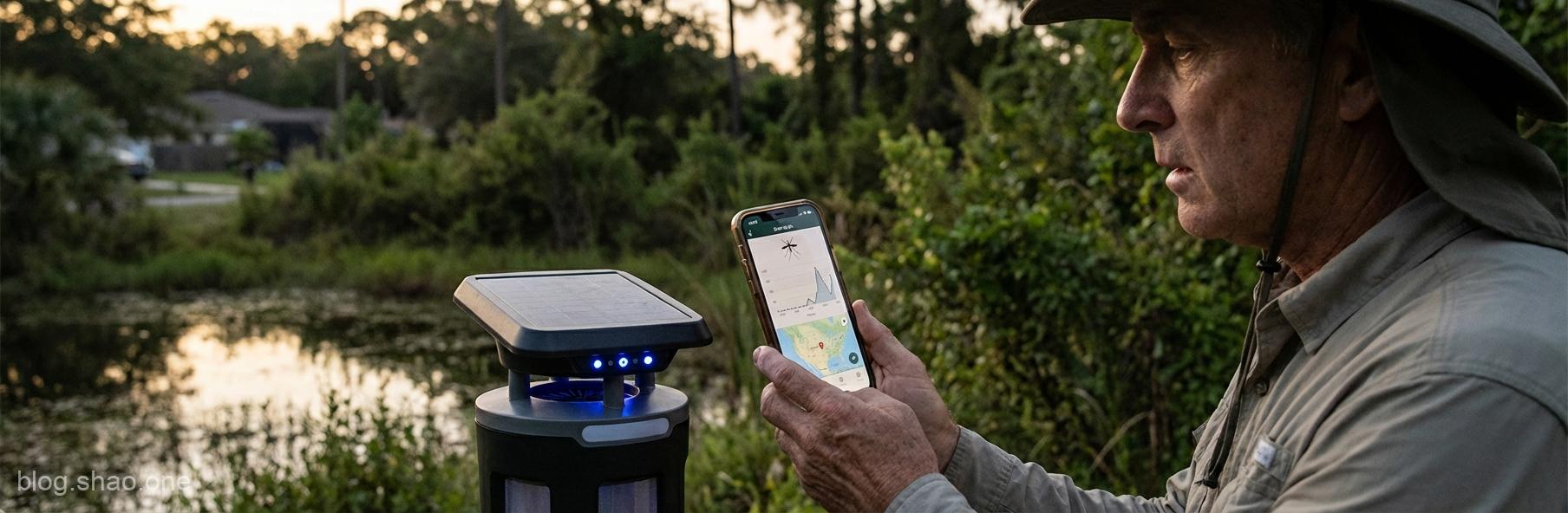
- Smart Mosquito Traps: Modern mosquito-catching devices don’t just suck in mosquitoes; some high-end equipment can automatically identify mosquito species through infrared spectroscopy and even determine if they carry viruses, with data transmitted back to the cloud in real-time.
- Gene Editing Technology (CRISPR): Scientists are researching Gene Drive technology to produce sterile offspring from male mosquitoes, “cutting the problem at the root.”
- Internet of Things (IoT) Monitoring: Sensors installed in community drainage systems monitor stagnant water. When water levels reach dangerous levels, the system automatically sends an alert to remind people to clean up.
🔍 Key Commentary:Although these technologies look like movie plots, they are our strongest backing when fighting tiny enemies. Technological progress allows us no longer to “wait for death” but to take the initiative and nip potential crises in the bud.
💡 Conclusion: Regaining a “Thorough” Preventive Awareness in the Era of “Internet of Everything”
Hancock’s story gives us a profound lesson: even in the 21st century, a single mosquito can still make us “weak at the knees.” While we pursue technological progress and become immersed in virtual worlds, we should not forget biological security in the real world.As tech enthusiasts, we should make good use of the tools at hand. For example, use apps with epidemic mapping functions, follow local public health bulletins, and maintain a “thorough” (serious and responsible) attitude in life by clearing stagnant water at home. After all, even the most powerful AI is no match for someone simply turning over a water container.Don’t wait until you “trip up in an unexpected place” to regret it. Stay vigilant, let technology be a tool to protect life, not the sole reliance. Let’s work together so that the next “life and death moment” doesn’t happen to us.
📢 Reader Interaction:Have you ever noticed local epidemic warnings while traveling or camping? Which technological method do you think is most effective in solving mosquito disturbances? Feel free to share your thoughts in the comments!”