“
Introduction: When “Burning to the Doorstep” Is No Longer Just a Metaphor
Last January, wildfires raged in Los Angeles. The overwhelming smoke and ash not only left local residents in a state of fear (tshò-le-tán, waiting in trepidation) but also directly exposed over 20 million people to the threat of toxic substances. According to the latest reports from NPR, the aftereffects of this disaster are gradually emerging. This is not just a one-time natural disaster, but a long-term public health issue. As technology observers, we must consider: in today’s era where climate change is “imminent,” how should technology play the role of a guardian?
Invisible Threats: “Long-term Impacts” More Persistent Than Raging Fires
After the wildfires were extinguished, the disaster didn’t truly end. Reports indicate that LA residents are concerned not just about the flames at the time, but about the toxic microparticles permeating the air and the contaminated soil. These “invisible killers” cause damage to the human body that is often a “prolonged ordeal” (pháin-hì thua-pân, a painful, drawn-out situation), potentially requiring years or even decades of follow-up research to understand the full picture.
- Long-term health side effects: For the public exposed to thick smoke, lung function is impaired, cardiovascular disease rates rise, and even psychological anxiety cannot be ignored.
- Residual environmental toxins: Heavy metals and chemical substances produced after houses burn will settle into the soil with ash, affecting community ecology in the long term.
Tech Perspective: This is a typical moment for “Big Data and Precision Medicine” to shine. Through long-term health data tracking from wearable devices, scientists can more accurately clarify the correlation between environmental factors and chronic diseases.
Fighting Fire with Tech: From “Prevention” to “Preparing for a Rainy Day”
Facing increasingly frequent extreme weather, the tech industry is dedicated to developing more powerful warning and protection systems. This is not just for immediate rescue, but for future survival.
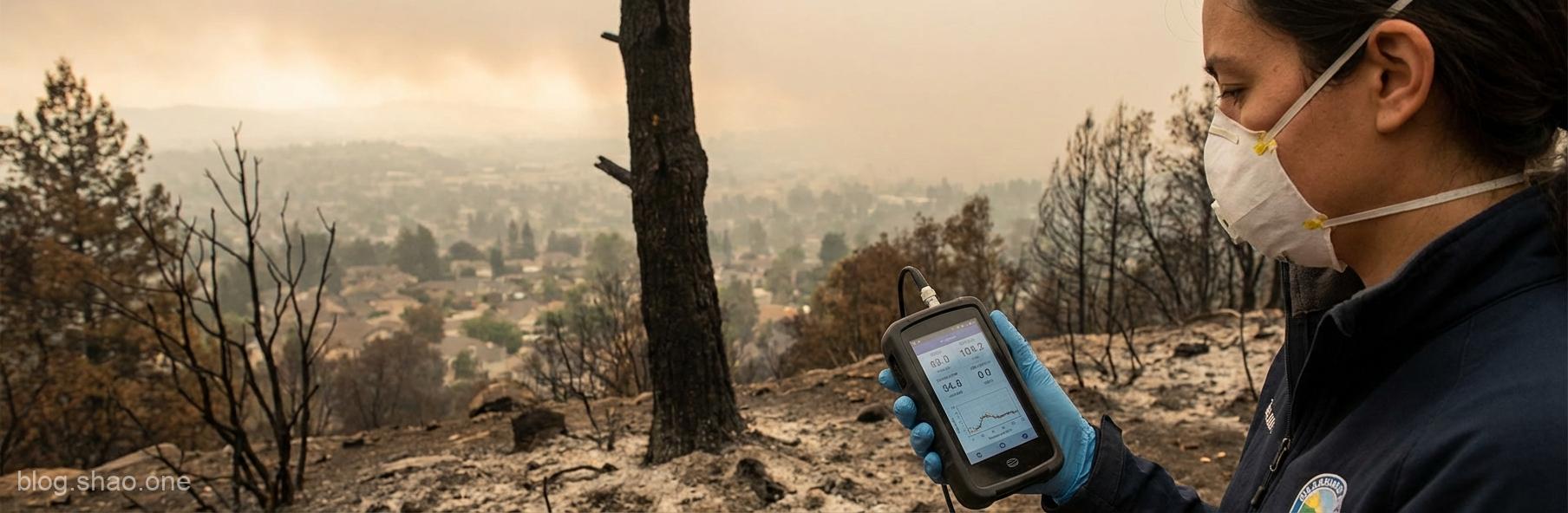
- High-Precision Environmental Monitoring Networks: Modern technology no longer relies solely on a few large weather stations, but utilizes a large number of low-cost IoT sensors to construct “micro air quality monitoring networks.” This allows residents to know instantly if their home air quality “breaks the scale,” helping them decide whether to close windows or start air purifiers.
- AI Smoke Diffusion Models: Through artificial intelligence calculations, fire departments can more accurately predict the flow of smoke. This is crucial for evacuation plans, preventing the public from accidentally entering areas with the thickest toxic smoke during the evacuation process.
- Digital Twin City Planning: Using digital twin technology to simulate the impact of wildfires on towns, helping governments improve building codes and urban smoke exhaust designs to achieve true “prevention before it happens.”
Our Commentary: We Can’t Always Wait Until the “Fire Burns Our Backsides” to Act
This report sounds an alarm for the tech community. In the past, we were used to investing resources into “immediate” technological experiences, but when facing climate change, what we need more is “Resilience Tech.”The Los Angeles example tells us that environmental monitoring should not be an “occasional” spot check, but a “year-round” infrastructure. If we are always “stubborn” (thih-khí, obstinately refusing to believe) in tech R&D and ignore the compound impacts brought by climate change, the future medical and social costs will be a burden too heavy for us to bear.
Conclusion: The New Normal of Coexisting with Wildfires
Research in Los Angeles is still ongoing, and this data will serve as a mirror for major cities worldwide. In Taiwan, we also face threats from air pollution and extreme weather. How to use technology to “prepare for a rainy day,” and be ready before the next disaster occurs, is a topic everyone should pay attention to.Technology should not just be used to pursue speed; it should be used to protect every breath we take. Don’t forget, health is the “ballast stone”; without health, even the most dazzling technology is just a “castle in the air.”
This article aims to provide a deep analysis of environmental disasters through a technological lens, hoping that while everyone pays attention to new product launches, they also take notice of these “hard technologies” concerning survival.“