“
Introduction: The Glory and Controversy of the Post-Apocalyptic Wasteland
Recently, the \”Fallout\” series TV show has become a global sensation, bringing this legendary game back into the public spotlight. However, just as everyone is celebrating the IP reaching its peak, legendary producer Chris Avellone, who was involved in the development of \”Fallout: New Vegas\” and the early series, has stepped forward to pour cold water on the excitement. He bluntly pointed out that although Bethesda has expanded the series since taking over, they seem to have \”failed to capture the essence,\” never truly grasping the original soul of \”Fallout.\” These remarks sparked heated discussions among veteran players, acting like an atomic bomb dropped into a calm lake.
Core Controversy: Humor or Farce? A Displaced Style
The core of Chris Avellone’s criticism lies in the shift of \”Tone.\” In early \”Fallout\” titles, the world-building was extremely oppressive and cruel; that black humor was built upon extreme despair and moral dilemmas, rather than simple quirkiness.
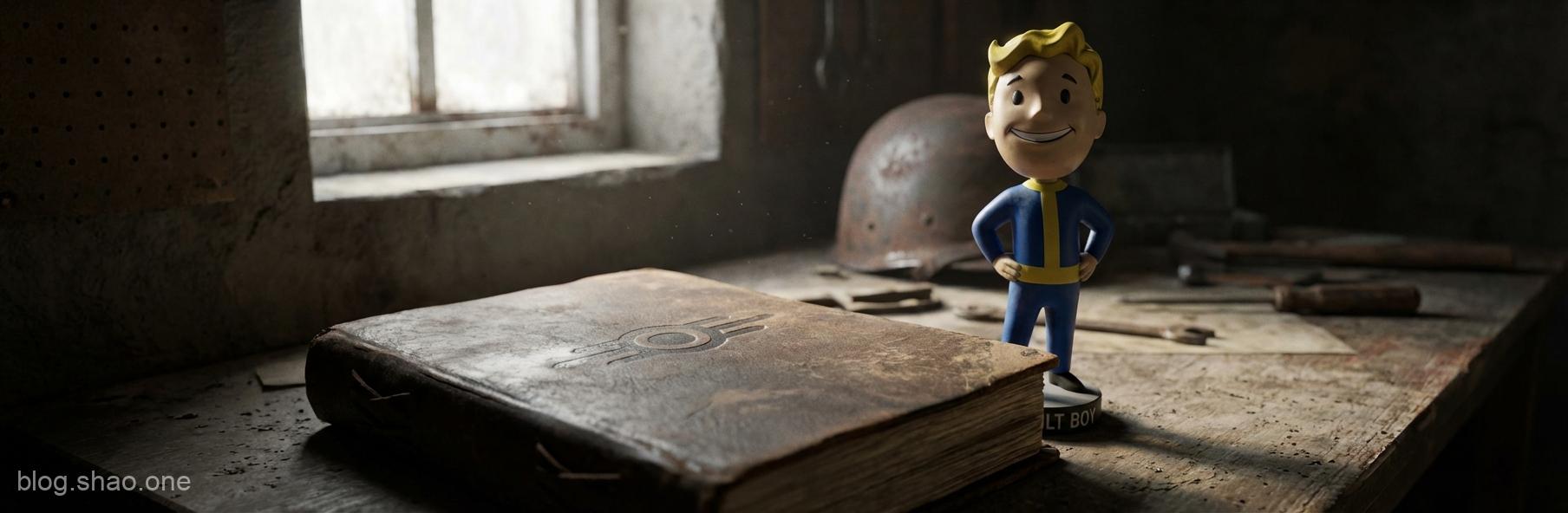
- Bethesda’s Commercial Formula: In \”Fallout 4,\” \”Fallout 76,\” and the latest TV series, Bethesda has emphasized the \”Vault Boy\” style of retro American comedy. Avellone believes this over-emphasis on a lighthearted and slapstick presentation has turned the series into something resembling a \”theme park\” rather than a realistically existing post-apocalyptic society.
- The Loss of Original Spirit: For veteran players, early works felt more like a biting satire of human civilization. While the current style lowers the entry barrier for new players, for hardcore fans seeking narrative depth, it feels like a total shift in mindset, sacrificing heavy historical depth for commercial gain.
The Chasm in Development Philosophy: Divergent Paths?
Avellone mentioned that Bethesda seems to have always tried to mold \”Fallout\” into a sandbox game \”full of various memes,\” while ignoring the struggles and ugliness of human survival in a post-apocalyptic setting. This isn’t just a matter of preference; it reflects a \”diametrical opposition\” in narrative philosophy between the two generations of developers.
- Differences in Environmental Storytelling: The black humor in early works was \”finding joy in suffering,\” meant to contrast with the collapse of the world. Modern works, however, sometimes seem too deliberate, as if telling players: \”Look, isn’t this apocalypse fun?\”
- Flattening of Character Portrayal: Critics point out that while modern works have made leaps in graphics and action, the moral gray areas of characters are gradually disappearing, turning into black-and-white choices, which veteran players find quite \”regrettable.\”
Expert Commentary: The Commercial Choice Where You Can’t Have It Both Ways
As observers of the tech and gaming industry, we must admit that Bethesda’s strategy has achieved massive commercial success. Starting from \”Fallout 3,\” the series truly entered the mainstream market. However, Avellone’s critique also reminds us of a harsh reality: when a subculture IP goes mainstream, the process of \”removing the dross\” often accidentally uproots the most core DNA along with it.The current \”Fallout\” is indeed \”wildly popular,\” but can it still be called the same \”Fallout\” that once shocked the soul? This is likely a matter of \”beauty being in the eye of the beholder.\” For Bethesda, they may feel that as long as players buy in, those arguments about the spiritual level are merely the \”groundless worries\” of the older generation. But if even the core spirit is lost, what makes this game any different from any other generic shooter?
Conclusion: Where Should the Future of the Wasteland Go?
This dispute is not just a clash of philosophies between two generations of game developers, but also a challenge faced by all long-standing IPs. Should they \”stick to the old ways\” to protect the original flavor, or \”evolve with the times\” to embrace the mass market?In the author’s view, while Bethesda’s current performance isn’t perfect, it can be seen as walking a tightrope between commerce and nostalgia. Avellone’s criticism is sharp, but it also sounds a warning bell for the development team: do not \”forget your roots.\” While pursuing laughter and special effects, do not forget the brilliance of humanity that once made players reflect deeply in front of their computers. Otherwise, this wasteland will no longer be mysterious, but just another colorful playground.To all players, do you prefer the original cold and satirical classic wasteland, or this Bethesda-style theme park full of laughs and oddballs? Feel free to leave a comment below and share your thoughts!”