“
Introduction: Your perceived \”cluelessness\” might be the mark of a hidden powerhouse
To all the tech geeks, slashies, or partners struggling daily in the digital tide: have you ever doubted whether you’re \”missing a screw\” because you can’t find your keys, forget to pay the phone bill, or feel completely lost during simple social small talk?Don’t be discouraged! According to psychological research cited by VegOut, if you feel powerless when dealing with these seemingly trivial daily matters, it doesn’t mean you’re stupid; instead, it may be because your brain is wired differently—perhaps even smarter than 95% of people. This is the so-called \”great wisdom appearing as folly,\” or as the saying goes, \”great talents mature late.\” Today, let’s talk about why high-IQ individuals often seem a bit \”clumsy\” in their daily lives.
Why do smart people get \”stuck\” in daily routines?
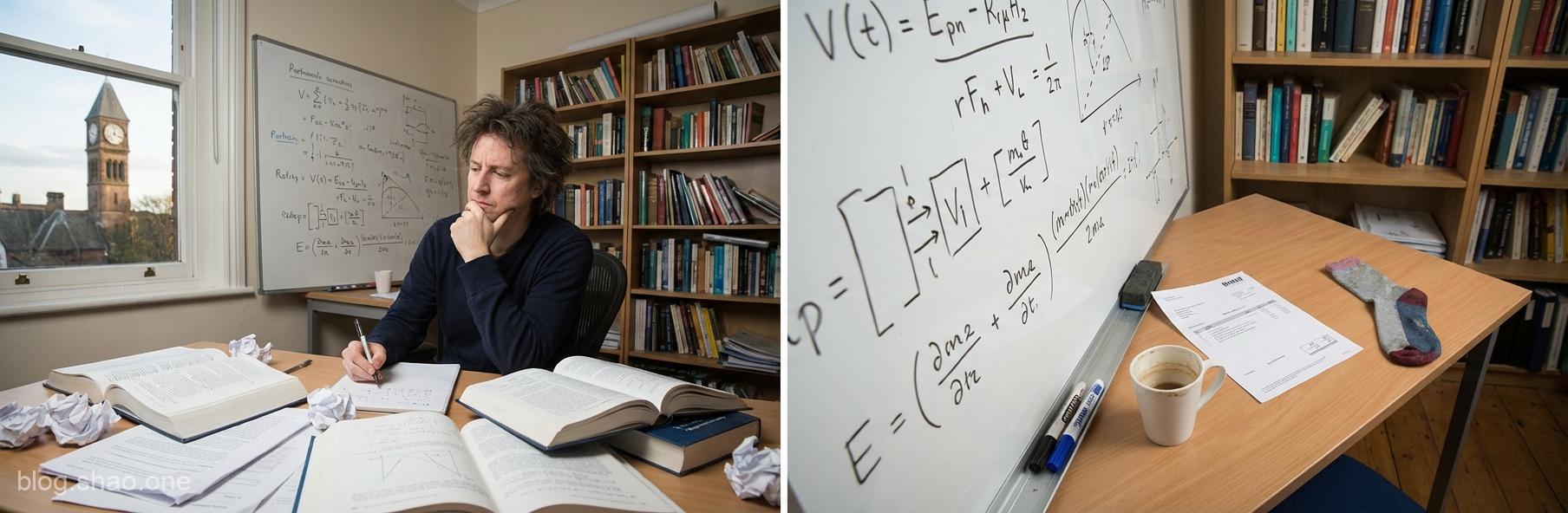
Psychologists have found that the neural networks of individuals with high IQs or high creativity operate differently from the average person. Their brains tend to prioritize complex, abstract, and challenging information, while feeling a psychological \”rejection\” toward \”automated\” or \”repetitive\” low-level tasks.Simply put, while your brain is pondering \”how to optimize AI algorithms\” or \”the origins of the universe,\” it automatically filters out trivialities like \”whether your socks match.\” This isn’t laziness; it is a balance of resource allocation.
Which of these 8 \”daily pain points\” do you have?
The following are common traits mentioned in the research; see if you relate to them:
- 1. Social Small Talk makes you feel like you’re on pins and needlesFor high-IQ individuals, chatting about the weather or asking \”have you eaten yet\” is sheer torture. They crave deep, constructive discussions rather than superficial social etiquette.
- 2. Feeling extremely bored by routine houseworkTasks like washing dishes or folding clothes are like \”using a sledgehammer to crack a nut\” for them, as they lack intellectual stimulation. When a task requires no brainpower, high-IQ people are more likely to get distracted or even do a terrible job.
- 3. Decision Fatigue: Hesitating over small thingsWhen faced with small choices like what to have for dinner, they might fall into deep thought, considering nutritional ratios, value for money, or even carbon footprints, leading to \”indecisiveness.\” This is actually because the brain is over-analyzing the details.
- 4. Living space is always in \”ordered chaos\”Rather than a perfectly tidy desk, they adapt better to slightly messy environments. Psychologists believe that messy environments can inspire more non-linear thinking, whereas overly organized spaces may suppress creativity.
- 5. Physical coordination occasionally \”goes offline\”Have you ever bumped into the corner of a table while walking? This might be because your thoughts are running faster than your body. When the brain is processing high-difficulty problems, control over physical extremities decreases relatively, making one appear a bit \”clumsy.\”
- 6. Prone to over-interpreting others’ wordsHigh-IQ individuals tend to observe minutely, but this also makes them \”overthink.\” A simple comment might be deconstructed in their minds into a dozen possible meanings, creating unnecessary psychological burdens.
-
7. Difficulty enduring repetitive administrative workTedious tasks like filling out forms or following application processes are a \”waste of talent\” for them. They would rather spend ten hours writing a program to automate a task than spend ten minutes doing it manually.
-
8. Sleep habits are often \”different from the crowd\”Many high-IQ individuals are typical \”night owls.\” The quiet environment of the night is best for deep thinking, but it also causes them to suffer when facing social norms of \”early to bed, early to rise.\”
Tech Commentary: What does this mean for us in the digital age?
In the modern workplace, we often pursue being an \”all-rounder,\” requiring a person to both develop core architectures and precisely manage daily schedules. However, this research offers an important revelation: Specialization is key.If your partner or employee seems a bit \”off\” when handling administrative chores, don’t be so quick to dismiss them. They might be among the top brains outside that 95%. In the digital tech field, many great founders (such as Steve Jobs and Elon Musk) have shown similar traits—extreme pickiness about specific details while appearing quite \”out of touch\” in certain aspects of daily life.This \”imbalance\” is actually the driving force of progress. It is impatience with the status quo (including tedious routines) that has spurred the creation of automation tools, AI assistants, and various efficiency-enhancing software. Don’t we develop technology precisely so these \”genius brains\” can be freed from trivialities to think about more important things?
Conclusion: Embrace your \”imperfection\”
If you find yourself being that \”daily chore-challenged person,\” remember: this isn’t a flaw; it’s your brain reserving bandwidth for higher-level tasks. Instead of forcing yourself to become perfectly \”meticulous,\” learn to coexist with your traits and use tech tools to compensate for your shortfalls.Next time you forget where your keys are, give yourself a lenient smile! After all, your brain might be busy changing the world. As the saying goes, \”even the wise have a lapse\”; as long as you can show that 5% talent at critical moments, a little bit of \”clumsiness\” in life actually makes you more humanly charming, doesn’t it?”