“Hello everyone, welcome to today’s Tech News Summary! Although we usually talk about the latest iPhones, graphics cards, or AI models, today we are going to talk about a topic that, while traditional, shows a brand new appearance with the help of modern technology: public health and infectious disease tracking.Recently, news that has caused anxiety in the local community has emerged from Summit County, Utah, USA. According to a report by KUTV, a student in the South Summit School District has been diagnosed with measles. This is not only the first case in the region but also dropped a bombshell in the quiet campus. How do these traditional epidemics intertwine with modern technology in the digital age? Let’s dive deep into it.
📢 Epidemic Bulletin: The Measles Storm in South Summit School District
According to the official statement from the Utah Summit County Health Department, this case involves a student attending South Summit School District. Although the specific source of infection and footprints are still being tracked, the keyword ‘measles’ is enough to make public health experts and parents ‘shiver’ (describing nervousness and trembling).
- First Confirmed Case: This is the first confirmed measles case in Summit County, breaking a long-standing peace.
- High Infectivity: The measles virus is extremely contagious. If one person is infected, 90% of those around them without immunity will find it hard to escape; it truly spreads like wildfire.
- Emergency Response: The health department has intervened in the investigation and is blocking the transmission chain through contact tracing.
💻 Tech Perspective: Why is this ‘Tech News’?
You might ask, what does a student getting sick have to do with technology? In fact, modern epidemic prevention is no longer as simple as ‘wearing masks and washing hands frequently.’ Behind it lies a powerful technological support system:
1. Application of Big Data and Geographic Information Systems (GIS)
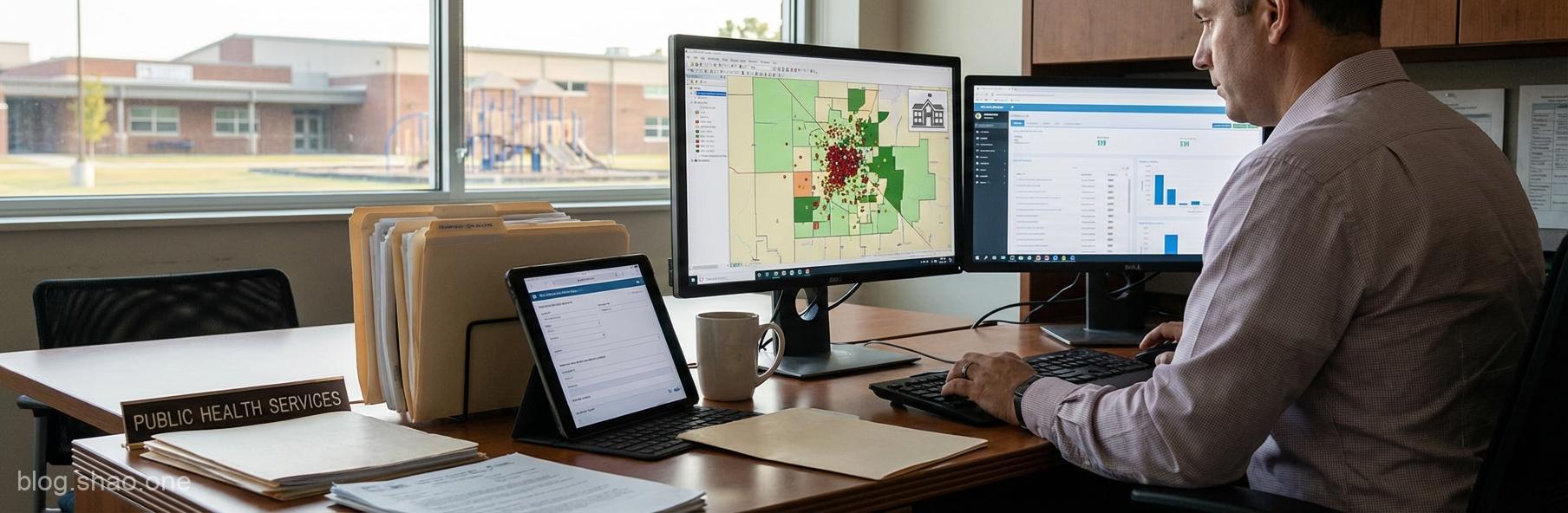
In this case, how did the health department accurately lock in potential victims? This relies on GIS tracking technology. Through the integration of digital footprints and campus attendance systems, public health experts can quickly map out the potential spread of the virus, achieving ‘prevention before it happens.’ These data visualization tools ensure that epidemic management is no longer like blind people feeling an elephant, but rather a scientific allocation of resources.
2. Digital Immunization Information Systems (DIIS)
In today’s information explosion, checking whether a student has been vaccinated no longer requires rummaging through cabinets for that ‘Yellow Card.’ Through networked medical databases, schools and health departments can immediately determine which students belong to ‘high-risk groups.’ This is one of the most hardcore applications of ‘cloud computing’ in the public health field, saving a lot of administrative work time.
3. Information Warfare and ‘Hearsay’ on Social Media
Technology is a double-edged sword. A large part of why measles has made a comeback is due to the widespread ‘anti-vaccine misinformation’ on social media. As tech-savvy readers, we must realize how algorithms affect public health concepts. Modern tech news is not just about products, but also about how information flow affects the safety of the real world.
🔍 In-depth Commentary: Better Late Than Never?
This measles case gives us several important insights. First, although we have entered the AI era, traditional Biosafety remains the cornerstone of social operations. Without a sound data monitoring system, once an epidemic breaks out, the consequences will be unimaginable.Secondly, ‘Digital Literacy’ is also a part of epidemic prevention. Facing medical rumors online, we should use fact-checking tools instead of blindly following others. For tech developers, how to develop AI models that can filter medical misinformation while respecting freedom of speech will be one of the most important tasks in the coming years.Finally, this incident also highlights the balance between ‘Privacy’ and ‘Public Interest.’ When conducting contact tracing, how to protect students’ personal privacy while achieving airtight epidemic prevention requires the joint efforts of legal and technical experts.
💡 Practical Suggestions for Readers
- Check Electronic Health Records: With advanced technology, you can now confirm your vaccination records through government health apps or related medical portals; don’t wait until the epidemic is at your door to panic.
- Make Good Use of Fact-Checking Tools: When you see suspicious epidemic news, don’t rush to forward it. Use fact-checking bots on LINE or official announcements to confirm, avoiding becoming a promoter of misinformation.
- Support Digital Epidemic Prevention: The progress of modern medical technology requires public trust in data sharing, which, of course, is built upon rigorous cybersecurity protection.
In summary, this measles case in Utah may seem like just campus news, but it is actually a ‘pop quiz’ for the modern tech-based epidemic prevention system. Beyond pursuing faster chips and smarter AI, how to use technology to safeguard the most basic health bottom line of humanity is the core value we tech people should truly focus on. Let’s continue to follow the follow-up developments, and also hope the student recovers soon and the epidemic does not spread further!
If you are interested in such topics where technology and healthcare intersect, don’t forget to keep following our column. See you next time!“