“
Introduction: The Google AI Army is Approaching—Is Your Phone Still Yours?
The hottest topic in the tech world recently is Google’s plan to let AI take over the Android ecosystem. In particular, a series of issues reported with Gmail has left many users stunned. Faced with Google’s aggressive ‘no-holds-barred’ upgrade, Samsung, the leader of the Android camp, doesn’t intend to just go with the flow. Instead, they’ve stepped up to emphasize giving users more options. Is this power play between tech giants for the sake of the users, or do they each have their own hidden agendas? Let’s take a look at this ‘tech cheat sheet.’
Is the Gmail Disaster Just an Appetizer? Google AI’s ‘Full Invasion’
A recent Forbes report points out that Google is actively integrating its powerful AI (specifically the Gemini model) into every corner of Android. While this sounds like a ‘dream teammate’ has arrived, in practice, it has caused many users to complain:
- Gmail Functional Changes: Many Android users report that the familiar Gmail operating logic has been ‘forcefully interrupted’ by AI features, resulting in a clunky user experience and even errors.
- Excessive AI Automation: Google’s goal is to let AI take full control of smartphones, from replying to emails and scheduling to photo editing. But for tech enthusiasts who value control, this feels like being forced into a trap.
- Privacy Red Flags: Latest reports show that Google AI’s privacy policy has triggered a strong backlash, with users worried that their private emails and data are becoming ‘free fodder’ to feed the AI.
[Commentary]: Google’s move is a bit forceful. Although the technology is superior, if user feelings are ignored, it’s likely to backfire, damaging the brand trust built over many years.
Samsung is No Pushover: Giving Choice Back to Users
Faced with Google’s dominance, Samsung has appeared quite shrewd this time. The message they are sending is clear: On Galaxy phones, the user has the final say. Samsung has confirmed it will provide more options, allowing users to decide the extent of AI automation they want to accept.
- Independence of Galaxy AI: Samsung is committed to developing its own Galaxy AI, which gives them the leverage to negotiate with Google and prevents Google from becoming a monopoly.
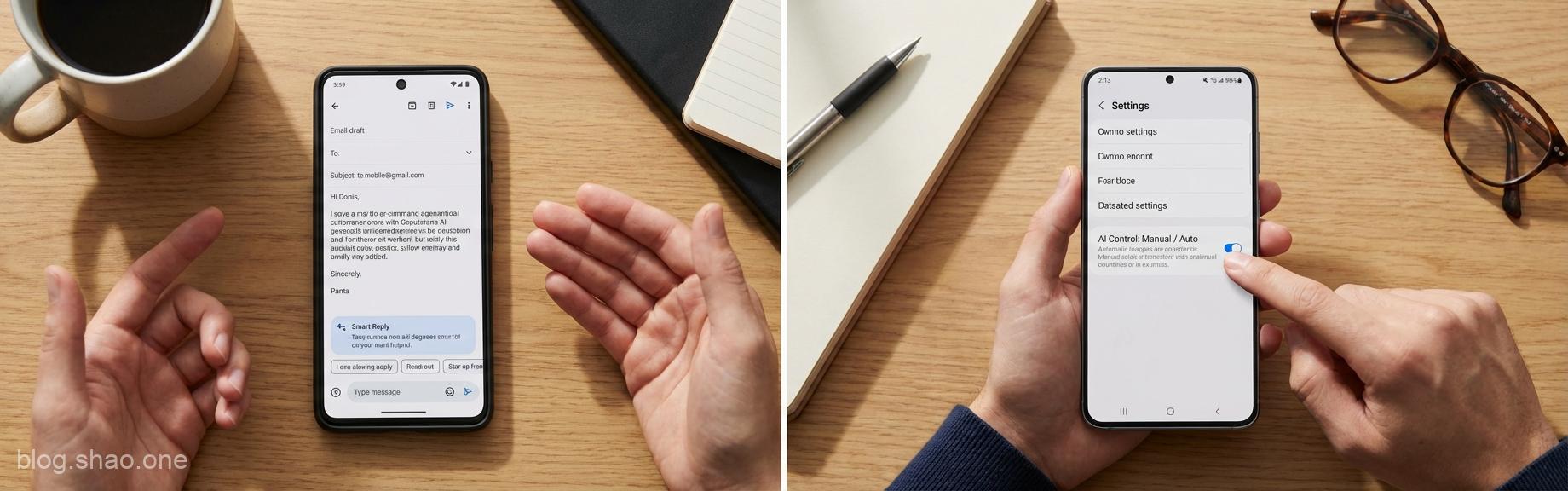
- Enhanced Setting Flexibility: Samsung hinted that in system updates, more toggles will be provided so users can ‘manually turn off’ or ‘customize’ the degree of AI intervention.
- Differentiated Competition: When all Android phones start looking like ‘Google’s puppets,’ the ‘control’ emphasized by Samsung becomes its most powerful selling point.
[Commentary]: Samsung played this ‘carrot and stick’ move beautifully! On one hand, they maintain a partnership with Google; on the other, they highlight the advantages of their own system by ‘giving users a choice.’ It’s truly killing two birds with one stone.
Privacy Rights Red Light: Water Can Carry a Boat, but Also Capsize It
According to the latest tracking on January 10, Google AI’s privacy controversy has reached a point where ‘it can no longer be covered up.’ Many experts point out that when AI is deeply integrated into a phone’s operating system, the scope of data collection will exceed expectations.
- Insufficient Data Transparency: Users often don’t know which of their data is being taken to train models. In regions with strict privacy regulations like the EU, this is undoubtedly a ticking time bomb.
- Cybersecurity Risks: If AI permissions are too broad and the system is compromised, the consequences would be unimaginable. This is why many business professionals feel ‘anxious’ about this.
[Commentary]: Tech companies often say AI is for convenience, but ‘there’s no such thing as a free lunch.’ While we enjoy the convenience, the price we pay might be our most private personal domains. This part really needs ‘strict oversight.’
Conclusion: A Battle of Tech Giants—Who Benefits?
This AI battle extending from Gmail actually reflects the current anxiety in the tech industry. Google is afraid of losing the AI war, so it’s rushing things; Samsung, meanwhile, wants to stand firm in the chaos and play the role of the ‘rational third party.’For the vast number of Android users, now is the ‘moment of decision.’ Are you willing to hand over control of your phone for extreme convenience? Or do you prefer Samsung’s approach of ‘leaving a way out’?Key Takeaways:1. Observe Update Trends: After recent Android system updates, be sure to go into settings to check privacy options; don’t let the AI overstep its bounds.2. Don’t Be Fooled by Buzzwords: ‘AI’ sounds cool, but if it interferes with daily work, it’s more of a hindrance than a help.3. Support Diversity: Competition in the market is a good thing; Samsung’s countervailing power can prevent Google from moving toward authoritarianism.This drama still has a long way to go. Let’s wait and see what new tricks these big bosses can pull off next!”