“
Preface: The original intention of technological research and development begins with awe for life
Recently, a heartbreaking news story shocked Ogden, Utah. Elora ‘Ellie’ Ann Rudd, only four years old, unfortunately passed away on January 6 due to flu complications. This tragedy not only plunged a family into ‘gut-wrenching’ pain but also once again sounded the alarm for the global public health system. As tech commentators, while we pursue chip performance and AI computing power, we should reflect more: can current top-tier technological means truly ‘prepare for a rainy day’ and build a protective wall before the next tragedy occurs?In this week’s tech special, we will explore how HealthTech responds to seasonal flu and what technological breakthroughs we can expect in the future to protect little lives like Ellie’s.
I. AI and Big Data Prediction: Running Ahead of Virus Spread
The reason the flu is so tricky is its extremely fast mutation rate, often making it ‘impossible to guard against.’ Currently, Google Health and several biotech companies are working on using big data analysis to accurately predict flu outbreak hotspots.
- Precision Epidemic Prevention: Through search engine keyword popularity, social media sentiment monitoring, and pharmacy cold medicine sales data, AI models can detect signs of community infection earlier than traditional disease control units. This is ‘pivotal’ in the field of public health, allowing medical institutions to schedule supplies in advance and avoid medical paralysis.
- Importance Analysis: Although the technology has matured, privacy rights and data accuracy remain a double-edged sword. How to achieve the ‘prepared for the worst’ warning effect while protecting privacy is currently the biggest test for the tech industry.
II. Evolution of Wearable Devices: From Fitness Tracking to ‘Early Warning Systems’
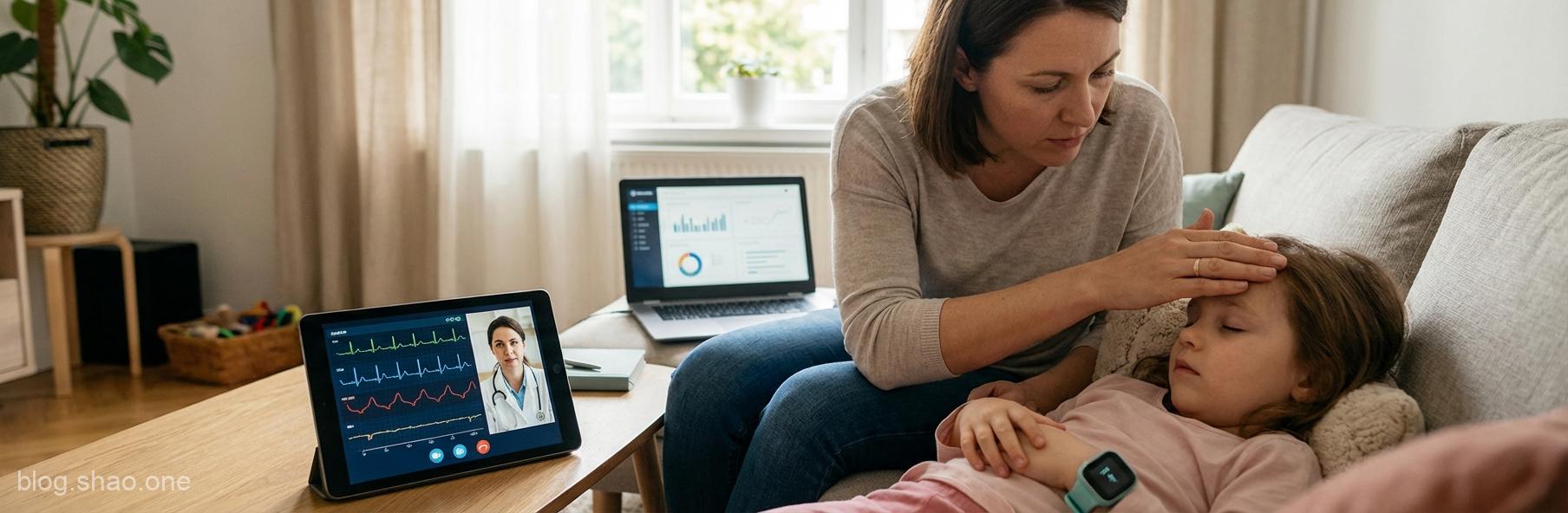
In Ellie’s case, family members mentioned that the worsening of the condition often happens in an instant. If we could conduct 24-hour physiological monitoring through technological means, perhaps we could ‘turn danger into safety.’
- Blood Oxygen and Heart Rate Monitoring: Current Apple Watch or Garmin devices already have functions to detect blood oxygen saturation and Heart Rate Variability (HRV). Research shows that 24 to 48 hours before flu symptoms appear, the human heart rate usually shows abnormal fluctuations. If this type of data can be linked with the family doctor system, ‘nipping it in the bud’ can be realized.
- Importance Analysis: For groups like young children or the elderly who cannot clearly express discomfort, wearable devices are no longer just tech toys but ‘life-saving straws’ at critical moments. The future challenge lies in how to reduce equipment costs so that technology is no longer the privilege of a few, but a basic protection for the common people.
III. mRNA Technology and the Dawn of Universal Flu Vaccines
When it comes to flu prevention, vaccine development is the ‘top priority’ of the tech world. Ellie’s tragedy reminds us that there is still room for improvement in the protection of existing flu vaccines.
- Modular Development: With the successful application of mRNA technology during the COVID-19 period, Pfizer and Moderna have launched clinical trials for mRNA flu vaccines. This type of technology can ‘adapt flexibly’ according to the virus strain of the year, significantly shortening the development cycle and enabling a more timely fight against variant strains.
- Importance Analysis: The tech world is currently moving towards a ‘universal flu vaccine,’ with the goal of developing a vaccine that can handle all Influenza A strains. If successful, it will be an ‘unprecedented’ milestone in human medical history, significantly reducing the tragedy of lives lost to flu complications every year.
IV. Popularization of Telemedicine: Breaking the Barriers of Geography and Time
In many parts of the United States, uneven distribution of medical resources is the norm. When a child has a fever in the middle of the night, parents often face the dilemma of ‘having nowhere to seek medical help.’
- Instant Consultation: Through high-quality cameras and AI-assisted diagnostic tools (such as electronic stethoscopes, otoscopes), telemedicine allows parents to get professional advice immediately, avoiding missing the ‘golden treatment window.’
- Importance Analysis: The value of technology lies in breaking spatial limits. For families living in remote areas or with heavy medical burdens, the popularization of telemedicine is an ‘urgent’ task.
Conclusion: Let Technology Return to the Warmth of ‘People-Oriented’
The passing of the little girl Ellie from Ogden makes us pause in the craze of pursuing technological innovation. Technology should not just be cold code and hardware; it should possess the warmth of protecting life. From AI warnings to mRNA vaccines, every step of progress is to prevent similar tragedies from recurring.We look forward to the further integration of technology and medicine. In the future, humans will be more confident in fighting flu and various viruses, so that every child can ‘grow up strong’ in a healthy environment. This is not only the goal of tech professionals but also our deepest tribute to those lives lost.Tech Review: Innovative technology is not a panacea, but it is our strongest and most powerful support against fate and for protecting loved ones. May tragedies cease, and may technology endure.”