“
😱 Terrifying! The Invisible Killer Behind Contact Lenses
To all the tech geeks staring at screens and typing on keyboards every day, you’ve worked hard! While we chase the latest AI technology and research which graphics card has the best price-performance ratio, does anyone—like our editor—wear contact lenses for long periods for convenience or aesthetics? If you are part of the contact lens tribe, you must keep your eyes wide open for today’s article, because this is no joke; if things go wrong, you could really hit a wall and lose your windows to the soul!According to the latest report from CNN, a rare parasitic eye disease called Acanthamoeba keratitis (shortened to AK) is threatening contact lens wearers. Although this disease is rare, once you win the lottery, it can lead to blindness in severe cases. Today, your editor will act as a gatekeeper to summarize the essential guide of this health education information for everyone!
👁️ Real-Life Case: A Sudden Eyeball Disaster
The protagonist of the story, Teresa Sanchez, felt a dry, stinging sensation in her right eye four years ago during a medical procedure in Mexico. Initially, she thought it was just a minor issue like a broken contact lens, never imagining it would be the start of a nightmare. After a series of examinations and ordeals, she discovered her eye had been invaded by Acanthamoeba.These protozoa are not to be trifled with; once they bore into the cornea, they set up camp there, causing extreme pain. Teresa described the pain as worse than death. Even after long-term treatment, her vision remains impaired. This tells us that when it comes to our eyes, we definitely cannot turn a blind eye; details are the key to success or failure.
🦠 What is Acanthamoeba Keratitis? (Essential Knowledge for Tech Geeks)
- Who is the culprit? Acanthamoeba is a microscopic single-celled organism widely found in the natural environment, such as tap water, lake water, swimming pools, and even hot tubs.
- Why target contact lens wearers? For the average person, the cornea has a very good protective mechanism. But for those who wear contact lenses, if hygiene is improper or if they encounter water while wearing lenses, these protozoa take the opportunity to attach to the lens and start eroding your cornea.
- What are the symptoms? Redness and swelling, blurred vision, a strong foreign body sensation, and most importantly—intense, agonizing pain.
💡 Editor’s Comment: This is like ransomware in a computer; once it’s locked (infected), unlocking (curing) it is not only time-consuming and labor-intensive but may also leave indelible damage (permanent vision loss).
🛠️ Eye Care Tips: Be a Bit More Meticulous, Your Life Depends on It!
Experts suggest that to avoid this terrifying parasite, we must become very meticulous in our daily lives. Here are several life-saving tips:
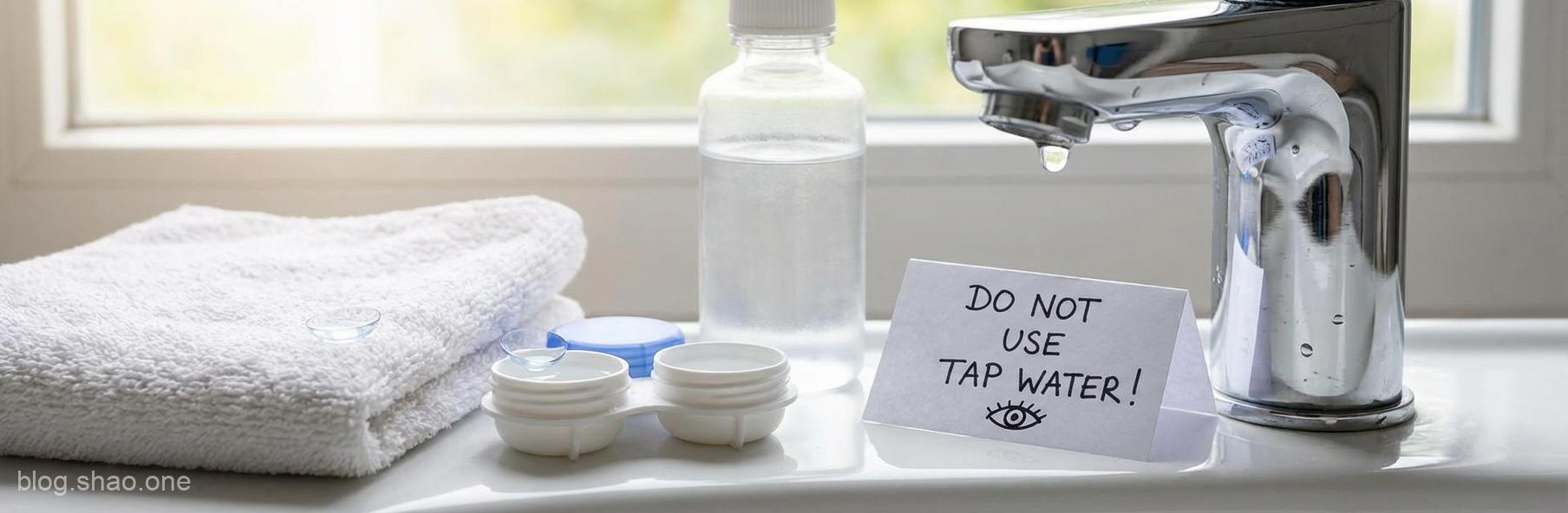
- Never let your lenses touch water: Whether showering, swimming, or soaking in hot springs, please be sure to remove your contact lenses. Although tap water is drinkable (in some countries), for your contact lenses, it is a breeding ground for protozoa.
- Rubbing and Rinsing is the way to go: Even if you use a solution labeled no-rub, experts still recommend gently rubbing the lenses during cleaning. This effectively removes surface biofilms and reduces pathogen attachment.
- Replace the lens case regularly: Many people change their solution but use the same case forever. It is recommended to replace the case every three months, pour out the old liquid every day, and let the case air dry.
- Disposables are the best way: If your budget allows, using daily disposable contact lenses can significantly reduce the risk of infection because you are using a sterile new lens every day.
🖥️ Tech Reflection: Bio-hackers Must Also Pay Attention to Hardware Maintenance
As tech enthusiasts, we often call ourselves Bio-hackers, trying various wearable devices to optimize our lives. But don’t forget, our body (the hardware) is the most important foundation. Long-term use of digital products has already made our eyes very tired (dry eye syndrome). If we add unhygienic contact lens wearing habits, the losses will outweigh the gains.In this era where AI develops faster than you can run a hundred-meter dash, we need a pair of bright eyes to witness the future. If your eyes have been feeling uncomfortable lately, don’t think let’s wait and see. Seeing a doctor immediately is the only right solution. Don’t let contact lenses, which should be helpful tools, become an obstacle to your health.Summary: Technology brings us convenience, but good hygiene habits are the long-term solution. I hope all readers can stay away from these eyeball edge cases, maintain a bright vision, and continue to explore the blue ocean of technology!If you find this content helpful, feel free to share it with those friends who are too lazy to wash their contact lenses. Saving a life is better than building a seven-story pagoda!”