Introduction: Is the “Protection” We Provide Truly What They Want?
In the long journey of technology and biomedical research, laboratory mice have always been indispensable “unsung heroes.” Their lives are often spent in temperature-controlled, sterile, and highly regulated transparent boxes. We always assume that providing sufficient food, clean water, and a stable environment is the greatest care we can offer these small lives. However, according to a recent study reported by Futurism, when these “hothouse flowers” who have lived in labs for years are released into nature, the changes that occur are truly eye-opening.
This study not only challenges our perception of animal welfare but also acts as a mirror, prompting us—the urbanites who traverse the concrete jungle every day—to reflect: is the secure life we pursue quietly consuming our mental health?
Direct Insight: From “Caged Birds” to “Thriving in Their Element”
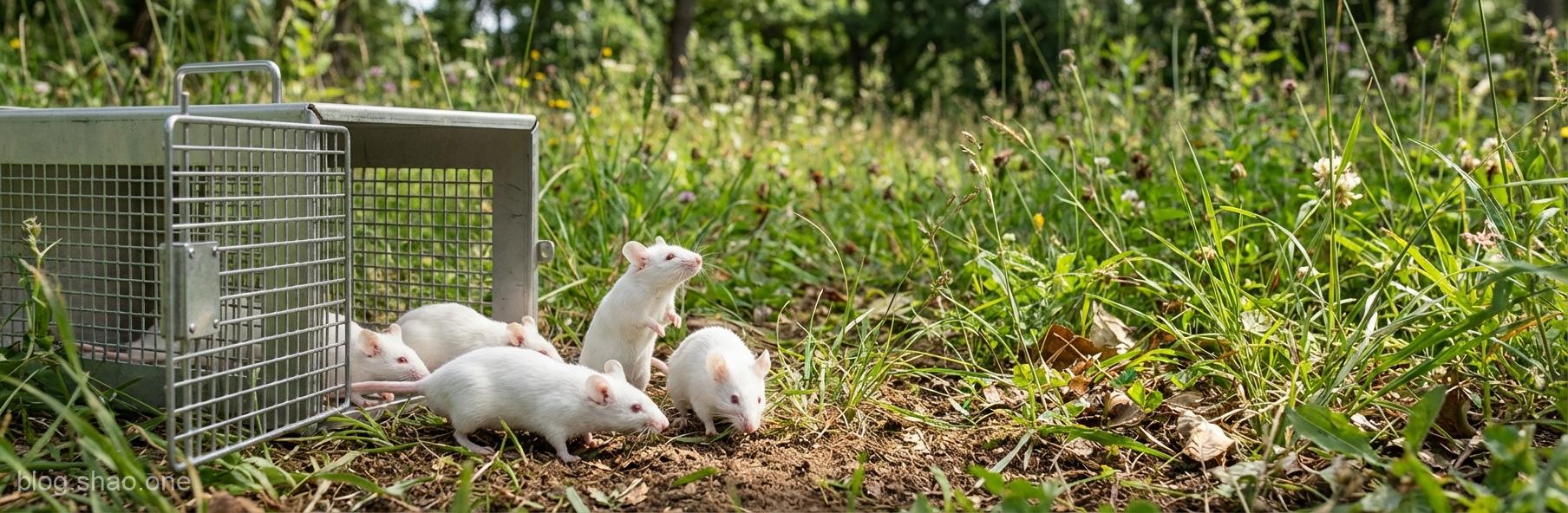
Researchers conducted a bold experiment: they released a group of lab rats that had lived in highly controlled environments for a long time into a large, enclosed outdoor meadow. From birth, these rats had only encountered plastic boxes, wood chips, and lab technicians’ gloves; they had absolutely no concept of the word “nature.”
According to common logic, rats accustomed to having everything provided for them should be terrified and hesitant once they reach the wild, which is full of unknown threats. But the reality was quite the opposite:
- Significant reduction in anxiety: The study found that after entering the natural environment, these rats showed behaviors indicating reduced anxiety almost “instantly.” They no longer frequently displayed compulsive avoidance behaviors, but instead showed more courage to explore.
- Transformation of behavioral patterns: In the wild, the rats displayed richer social interactions and digging instincts—things never seen in cramped laboratory cages. They seemed completely transformed, changing from shrinking lab specimens into vibrant wild individuals.
- The power of environmental enrichment: Compared to the monotonous wheels in the lab, nature provided complex terrain, diverse scents, and weather changes. These seemingly “unstable” factors became a tonic for the rats’ mental health.
In-Depth Analysis: Why This Discovery Has the Scientific Community “On Edge”?
The reason this discovery carries profound significance is that it points directly to the “Achilles’ heel” of modern biomedical research.
- Authenticity of experimental data: If we test drugs (such as antidepressants or cancer medications) on “extremely anxious and unnatural” subjects, is the data truly accurate? For a long time, the scientific community has been used to minimizing environmental variables, but has overlooked that the “stressed environment” itself is a massive variable. If the rats’ psychological state is already beyond cure, the experimental results might just be a partial and distorted view.
- Redefining animal welfare: In the past, we believed that “not suffering and not being hungry” constituted welfare. But this study tells us that animals also have psychological needs; they long for challenge and exploration. Keeping them in a monotonous environment is undoubtedly a form of “invisible abuse.”
- Inspirations for human life: Modern people sit in cubicles every day, staring at blue-light screens and eating standardized takeout—how is this different from lab rats? Research shows that nature has a healing effect on rats, and the same applies to humans. This might explain why we feel refreshed and delighted walking in a forest, because deep in our genes, we still crave a connection with nature.
Perspective Commentary: Don’t Let Technology and Progress Become Shackles of the Soul
This news is undoubtedly a wake-up call for the tech and scientific communities. We are committed to developing cutting-edge gene-editing technology and the most precise medical instruments, but sometimes, the most effective “prescription” is hidden in the most primitive forests and meadows.
As a tech observer, I believe this study reminds us: An “over-controlled” environment is often the graveyard of creativity and a breeding ground for mental illness. For lab rats, although the risks of the wild (such as temperature fluctuations and foraging pressure) increase, the sense of freedom and satisfaction at the psychological level is irreplaceable.
For us readers, this is also an opportunity to re-examine our lifestyle. If you’ve been feeling overwhelmed and deeply anxious lately, perhaps you don’t need to rush for medication or the solace of electronic products. Try putting down your phone, walk outdoors, and let nature “reboot” your brain.
Conclusion: Return to Nature, Find Your Lost Self
The story of these laboratory mice tells us that no matter what kind of life it is, it should not be trapped in an invisible framework. Although we cannot completely escape the constraints of modern life, we can at least occasionally “let ourselves out” and not let our souls wither in a regulated rhythm. After all, even lab rats know that running on the earth feels far more exhilarating than spinning aimlessly on a wheel!