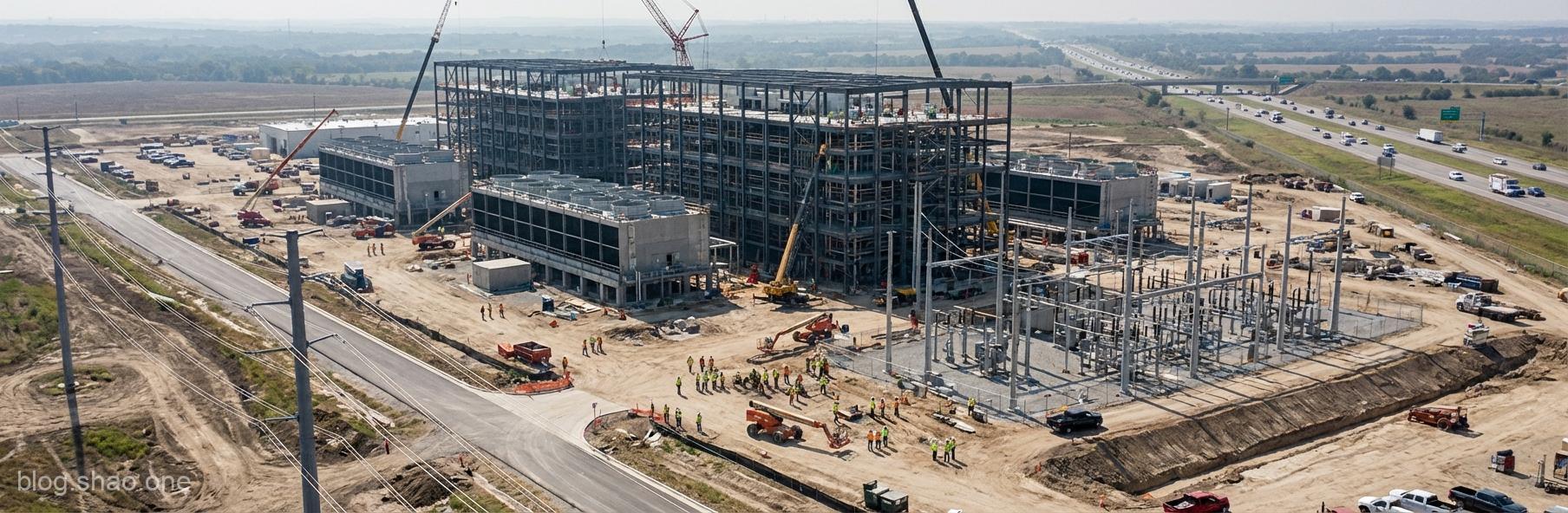
Foreword: When AI is No Longer Just a Virtual Concept in the ‘Cloud’
In recent years, Generative AI has become incredibly popular, with tools ranging from ChatGPT to various AI image and video generators leaving everyone in awe. But while everyone enjoys the convenience AI brings, have you ever wondered how much the ‘brain’ behind these computations—the data center—actually costs?
According to the latest report from NPR’s ‘Planet Money,’ the United States is pouring money into building data centers at an unprecedented rate to support AI computing demands. Just how staggering is this investment? It is shocking: after adjusting for inflation, the funds we are currently investing in data centers have already surpassed the total cost of building the original ‘U.S. Interstate Highway System’! This is not just a ‘money-burning war’ in the tech world; it’s a massive transformation shaking the nation’s infrastructure.
Staggering Data: More Expensive Than ‘Building Highways’?
In the 1950s, the United States launched one of the greatest infrastructure projects in human history: the Interstate Highway System. This project fundamentally changed America’s logistics, economy, and way of life. However, the cold hard cash currently being poured into AI by tech giants (such as Google, Microsoft, and Amazon) already makes that highway construction look ‘small by comparison’.
- Astronomical Investments: Tech giants invest hundreds of billions of dollars annually in building data centers to house tens of thousands of expensive NVIDIA GPUs.
- Dual Expenses of Hardware and Energy: This money isn’t just for buying machines; a large portion is used for ‘stable power supply’ and ‘cooling systems’.
Editor’s Note:
This means we are in a transitional period for ‘digital infrastructure.’ Previously, we relied on highways to transport physical goods; now, we rely on fiber optics and data centers to transmit data. But here’s the question: once a road is built, everyone can drive on it, so who will eventually foot the bill for this massive investment?
The Power-Hungry Monster Revealed: Why Your Electricity Bill Will ‘Feel the Impact’
The most prominent characteristic of AI data centers is that they are massive power consumers. These data centers not only operate 24/7 without interruption, but their power consumption is also growing exponentially. For existing power grid systems, this is undoubtedly a huge burden.
- Overloaded Infrastructure: To supply power to these ‘power-hungry monsters,’ utility companies must upgrade the grid and increase power generation equipment. These projects often take years and cost staggering amounts.
- The Cost is Passed to the Consumer: When utility companies are forced to expand investment to meet AI demands, these costs are often ultimately passed on to average consumers. Even if you never use ChatGPT, your electricity bill might quietly rise because a data center was built nearby.
- Crowding-out Effect: Some regions are already experiencing tight power supplies, causing challenges for other industries or residential electricity use.
Editor’s Note:
As the saying goes, ‘There’s no such thing as a free lunch.’ When we type a command on a screen, countless server racks are running frantically and emitting heat in the background. When the speed of technological development outpaces the speed of energy transition, ordinary people may have to ‘tighten their belts’.
The Tech Giants’ Gamble: Success by AI, Failure by AI?
The current tech market shows a ‘keeping up with the Joneses’ attitude. If a company doesn’t follow through with AI investments, it may be eliminated in future competition; however, with such massive capital expenditures, it would turn into a disaster if AI ultimately fails to bring a corresponding return on revenue.
- Capacity Race: Everyone is currently scrambling for GPUs, land, and power. This level of frenzy is almost like the ‘Gold Rush’ of the past.
- Concerns Over Return on Investment (ROI): Currently, most AI services are still in a loss-making promotional phase. While the technology is cool, how to transform it into a stable profit model remains a problem that CEOs are scratching their heads over.
Editor’s Note:
This gamble not only bets on the future of companies but also affects global resource allocation. If the AI bubble bursts, will these expensive data centers become ‘digital ruins’? Or will they become the infrastructure pillars of the next generation? At this point, no one can say for sure.
Conclusion: How Should We View This ‘Digital Revolution’?
This report from NPR gives us a warning: AI is not just code on a screen; it has a very real and heavy ‘physical weight.’ While we discuss the ethics and safety of AI, perhaps we should also start paying attention to its substantive impact on our environment, power grids, and even our daily expenses.
Key Observation Points:
1. Energy Transition is Imperative: To support AI, clean and cheap energy (such as nuclear and green energy) will become strategic resources of the future.
2. Intervention of Policy Regulation: How governments balance technological development with the rights to residential electricity will be a major political challenge in the future.
3. Increased Consumer Awareness: We must realize that technological progress is never free; every convenience comes with a cost.
This gamble, more expensive than the Interstate Highway System, has only just begun. As consumers, besides buckling up, we probably need to prepare ourselves mentally for future ‘invisible bills’!
If you like this kind of in-depth analysis of technology trends, remember to subscribe to our blog to keep up with the latest and most down-to-earth technology news!