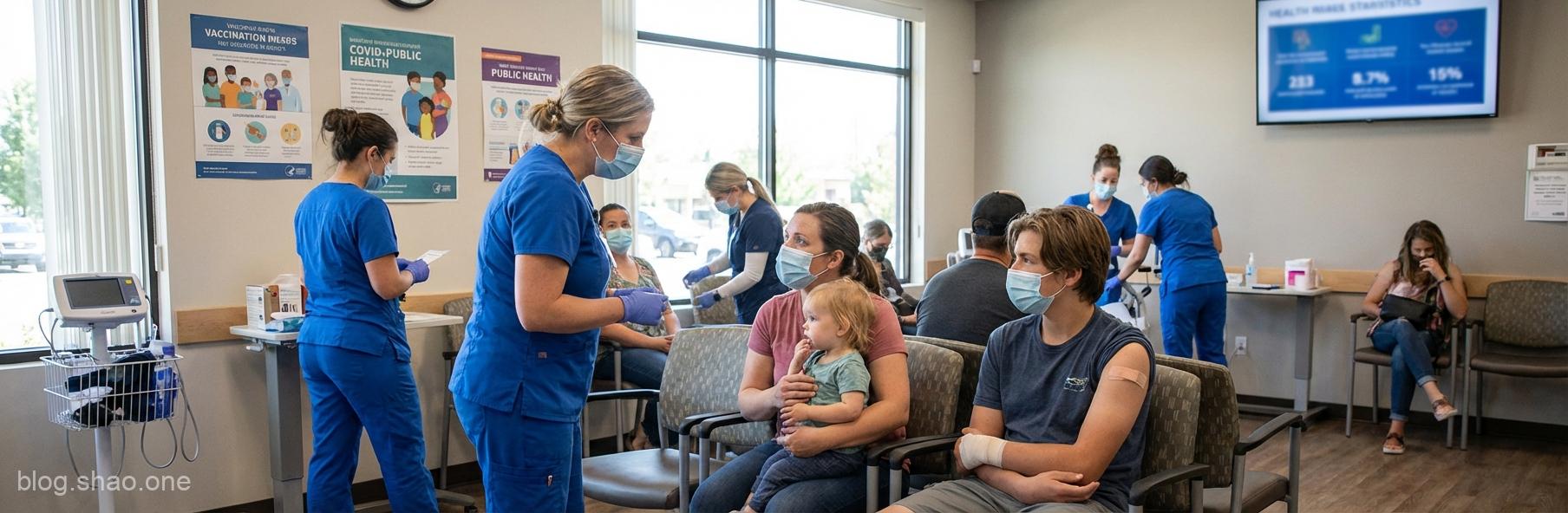
One Wave After Another: A Warning Signal from the Utah Measles Outbreak
Recently, both the tech circle and the public health sector have been focusing on ‘nerve-wracking’ news. According to the latest report from KSL.com, the measles outbreak in Utah County, USA, is continuing to expand. Within the past week alone, local health officials have received 6 new cases, and all the infected individuals are adolescents and children under 18. This outbreak has made modern people, who thought measles was a thing of the past, feel the threat of the ‘resurgence’ of infectious diseases once again.
For us tech observers, this is not just a piece of medical news, but a practical lesson in ‘data monitoring’ and ‘digital prevention systems.’ When the pandemic is ‘right on our doorstep,’ is our tech infrastructure truly ready?
Outbreak Summary: The Current Crisis Situation
- New Cases: 6 confirmed cases in the past week, all of whom are minors.
- Infection Scope: Concentrated in Utah County; local health units have entered a state of high alert.
- Public Risk: Measles is highly contagious; as long as there is an infected person in a space, non-immune individuals have a 90% chance of being infected.
Tech Perspective Commentary:
This incident reveals that Public Health Surveillance Systems often face the risk of being ‘half a step behind’ when dealing with high-transmission diseases. In the digital age, if we cannot use big data analysis to lock down tracks in real-time, the pandemic could easily become as difficult to manage as ‘wildfire on a prairie.’
Why Can Measles Still ‘Wreak Havoc’ in 2024?
Many people ask, since there are already mature vaccines, why is this still happening? This actually reflects the loopholes in modern society regarding technology dissemination and information interpretation:
- Information Asymmetry and the Spread of ‘Fake News’: Anti-vaccine rhetoric on social media causes some parents to ‘develop fear’ towards vaccinations, leading to a drop in vaccine coverage. This is a classic case of ‘rumors becoming truth’; the destructive power of online rumors can sometimes be scarier than the virus itself.
- Technical Barriers to Tracking Systems: Although we have GPS and geofencing technology, in the balance between protecting privacy and pandemic prevention, technical applications often appear to be ‘handcuffed.’
- Loosening of the Herd Immunity Screws: When vaccine coverage drops below 95%, the community’s safety net fails, giving the virus an opportunity, akin to ‘losing Jingzhou through carelessness.’
How Can Tech Intervene? Future Directions of Public Health Technology
Facing this situation, we cannot just ‘wait for doom.’ The future technological protection network should have the following key elements:
- Predictive Modeling: Use Artificial Intelligence (AI) to analyze vaccination rates in schools and communities, predicting in advance which areas are ‘powder kegs,’ and ‘giving a preventive shot’ before an outbreak occurs.
- Blockchain Vaccine Records: Ensure that vaccine records are transparent and immutable, allowing public health agencies to accurately grasp the status of herd immunity and avoid ‘black box operations’ or data loss.
- Digital Footprint Tracking and Real-time Notifications: Through smartphone apps, send push notifications to potential contacts the moment an infected person appears in a location, truly achieving ‘prevention before it happens.’
Author’s Observation: Tech Cannot Just Be an ‘Ornament’
The measles outbreak in Utah has given us a ‘wake-up call.’ In today’s world of rapidly advancing technology, although we have AI and 5G, if basic public health protection is ‘fragmented,’ even the most advanced technology can hardly save it. This is not because the technology is unreachable, but because there is still a long way to go between technical application and public trust.
We often say ‘prevention is better than cure,’ but in practical operations, we often wait until we ‘hit a wall’ to think about improvements. The Utah case reminds us that digital medical and public health systems must be more ‘down-to-earth’ and cannot just be empty talk in the lab. How to use technology to build public trust in science and provide more intuitive and real-time health monitoring will be the direction the tech community needs to work on together next.
In summary, while this outbreak is worrying, it also provides an opportunity to ‘mend the fold.’ We hope relevant units can take this opportunity to upgrade digital pandemic prevention mechanisms, and not let these ‘diseases of the old era’ continue to stir up trouble in the ‘new tech era.’