“
Foreword: Traveling abroad during the holiday to join the festivities—but is the virus tagging along too?
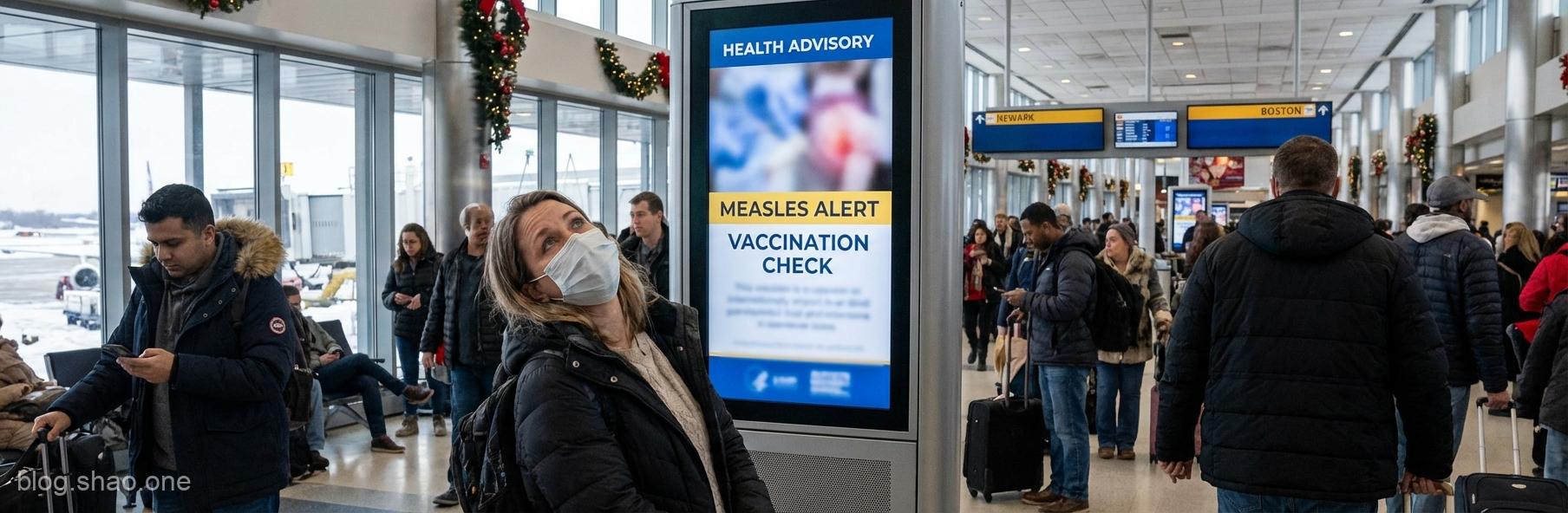
Just as everyone was eagerly packing their bags, ready to "unwind" abroad during the Christmas and New Year holidays, a startling report emerged from the United States.According to the latest report from Fox News, measles—the most contagious virus on Earth—has surfaced at two major U.S. transportation hubs: Newark Liberty International Airport in New Jersey and Logan International Airport in Boston!In this era of globalization, where human mobility outpaces even fiber-optic transmission, this news is undoubtedly a bombshell for all frequent flyers. Today, we'll explore how this unwelcome visitor's arrival will impact our travel safety and public health technology.
📍 Breaking News: Two Major Airports Overrun, Pandemic Prevention Sounds Alarm
This epidemic report is no trivial matter. Below is the core information currently available:
- Incident locations: Newark Liberty International Airport (EWR) Terminal B and Boston Logan International Airport (BOS). Both serve as major gateways for international travelers entering the United States, with passenger volumes so high they resemble bustling "open-air markets."
- Source of infection: A confirmed case traveled between these two major airports during peak travel season. Since the measles virus can remain airborne for up to two hours, this means that even if you didn't come into direct contact with the patient, simply walking the same path carries a risk of infection.
- Authorities' Response: Health officials have issued an urgent appeal for travelers who visited the aforementioned locations during that period to promptly check their vaccination records. If experiencing fever, cough, or rash, do not "tough it out"—contact a medical institution immediately.
💡 Tech Perspective: Why is this news significant for the tech community?
As technology observers, we cannot merely scratch the surface. This airport measles crisis actually reflects several major challenges facing modern public health technology and data tracking:
1. The Horror of R0: The World's Deadliest Malware
Measles has an extremely high transmission rate (R0 value) of 12 to 18, making it the fastest-spreading "computer virus" in the biological world.A single infected individual can rapidly spread the disease within an unprepared population. This raises critical questions: Are existing airport biosecurity technologies—such as infrared temperature screening—adequate for combating diseases with long incubation periods and high airborne transmission capabilities? Clearly, current technology remains somewhat inadequate.
2. The Dilemma of Travel Data Tracking
When a case emerges, how can we swiftly locate tens of thousands of passengers who were in the same terminal during the same time period? Although we have digital boarding passes and advanced ticketing systems, cross-state and cross-border personal data protection laws often stall contact tracing efforts.This has reignited the debate: Can we leverage blockchain or decentralized identity (DID) technology to deliver precise epidemic alerts without compromising privacy, striking a balance between public safety and personal privacy?
3. Information Warfare on Social Media
The resurgence of measles is largely attributable to the spread of anti-vaccine pseudoscience online. For major tech platforms like Meta, X, and YouTube, this represents an ongoing technological battle: how to leverage AI algorithms to accurately filter out misleading misinformation while promoting accurate medical information.
🛡️ A Quick Guide to Epidemic Prevention for Our Readers
This is truly a case of "misfortune never comes singly." Traveling abroad during the holiday break is already crowded enough, and now we have to worry about the virus too. If you're planning to travel abroad in the coming days or have just returned from the United States, please keep the following points in mind:
- Check Your "Firewall": Confirm whether your MMR (Measles, Mumps, Rubella) vaccine still provides protection. This is your body's most powerful antivirus software.
- Wear your mask properly for your own safety: Although airport mask requirements have eased globally, wearing one in crowded enclosed spaces is definitely a good idea.
- Self-monitoring: Pay attention to flu-like symptoms. Don't dismiss them as mere "exhaustion"—sometimes your body's warning signs shouldn't be ignored.
Conclusion: Don't let a moment's carelessness turn into a major problem.
The recent measles outbreak at a U.S. airport serves as a stark reminder: in today's highly interconnected world, public health is not the private concern of any single nation or individual—it is a matter where "a single hair can affect the entire body." While we possess cutting-edge aerospace technology that carries us across the globe, safeguarding this freedom requires equally robust epidemic prevention technology and civic awareness.We hope all readers can stay vigilant while enjoying their holidays. After all, the purpose of traveling abroad is to have fun—no one wants to bring back an unwanted "souvenir" that could infect family and friends. When you're away from home, remember to keep your guard up. Otherwise, you might end up losing both your vacation and your health—a case of "losing more than you gain"!What are your thoughts? Do you think airports should implement stricter health screening technology? Feel free to share your opinions in the comments below!“