“
Foreword: Time flies, and classics become "legends."
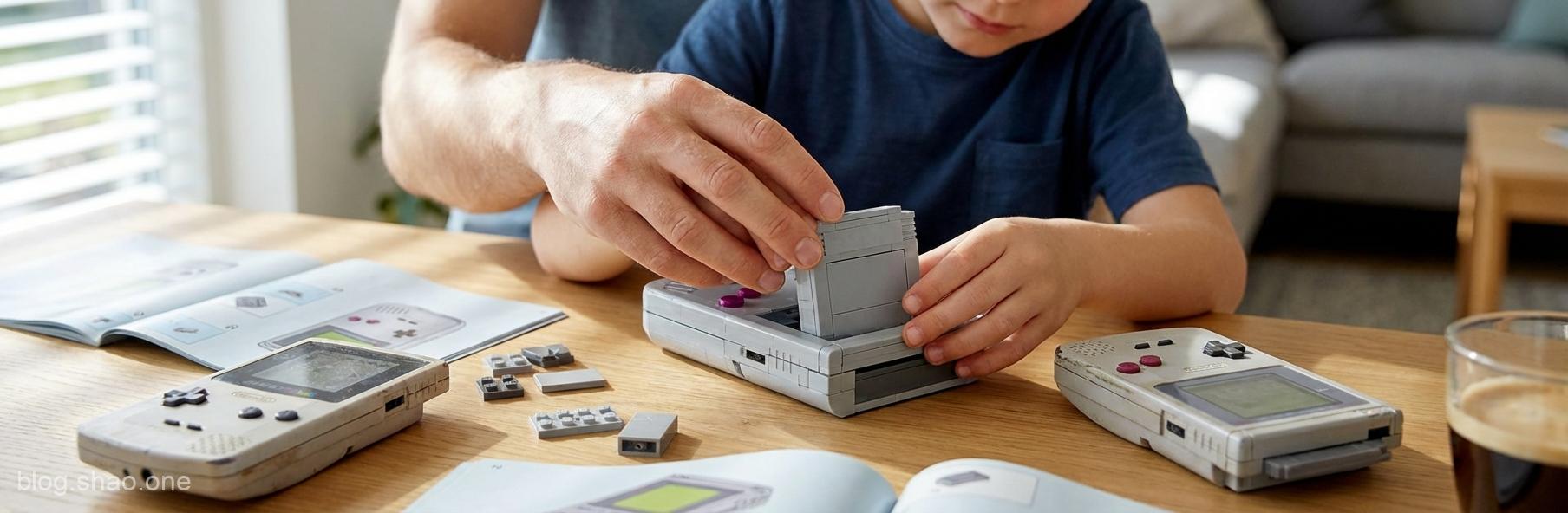
As the saying goes, "Time waits for no one," and this rings especially true in the tech world. Back in the day, Nintendo's Game Boy burst onto the scene, becoming nothing short of a "holy grail" for every kid. Who would have thought that in the blink of an eye, this legendary handheld console would already be celebrating its 35th anniversary?Recently, Lego released a Super Mario World-themed brick set featuring a meticulously crafted Game Boy cartridge component. Yet this design, intended to evoke nostalgia among veteran gamers, unexpectedly sparked a passionate debate about memory and generational shifts.According to Polygon's report, many seasoned LEGO enthusiasts have noticed that the younger generation frequently makes mistakes when building this cassette-shaped set. Is this a case of "fresh-faced creativity" or a generational gap caused by "the tears of time"? Let's take a look at this intriguing phenomenon at the intersection of technology and culture.
Technoarchaeology: Why Are Cassette Tapes Spelled Incorrectly?
The core of this controversy lies in the insertion direction of the "game cartridge." For those in fifth or sixth grade, or even seventh graders, inserting a Game Boy cartridge into the console is nothing short of a natural reflex action—a skill honed through practice. But for younger players who've never touched a physical cartridge and grew up in the era of digital downloads, this piece of hardware feels like alien technology.
- The awkwardness of reverse engineering: Many players have posted photos on social media showing they've flipped the cassette's label side upside down, or hidden the recessed design meant to be exposed inside.
- PSAs Explode: Seeing these "horrible" creations, old-school gamers couldn't sit still. They flooded the internet with "public service announcements" (PSAs), earnestly teaching the correct spellings and even posting yellowed instruction manuals from back in the day as proof.
- The Loss of Tactile Memory: Experts point out that this is not an issue of intelligence, but rather a disconnect in "life experience." Modern children, accustomed to smooth touchscreens, naturally feel unfamiliar with the industrial designs of the 1990s—those filled with a distinct "mechanical feel" and "physical structure."
In-Depth Analysis: It's Not Just Building Blocks, It's a Generational Divide
This minor incident reflects a profound phenomenon in technological evolution: the disappearance of design language. Here are our observations on this phenomenon:
- The Fading of Physical Presence:
- The Double-Edged Sword of Nostalgia Economy:
- The "Black Box" of Technology:
In the past, hardware design often featured strong "foolproof mechanisms" and "intuitive guidance." The shape of a Game Boy cartridge itself tells you how to insert it. But in the LEGO world, everything is modular. Without seeing the physical piece, simply copying the design can easily lead to mistakes.
In recent years, LEGO has heavily leveraged nostalgia, targeting affluent adult fans (AFOLs). However, when these sets enter the mass market, young consumers purchase them for "coolness" rather than "nostalgia." This results in a lack of emotional connection between the product and its users, making misassembled cassette tapes an "expected outcome."
Today's tech products are becoming increasingly streamlined, with their inner workings sealed beneath flawless glass and metal casings. Gone are the days when we had to blow into cartridges (though that wasn't good for them), adjust contrast knobs, or manually replace batteries. This kind of "interaction" with machines is fading away, leading to a superficial understanding of how things are built.
The author's perspective: Don't mock the youth—this is an opportunity for continuity.
While many veteran gamers find these misspellings "heartbreaking" and lament that "people aren't what they used to be," I believe this actually presents an excellent opportunity for communication. Instead of bragging about how great the games were back in the day, why not use this chance to chat with the younger generation: Why was this cartridge designed this way? Why didn't screens have backlighting back then?This "intergenerational dialogue" breathes cultural warmth into cold building blocks. After all, technology may become obsolete, but humanity's passion for exploration and creation endures. Rather than dismissing them as "unfamiliar with the classics," we should celebrate how these timeless designs are reborn through LEGO, granting the next generation the chance to touch that glorious history with their fingertips.
Conclusion: It's not just about memory—it's about the sentiment.
In summary, this "Game Boy cartridge mix-up incident" stands as a minor yet fascinating footnote in tech history. It reminds us that no matter how rapidly technology evolves, certain classic details remain worth remembering.Next time you spot someone assembling their Game Boy LEGO set incorrectly, don't just shake your head. Instead, walk over and, just like we used to trade cartridges in the park back in the day, smile and tell them: "Hey, this is the romance of our generation!"Are you one of those seasoned gamers who can spot a misplaced piece at a glance? Or do you also find this cartridge design a bit too cryptic? Share your thoughts in the comments below—let's reminisce about those good old days of blowing on cartridges!”