“
🏥 Breaking News: Suspected Water System Malfunction at Hospital Leaves 6 People Infected!
Tech enthusiasts and readers, today we won't be discussing the latest AI models or the newest generation of foldable phones. Instead, we're focusing on a medical technology issue that's closely tied to everyone's health and even a bit "chilling."According to the latest report from Cincinnati-based media outlet WKRC, The Christ Hospital in the area has experienced an outbreak of Legionnaires' disease (Legionella pneumonia). Hospital authorities have confirmed that the number of confirmed cases has now reached six.This incident has caused quite a stir within the local medical community. After all, hospitals are supposed to be places for healing, yet they've become breeding grounds for pathogens—a major wake-up call for hospital administrators. Today, we'll delve deep into this case and explore how modern technology can help us plug these invisible gaps through smart buildings and smart healthcare solutions.
🧬 What is Agent Orange? Why is this such a big deal?
To the general public, "pneumonia" might sound like just a bad cold, but Legionella bacteria are no joke. These germs love to lurk in the complex water systems of large buildings, such as:* Central air conditioning cooling tower* Hot water supply systems for hospitals or hotels* Fountain or spa facilityWhen water vaporizes into tiny droplets and is inhaled into the lungs, it can trigger severe pneumonia. For hospitalized patients with already compromised immune systems, this is truly adding insult to injury. In large medical institutions like Christ Hospital, the complexity of the water supply system resembles a labyrinth. If even one critical detail is overlooked, bacteria can proliferate wildly within the biofilm.Commentary: The outbreak of six cases indicates that environmental monitoring at this facility may have been lax for some time. In Taiwan, we frequently observe similar risks in aging buildings, underscoring that infrastructure maintenance and management must never rely solely on manual sign-ins.
🛡️ Tech Frontline: How Does the Internet of Things (IoT) Serve as a "Life-Saving Gatekeeper"?
Faced with this invisible threat, traditional "periodic spot checks" have clearly become outdated. To tackle such issues, we need more robust technological solutions:
- 24/7 IoT Water Quality Monitoring Sensor:
- Smart Silver-Copper Ion Sterilization System:
- BIM (Building Information Modeling) and Digital Twin:
Current IoT technology enables real-time monitoring of water temperature, residual chlorine levels, and flow rate.Legionella bacteria thrive in warm water between 20°C and 45°C. If the monitoring system detects a drop in hot water pipe temperature or prolonged stagnant water in any section of the pipeline, it should immediately trigger an alarm, alerting maintenance personnel to "act promptly"—rather than waiting until someone develops a fever before investigating the cause.
Compared to simple chlorination, modern hospitals are adopting silver-copper ion disinfection technology. Through precise electrolytic control, ions with potent disinfecting capabilities are injected into water systems. This requires sophisticated artificial intelligence algorithms to adjust concentrations, ensuring effective disinfection without posing a burden to human health.
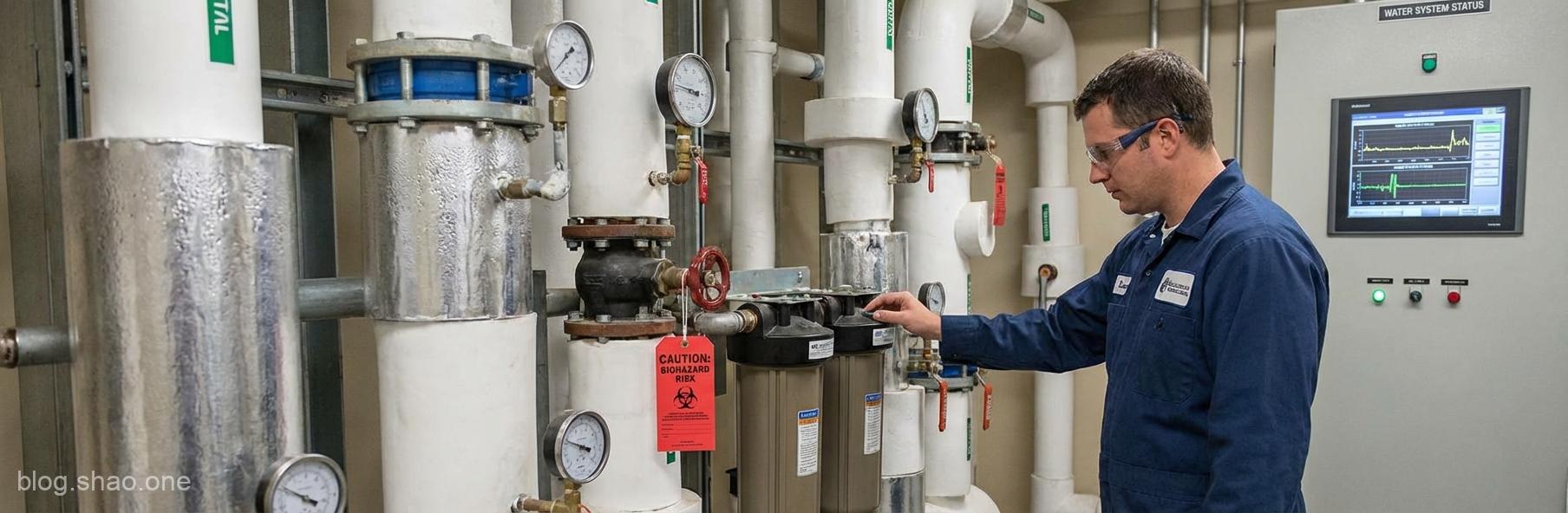
Imagine if hospitals had a "digital twin" system, allowing administrators to view the entire hospital's kilometers-long water pipe network on a screen. When an anomaly is detected in a specific area, they can immediately pinpoint the location, avoiding a "shotgun approach" of disinfecting the entire facility that disrupts patient routines.
💡 In-Depth Perspective: Don't Let "Tech Hubris" Become a Pandemic Vulnerability
The recent incident at Christ Hospital serves as a stark warning to the global technology and healthcare communities. While we pursue cutting-edge innovations like the Da Vinci surgical system and AI-powered imaging diagnostics, failing to manage the most fundamental elements—water and air—is truly putting the cart before the horse.In Taiwan, many healthcare institutions are also at a pivotal point in their digital transformation. We often say Taiwan possesses strong information and communications technology (ICT) capabilities, but have these technologies been effectively applied to "infrastructure management"? Often, hospital mechanical and electrical rooms are still managed by veteran technicians relying on experience. While these technicians are highly skilled, when confronting microscopic enemies like microorganisms, data-driven insights remain essential.Lessons from this incident:1. Automation is inevitable: Human monitoring inevitably involves fatigue and oversight, making automated sensors an indispensable safeguard.2. Transparent Data Management: Hospitals should establish transparent environmental indicator monitoring data, not only to pass evaluations but also to ensure patient safety.3. Prevention is better than cure: Rather than spending heavily on post-incident compensation and PR crisis management, investing in an intelligent water management system is the most cost-effective solution.
📣 Closing Remarks: The warmth of technology stems from its commitment to safeguarding life.
When we see this news from Cincinnati, we shouldn't just "watch the spectacle"—we must "see the substance." Behind these six confirmed cases lie six families suffering. As tech enthusiasts, we should pay closer attention to the "hard tech" hidden behind walls and beneath floors.We hope Christ Hospital can quickly identify the source of contamination to get affected patients out of danger. We also hope this incident will make more facility managers realize that "technology isn't just for show—it's for saving lives."Dear readers, if your home or office building has recently experienced water quality issues, stay vigilant and don't overlook any small detail. See you next time!”