“
Foreword: What you perceive as health may just be the "Emperor's New Clothes" of the business world.
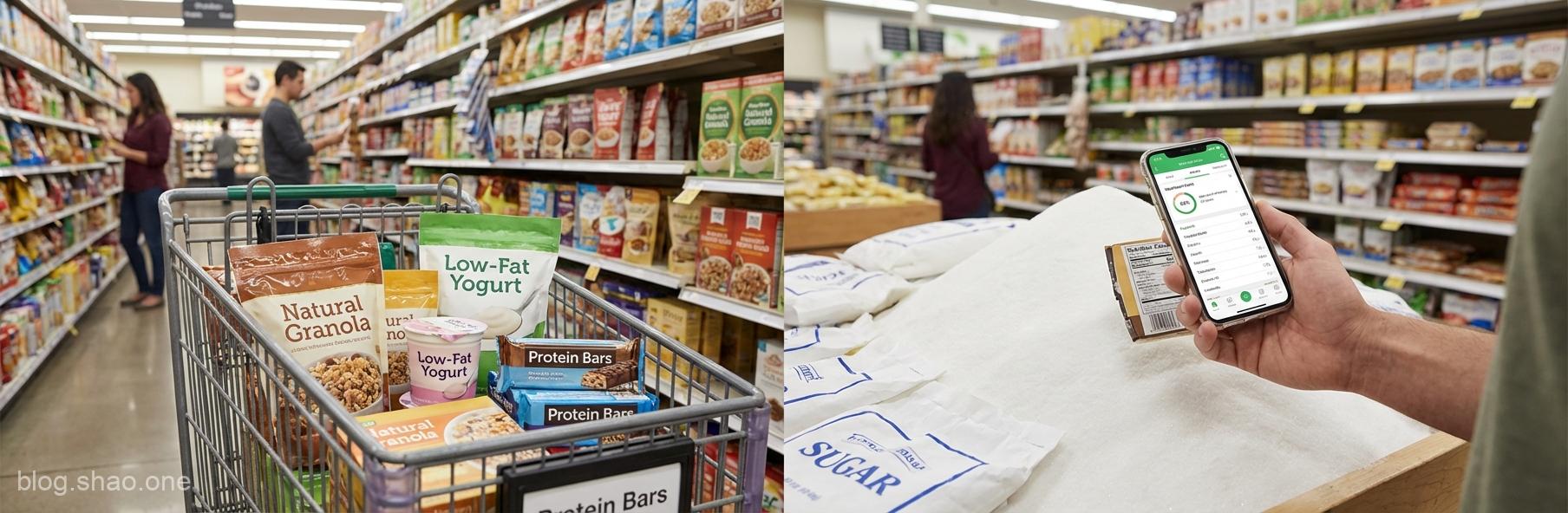
In this era of nationwide wellness pursuit, stepping into a supermarket often leaves us "brainwashed" by the dazzling array of labels. Seeing "All Natural," "High Protein," or "Low Fat" makes us believe that jar of yogurt or box of cereal is synonymous with health.But according to a recent Associated Press report, these seemingly life-saving "health slogans" may conceal a shocking sugar trap. Today, we'll dissect these marketing terms to uncover who's really "bait-and-switching."
Data Shock: How Did We "Eat" 57 Pounds of Sugar in a Year?
The American Heart Association (AHA) has revealed a jaw-dropping statistic: the average person today consumes a staggering 57 pounds of added sugar annually. This isn't some sensational urban myth—it's a stark reality. That's equivalent to swallowing several bags of jumbo-sized sugar each year.The scariest part is that these sugars don't just come from those "knowingly indulgent" donuts or large cups of soda. More often, they lurk in foods packaged as "health remedies." It's like playing a game of hide-and-seek: sugars change their names and hide behind healthy labels, making you willingly open your wallet.
Wolves in Sheep's Clothing: Hidden Sugars' "High-Risk Zones"
Reports indicate that consumers often opt for seemingly wholesome health foods to avoid guilt-inducing frosted pastries. Here are several areas where people most commonly fall into traps:
- All-Natural Oatmeal (Granola): Many people enjoy a bowl of oatmeal with milk for breakfast, finding it both healthy and satisfying. However, many store-bought oatmeal products add large amounts of syrup or honey for taste, meaning a single bowl can easily cause your sugar intake to "exceed the limit."
- Low-fat Yogurt: This is probably the biggest "smokescreen." When fat is removed from food, it often becomes as unpalatable as chewing wax. To enhance flavor, manufacturers typically add copious amounts of added sugar as a "genius stroke." You think you're slimming down, but you're actually loading up on sugar.
- Energy bars and protein bars: These products marketed to athletes boast high energy content, but at their core, they're often just "candy bars with fancy packaging."
Editor's Note: The "Intelligence-Diminishing Tactics" Behind Marketing Jargon
As observers of technology and lifestyle trends, we can see this as a classic case of "information asymmetry."Businesses exploit the public's blind worship of specific keywords (like "protein" or "natural") to repeatedly "harvest the chives." This phenomenon is known in psychology as the "Health Halo Effect." When a product carries a healthy attribute, consumers automatically project it with all-around benefits, overlooking the densely packed "added sugars" listed on the nutrition facts panel.This phenomenon is also commonplace in the tech world, much like certain electronic products touting "AI-powered" features that are merely enhanced with simple automation scripts. We must learn to see through the tricks and no longer be fooled by superficial rhetoric.
Tech Self-Defense: How to Use Tools to Spot Sugar Traps?
Since human eyes are easily deceived, let technology help us keep watch. Here are several recommended "digital defense measures":
- Make the most of nutrition tracking apps: Apps like MyFitnessPal or Taiwan's local health management apps instantly reveal a product's sugar content by scanning its barcode, exposing hidden sugars.
- Learn to read ingredient lists: This is the most fundamental "hard skill." Ingredients are listed in descending order of quantity. If you spot "sugar, syrup, concentrated fruit juice" among the top three ingredients in a product marketed as healthy, it's essentially a red flag. Best to leave it on the shelf.
- Calculating sugar content: Remember this rule of thumb: 4 grams of sugar equals one teaspoon. If a yogurt contains 16 grams of added sugar, it's like shoveling four spoonfuls of granulated sugar straight into your mouth. That image is too vivid—I can't bear to look.
Conclusion: One must always be wary of others, and equally wary of sugar.
At the end of the day, there are no shortcuts to maintaining good health, nor can it be achieved by buying a few products emblazoned with "health slogans." This report delivers a wake-up call: in the world of the food industry, nothing is inherently healthy. Rather than believing the empty promises of marketers, it's better to return to whole foods or spend three extra seconds reading the label before making a purchase.Next time you see a product touting "all-natural," remember to raise a mental eyebrow. Don't let your health become a casualty of corporate marketing tactics. Keep in mind that reliable labels are few and far between these days—only your own knowledge and judgment can truly protect you!”