“
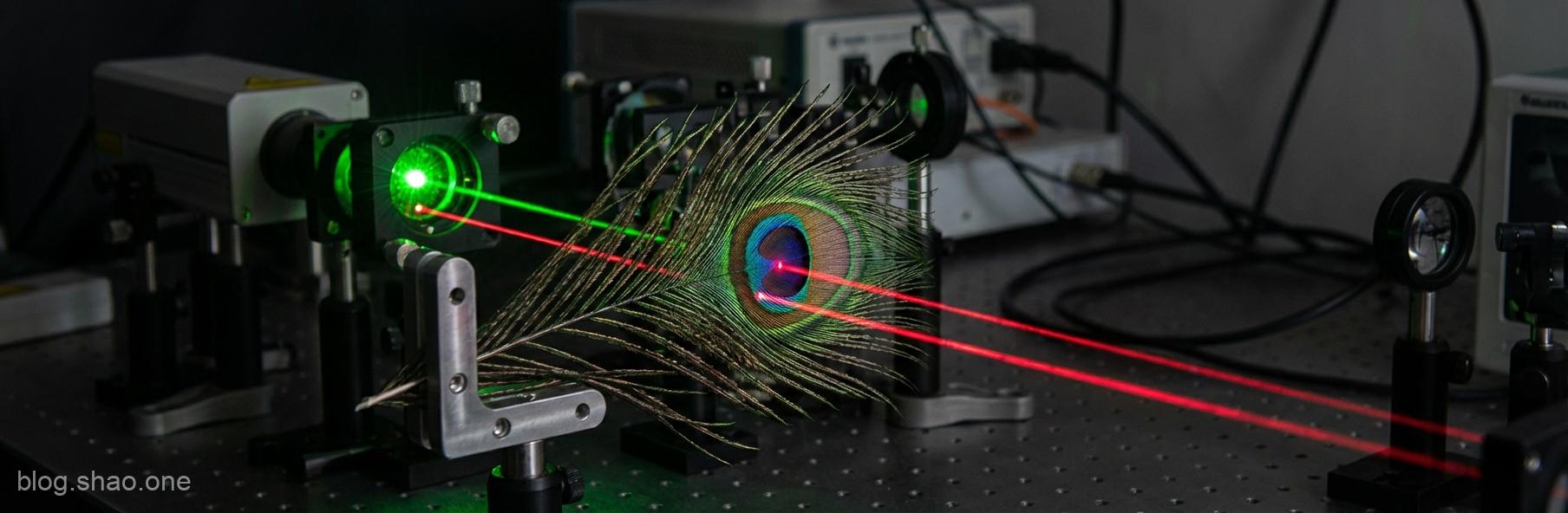
Unbelievable! Peacock feathers aren't just beautiful—they can actually emit lasers?
Good morning, tech enthusiasts and nature lovers! Today's topic will truly make you think, "The world is full of wonders."When you think of peacocks, the image that usually pops into your head is them strutting their stuff in zoos, right? But to scientists, those vibrant feathers aren't just decorative "pick-up tools"—they've now become cutting-edge "laser emitters"!According to the latest report from Earth.com, researchers have successfully enabled peacock feathers to emit laser light—a first in the animal kingdom that has left the scientific community utterly astonished. This discovery not only fills us with awe at nature's marvels but also opens a new door for the future of biophotonics.So what "magic trick" did scientists pull off? And how might this impact our future technological lives? Let's dive in.
"Masterful Tricks" Revealed: How to Turn Feathers into Laser Guns?
You might think peacock feathers are fine for waving around, but using them to fire lasers? That sounds like pure fantasy! Actually, this doesn't mean peacocks naturally shoot beams like the Death Star in Star Wars (though that would be pretty cool). Instead, researchers are harnessing the feathers' unique "microscopic structure."The specific operational procedure is as follows:
- Dye-enhanced: Researchers first immersed peacock feathers in the common dye Rhodamine 6G. This dye emits light when excited.
- Green pulse excitation: Next, scientists illuminated these feathers with green laser pulses.
- Structural Amplification: At this very moment, a miracle occurs! The intricate "nanoscale structures" within the peacock feather act as an optical cavity, repeatedly reflecting and amplifying light within its interior. Finally, it emits two extremely narrow beams of light.
The emergence of this "biological laser" proves we needn't rely entirely on artificial silicon wafers or crystals—nature itself is a perfect hardware supplier. This ingenious "leveraging force" black technology is truly awe-inspiring.
Why Peacocks? Unraveling Nature's "Precision Optical Instrument"
Why did scientists choose peacocks? Was it for their looks? You'd be mistaken. The reason peacock feathers can emit laser light lies in their "structural color."Typical colors rely on chemical pigments absorbing light, but peacock feathers derive their hues from physical structures. Their plumage contains countless meticulously arranged microscopic protein crystals, functioning like natural optical sensors. When dyes are introduced and energy applied, these structures perfectly capture and direct light beams.Scientists believe the precision of this structure remains beyond replication even by today's most advanced laboratories. This exemplifies nature's ingenuity, demonstrating that biomimicry holds immense potential for technological innovation.
Not Just Fun: How This Discovery Will Transform Future Healthcare?
If this were merely to make peacock feathers shinier, it would be nothing more than a cool experiment. But the significance behind this research extends far beyond that. From a tech journalism perspective, the most compelling aspect of this technology lies in its potential applications for biosensing and medical imaging:
- Ultra-precise biosensing: The wavelength of the laser beam is highly sensitive. If the feather structure undergoes minute changes—such as upon contact with specific viruses or chemicals—the laser's frequency will shift. This suggests that in the future, we may utilize similar biomaterials to develop ultra-sensitive disease detection instruments.
- More eco-friendly technological materials: Compared to traditional lasers that require heavy metals or expensive semiconductors, peacock feathers—a "biological material"—offer biodegradability and low toxicity, making them more environmentally friendly and aligning with today's hottest green tech trend.
- Non-destructive testing technology: This technique, which amplifies natural structures, enables scientists to perform deep cellular scanning and observation without damaging biological samples.
Conclusion: Nature is the ultimate "hardware engineer."
After reading this story, don't you agree that peacock feathers are no longer mere ornaments, but brimming with a high-tech vibe? This research reminds us: "Never underestimate any living thing." Even a single feather, when placed in the right context and used in the right way, can transform into cutting-edge technology that changes the world.The most noteworthy aspect of this discovery, in my view, lies in its interdisciplinary collaboration. The convergence of optical engineering and evolutionary biology has sparked unprecedented innovation. While laser peacocks may not yet grace our streets, this nature-inspired approach will undoubtedly give future medical and sensing technologies a significant boost.If you enjoyed today's tech trivia, don't forget to keep following our column. See you next time, bye!”