“
Foreword: When "seeing" is no longer bound by the laws of physics
Since ancient times, humanity's desire to explore the unknown has never ceased. From observing distant galaxies billions of light-years away to examining the minute, dust-like operations of cells within the human body, imaging technology has consistently played the role of a "pioneer." However, on the path of technological advancement, scientists have long faced a seemingly "insurmountable" physical barrier—the diffraction limit.Recently, according to a report by Phys.org, a revolutionary image sensor technology has finally emerged. This breakthrough not only challenges our understanding of optical imaging but also has the potential to completely rewrite the rules of the game in semiconductors, biomedicine, and space exploration. Today, we'll discuss this bombshell that has left the global tech community utterly stunned.
Core Breakthrough: How Did This Sensor Turn Defeat into Victory?
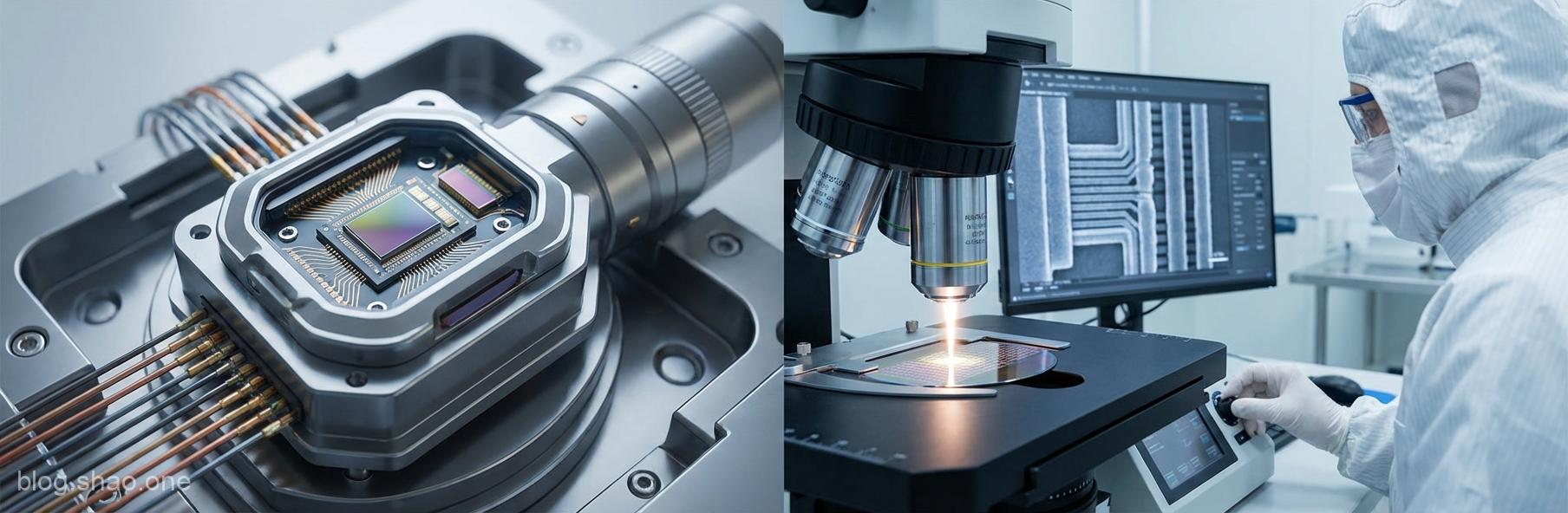
For a long time, optical imaging has been constrained by the wave nature of light, resulting in an insurmountable barrier to resolution. Traditional sensors often prove inadequate when encountering extremely minute structures, producing blurred and indistinct images. However, this newly developed imaging sensor successfully circumvents this physical barrier through innovative materials and capture technology.Here are the key highlights of this technology:* Super-resolution imaging technology: Novel sensors can capture "near-field signals" undetectable by conventional lenses, enabling resolution to leap directly to the nanoscale level.* High sensitivity and low noise: Maintains image clarity even under extremely faint light conditions, which is crucial for deep-sky observations.* Deep integration of hardware and algorithms: Beyond the evolution of the sensors themselves, powerful backend processing reconstructs chaotic light signals into high-quality images, achieving a transformative effect.
Application Scenarios: "All-Round" Evolution from Micro to Macro
The advent of this technology is by no means merely an academic breakthrough; its impact in practical applications is truly pivotal:
- Semiconductor Manufacturing and Testing:
- Precision Medicine and Life Sciences:
- Space Exploration and Satellite Telemetry:
As Moore's Law slows down, chip line widths have entered the nanometer range. Traditional inspection methods often fall short, but this new sensor helps engineers precisely locate defects on wafers, boosting yield rates. For Taiwan's semiconductor industry, this is undoubtedly a major boon.
When observing living cells, it was previously common to add fluorescent dyes to visualize fine structures, but this often interfered with cellular activity. The new sensor enables direct observation of minute cellular structures with crystal-clear clarity, allowing cancer research and drug development to target treatments precisely.
For observing distant galaxies, every single photon is precious. The high sensitivity of the new sensor allows astronomers to be more "in their element" when observing dark matter or distant planets.
In-Depth Perspective: This Is Not Just a Small Step Forward, but a Milestone Leap
The author believes that the emergence of this technology represents a significant turning point in imaging science. In the past, we were accustomed to "refining" existing equipment—such as enlarging lenses or improving image sensors—but this breakthrough fundamentally redefines how light is captured.
- Breaking Physical Barriers: This technology demonstrates that while physical limitations exist, human creativity knows no bounds. Through the rearrangement of structured light and digital reconstruction, we can finally glimpse worlds once deemed invisible.
- Accelerating the integration of automation and AI: High-quality raw image data is crucial for AI decision-making. The evolution of sensors will make technologies like autonomous driving and industrial robots more "keen-eyed," significantly reducing misjudgment rates.
However, for this technology to transition from the laboratory to large-scale commercialization, it must still overcome challenges in cost control and mass production processes. Regardless, it has already cast a giant stone into the calm waters of imaging technology, and the ripples it creates will spread across all industries.
Conclusion: The future vision is just around the corner.
In summary, this novel sensor that pushes the boundaries of optics represents not only a triumph for scientists but also another evolutionary leap in extending human vision. It demonstrates that even when confronted with seemingly "ironclad" physical limitations, innovative thinking and technology enable us to "reach new heights."How clear will the world become in the future? How will this technology transform our daily lives? Let's wait and see.
Keywords: #ImageSensor #OpticalLimits #PhysOrg #TechBreakthrough #Semiconductor #MedicalImaging #AIVision #TaiwanTechWeekly”