“
Foreword: Public Health Policy Drops a "Bomb," Tech and Biomedical Sectors Brace for Impact
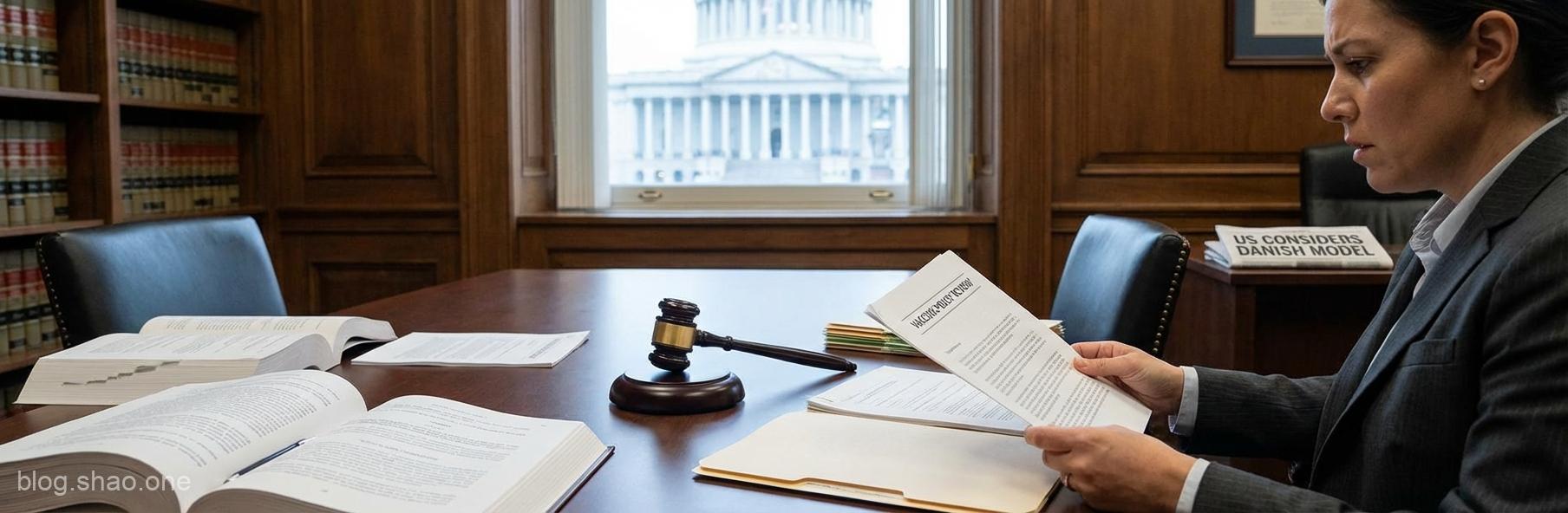
Recently, a piece of news has been making waves in U.S. public health and biotech regulatory circles, sending shockwaves through the otherwise calm waters.According to Axios, if the U.S. government considers adjusting the current childhood vaccination schedule to emulate the "Danish model," this seemingly simple administrative change could conceal legal risks substantial enough to "blow the minds" of pharmaceutical giants. This is not merely a medical issue but a storm capable of triggering a "butterfly effect" in the biotech industry, potentially involving billions of dollars in legal liabilities.
Core Controversy: That "get-out-of-jail-free card" that has provided protection for decades
To understand why this issue has pharmaceutical companies "on edge," we must first discuss a U.S. "legal shield"—the National Childhood Vaccine Injury Act of 1986.Over the past few decades, this legislation has served as a shield for major pharmaceutical companies.To encourage research and development and ensure uninterrupted vaccine supply, the U.S. government mandates that any adverse reaction disputes involving childhood vaccines listed on the official schedule must first enter a specialized compensation program, rather than directly suing pharmaceutical companies in regular courts. This allows giants like Pfizer and Merck to focus solely on developing new technologies without fear of being sued into bankruptcy.However, the situation has now undergone a major reversal:
- Legal Loopholes in Schedule Changes: Should the U.S. decide to adopt a more streamlined or different vaccination schedule akin to Denmark's, the legal exemptions originally provided by the bill could become "useless."
- The floodgates for lawsuits have opened: Legal experts warn that if vaccines are no longer covered under the statute's specific protections, lawyers may swarm like sharks smelling blood, launching class-action lawsuits against pharmaceutical companies.
- The Danish Model's Limitations: Denmark's vaccine policy has long been known for its cautious approach. While this may alleviate some concerns about overtreatment, applying it to the United States—a country with a fundamentally different legal environment—risks being ill-suited to the local context.
Industry Impact: The "Chilling Effect" on Pharmaceutical Giants?
This development is by no means a flash in the pan for the technology and biomedical industries. Should cracks appear in the legal protective umbrella, it will trigger a chain reaction:
- Diminishing R&D Momentum: If every new vaccine faces the prospect of endless litigation, pharmaceutical companies will inevitably become hesitant to invest in research and development. For technology-driven biomedical innovation, this is undoubtedly a major setback.
- Increased supply chain risks: To mitigate risks, pharmaceutical companies may reduce production or even withdraw from specific markets, potentially causing vaccine supply to descend into chaos.
- Soaring operating costs: To cope with legal proceedings, pharmaceutical companies must allocate massive budgets, and this expense will likely be passed on to consumers, causing everyone to "take a big hit to their wallets."
In-Depth Commentary: The Tug-of-War Between Technological Progress and Regulatory Risks
From a tech observer's perspective, this controversy reflects the disconnect between public health policy and commercial realities. While we certainly hope vaccine policies can evolve with the times—even achieving Denmark's level of precision—recklessly altering them before they're fully developed would lead to the collapse of legal frameworks. That would truly be shooting ourselves in the foot.Vaccine development represents the cutting edge of modern biotechnology, involving extensive AI-driven drug simulations and genetic engineering. Yet no matter how advanced the technology, if the legal environment makes companies feel that "the more you do, the more you risk," the spark of innovation will quickly be extinguished.This offers a crucial lesson: when advancing any policy reforms that impact industrial structures, we must never adopt a piecemeal approach of treating symptoms rather than root causes. Instead, we must holistically consider the interconnectedness of the legal safety net.
Conclusion: Is it a "turning point" or a "crisis"?
The current "vaccine drama" has only just begun, and whether the U.S. government will ultimately adopt the Danish model remains to be seen. What is certain, however, is that pharmaceutical giants are now treading carefully, closely monitoring every regulatory move.For the general public, we expect a more precise and safer healthcare environment; but for the industry, a stable and predictable legal environment is the key to ensuring technology continues to benefit humanity. This tug-of-war between public health and the law warrants our close attention as developments unfold.
💡 Keyword Alert:* The Danish Model: A vaccination program known for its cautious and streamlined approach.* 1986 Act: The legal protection umbrella for U.S. vaccine manufacturers.* Biomedical Butterfly Effect: How Regulatory Tweaks Could Trigger Industry-Wide Disruption.”