“
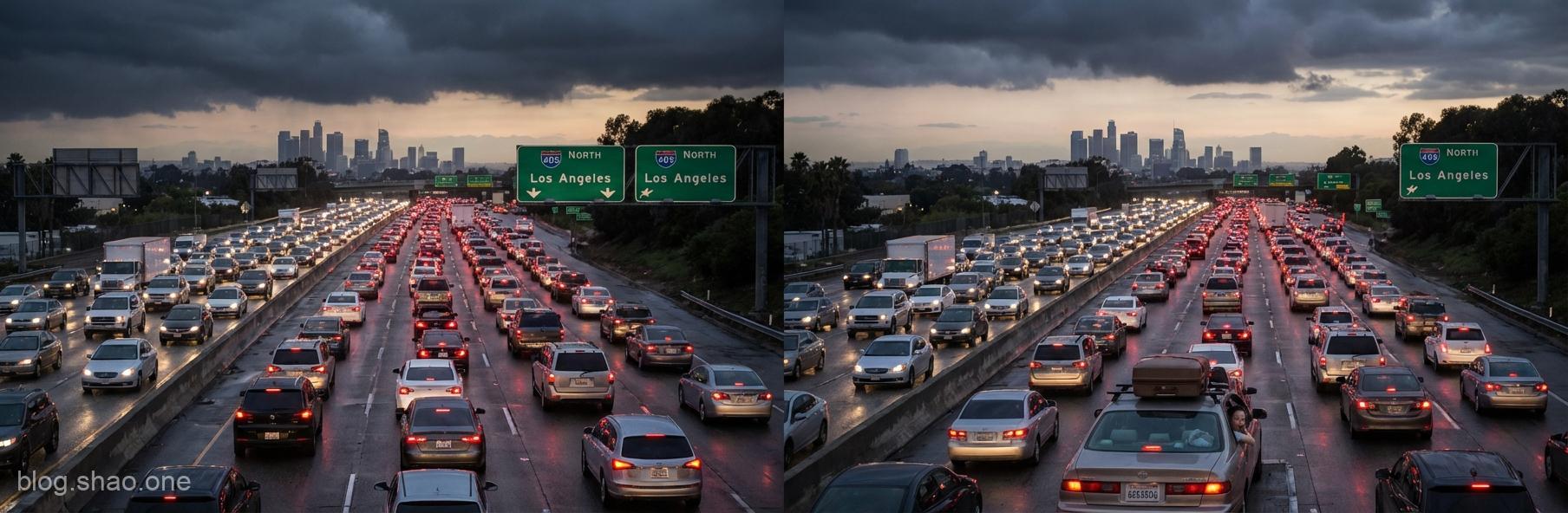
The holiday travel rush is upon us: Southern California traffic enters a "fever pitch" phase.
As the festive season intensifies, the United States is experiencing a massive travel surge. According to the latest data, over 120 million Americans are expected to hit the road this week. However, for Southern California residents, this joy quickly turned into a traffic nightmare that left them feeling helpless.As reported by KABC-TV, Los Angeles' iconic 405 Freeway has recently descended into a massive parking lot, with gridlock reaching staggering levels.This massive traffic chaos not only left commuters complaining bitterly but also directly disrupted many families' vacation plans.One family, excitedly preparing to fly to Hawaii for vacation, unexpectedly got stuck on the 405 freeway for hours. They watched helplessly as their flight took off, left only to lament by the roadside. This tragic scenario of "plans failing to keep pace with reality" perfectly encapsulates the current state of travel across the United States.
Misfortune never comes singly: A winter storm throws a wrench in the works.
If heavy traffic was "expected," then the approaching winter storm is undoubtedly "adding insult to injury." Weather forecasts indicate a powerful storm is heading toward Southern California, posing a significant challenge for travelers already suffering from gridlock.
- Traffic Bottleneck: Los Angeles's Highway 405 is currently at its congestion limit, where even minor incidents can cause complete gridlock.
- Climate Variables: Low temperatures and heavy rainfall will cause slippery road surfaces and reduced visibility, further slowing traffic speeds.
- Chain reaction: Delays in ground transportation directly cause long queues at airport check-in counters, with the risk of missing flights growing exponentially.
【Expert Commentary】: This isn't merely a matter of luck, but a classic case of infrastructure overload. When 120 million people simultaneously flood roads and airports, the existing transportation network is already stretched beyond its limits. This also serves as a stark reminder that during such "critical moments," relying solely on experience to navigate traffic is no longer viable—we must instead depend on more precise technological assistance.
Tech Power vs. Physical Strength: How to Stand Out in the Migration Wave?
As tech enthusiasts, we should ask ourselves: In situations where traffic jams can easily last for hours, what can technology do for us? When facing this tough battle, proactive planning is the key.
- Advanced Applications of Real-Time Navigation Systems:
- Weather and Flight Tracking App:
- Smart Vehicle and Power Management:
Don't rely solely on Google Maps' estimated travel times. In extreme situations, it's advisable to also open Waze or Apple Maps for cross-referencing. These apps use big data analysis to detect sudden incidents earlier than radio broadcasts, helping you "avoid trouble" by bypassing the worst-hit areas.
When facing an approaching storm, professional apps like FlightAware or Windy can provide more detailed cloud maps and delay alerts. If you find traffic around the airport has become gridlocked, it's wiser to use these apps to change your flight or request a refund or rebooking early than to wait idly in the airport terminal.
For electric vehicle owners, power consumption during traffic jams poses a significant challenge. Before setting off, ensure your battery is fully charged and use navigation to plan charging station locations along your route. This prevents getting stranded in the middle of the road, leaving you stranded with no one to turn to for help.
【Tech Commentary】: While technology can't make traffic jams vanish instantly, it can provide valuable "information advantages." In the case of the traveler who missed their Hawaii flight, had they received a big data alert two hours earlier to avoid the 405 freeway, the outcome might have been entirely different. In this digital age, "information" is your most effective shield.
Conclusion: Prevention is better than cure—only then can we enjoy the festive season.
In summary, the recent traffic chaos in Southern California serves as a final exam for modern urban logistics and individual adaptability. Faced with airports teeming with people and highways gridlocked, we must learn to pivot rather than merely complain.Sincere Advice for Readers:1. Leave early: While this may sound like a cliché, with 120 million people hitting the roads, leaving 3 to 4 hours ahead of schedule is absolutely not too early.2. Contingency Plan: Always have a Plan B ready. If this route is blocked, do you have an alternate route? If the flight is canceled, do you have a backup accommodation plan?3. Stay calm: Getting worked up during traffic jams won't help. Keep your cool and use tech tools to adjust your pace as needed.May every traveler have a safe journey, and may this festive migration not turn into a disaster. Technology is our eyes, but only careful planning can ensure we arrive safely to reunite with our families and enjoy precious moments together!”