“
Foreword: The devil is in the details—packaging design demands meticulous attention.
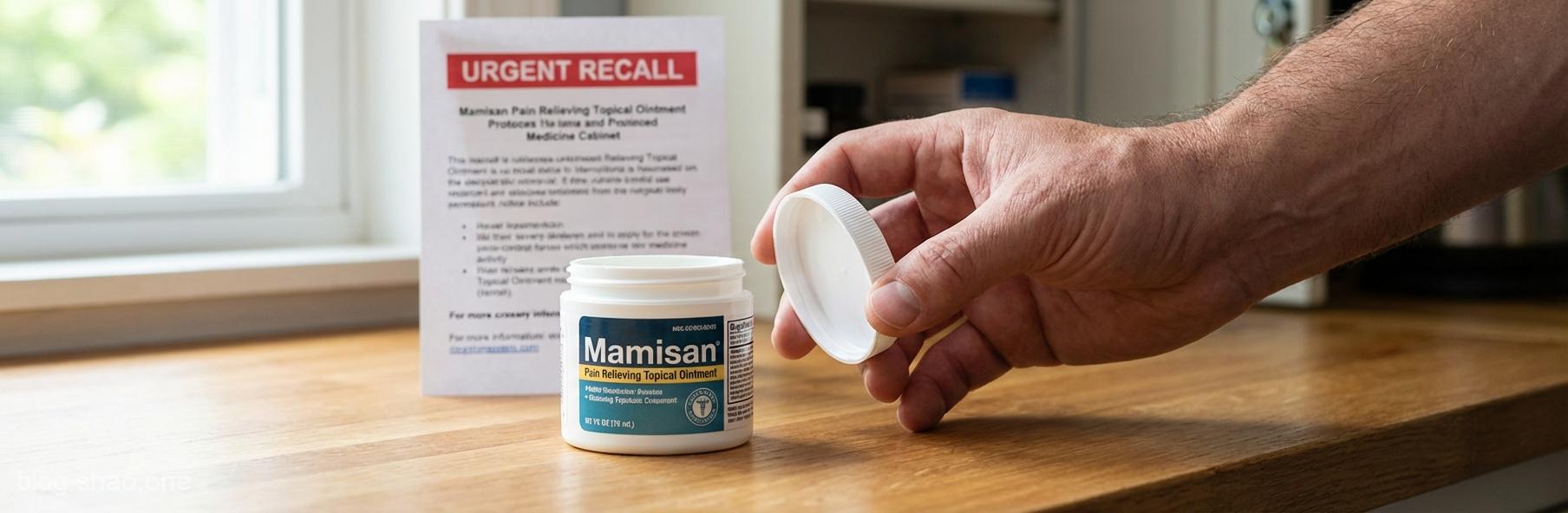
Good morning, tech enthusiasts and readers who care about quality of life! Today we're not discussing cutting-edge AI algorithms or the latest foldable smartphones from major manufacturers. Instead, we're tackling a seemingly "low-tech" yet life-critical issue: safety mechanisms in industrial design.As the saying goes, "Details determine success or failure," and this holds especially true in the realm of product design. Recently, an incident in the United States sent shockwaves through the parenting community: the renowned pain relief ointment Mamisan faced a major setback due to its packaging safety design, forcing a complete recall and withdrawal from shelves. For us tech professionals dedicated to "Human-Centric Design," this case serves as an absolute cautionary tale.
Headline News: Mamisan Pain Relief Ointment's "Safety Cap" Fails Miserably
According to a report by AL.com, a topical pain-relieving ointment named Mamisan Pain Relieving Topical Ointment is currently facing an emergency recall order issued by federal officials. What's the problem? It's not that the ingredients have expired, but rather that the "child-resistant cap" we usually struggle to open has malfunctioned.The key points of this incident are as follows:
- Safety standard non-compliance: The container cap of this product fails to meet federal child-resistant packaging requirements.
- Potential Life-Threatening Risk: Federal officials warn that if this ointment is accidentally ingested by children, it could pose a life-threatening danger.
- Emergency Response: Authorities have instructed retailers to immediately remove the product from shelves and are urging consumers who have purchased it to place it out of children's reach or return it directly.
Why is this such a big deal? Examining safety through technology and design
In Taiwan, we often say that doing things requires "Tíng-tsin" (meaning meticulous attention to detail), but clearly Mamisan's screws came loose during the product packaging process. You might think, what's the big deal about a cap? But in the field of pharmaceutical technology, "Child-Resistant Packaging (CR Packaging)" is the culmination of a precision physical structural design.
- The Structural Mechanics Defense Line: Safety caps typically require either "pressing down and twisting" or "aligning at a specific angle" to open. This mechanism serves as a "hardware firewall" designed to simulate the characteristics of young children, whose hand muscles are not yet fully developed and whose logical reasoning abilities are limited.
- Chemical Hazard Barrier: Many topical pain relief patches contain methyl salicylate or other chemical ingredients. While effective when applied to the skin, these substances become deadly poison if ingested by children who mistake them for candy.
This is not merely a packaging issue, but a complete breakdown of the product quality control (QC) process. When a brand fails on such a fundamental "safety protocol," consumer trust in its technological R&D inevitably plummets to rock bottom.
Commentary: Technology should not only pursue "usability," but also prioritize "error prevention."
As a tech journalist, I've observed that modern tech products often prioritize the fluidity of UX (user experience) while neglecting the critical importance of fail-safe mechanisms. Mamisan's incident serves as a stark warning to all hardware entrepreneurs: if your product carries inherent risks, your "fail-safe mechanisms" must be engineered with greater precision than your "core functionality."In Taiwan's workplace culture, we often emphasize "prevention is better than cure." The packaging failure of this product reflects a disregard for detail in supply chain management. Perhaps to cut costs, the production side switched materials or altered mold precision, resulting in irreparable damage to commercial reputation and threats to public safety. This truly exemplifies "sacrificing the big picture for minor gains"—a classic case of "saving pennies but losing dollars."
How can consumers protect themselves? "Watch out!"
If you have this Mamisan ointment at home, or if you regularly purchase pain relief medications from overseas, please take the following actions immediately. Do not assume you won't be unlucky enough to be affected:
- Immediately check storage locations: Medications must be stored in a "high, locked" cabinet to prevent children from tampering with caps.
- Testing the cap's functionality: If the cap opens with just a slight twist and requires no effort whatsoever, the product's safety is questionable.
- Stay informed about product recalls: Regularly monitor announcements from agencies like the CPSC (U.S. Consumer Product Safety Commission) or Taiwan's Food and Drug Administration. Don't let outdated tech products become time bombs in your home.
Conclusion
In an era where even toilet seats come equipped with AI, the Mamisan case reminds us that returning to the most fundamental "physical security" is the cornerstone of technological progress. We hope all manufacturers will take heed and stop letting such "elementary mistakes" threaten our precious ones. Safety first isn't just a slogan to be casually thrown around—it's a technical standard that must be rigorously enforced!”