“In the world of technology, speed is everything. While most of us are still digesting the new features brought by Linux 6.19-rc1, kernel developers have already "moved ahead" and set their sights on the distant future—possibly Linux 6.20, or even the milestone Linux 7.0.As the saying goes, "Before the troops move, provisions must be in place." This perfectly captures the development model of the Linux kernel. Just as the merge window for version 6.19 closed, the first provisions for the next-generation kernel—namely, the brand-new graphics driver code—have already been dispatched to the barracks known as "DRM-Next."This not only demonstrates the relentless development pace of the open-source community but also offers a glimpse into the blueprint for the future Linux desktop experience.
What is DRM-Next? The future of graphics technology is taking root here.
For readers unfamiliar with core development, these terms may seem a bit "like looking at flowers through a mist." Simply put:
- DRM (Direct Rendering Manager): This is the critical subsystem within the Linux kernel responsible for communicating with your graphics card (GPU). Whether you're playing games, watching videos, or moving windows around, DRM is the unsung hero behind the scenes.
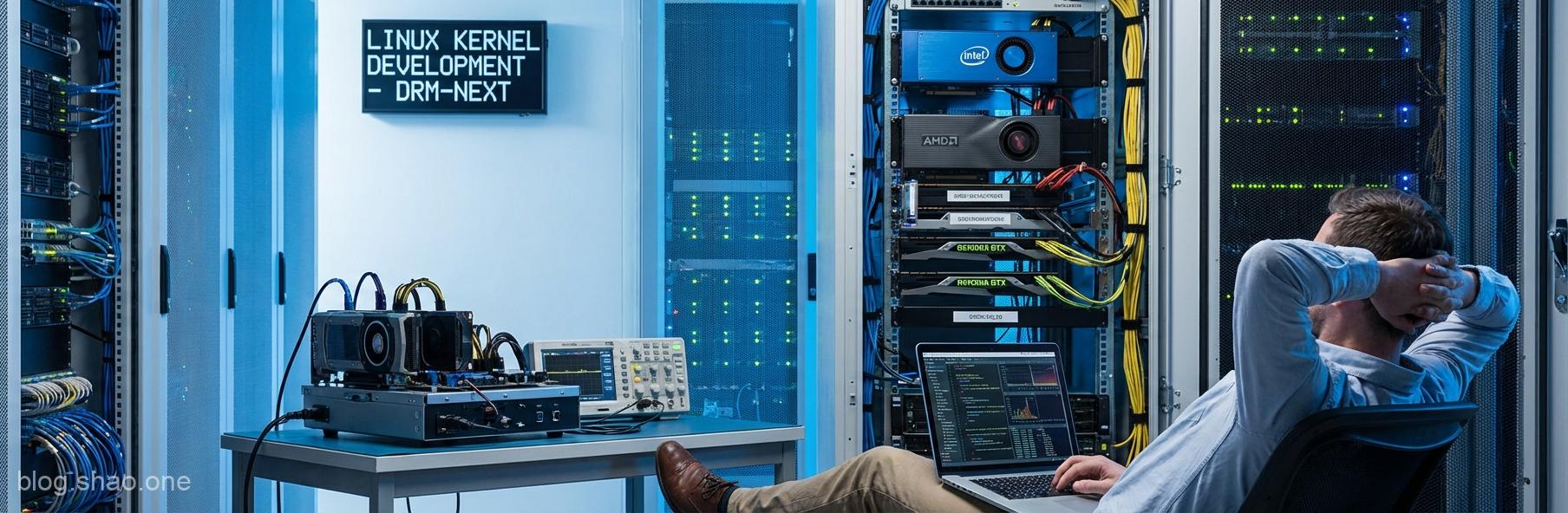
- DRM-Next: This is a development branch that can be thought of as a "new feature testing ground." All the latest, cutting-edge code from Intel, AMD, and Nouveau (the open-source NVIDIA driver) is first integrated and tested here. When the development cycle for the next kernel release (i.e., the merge window) begins, these features that have undergone preliminary validation will be formally incorporated into the mainline kernel.
This process ensures the stability of the Linux kernel while enabling development to advance at a rapid pace, preventing stagnation due to waiting for a release.
Future Outlook: What exciting developments can we look forward to?
Although this update is only the first batch and details remain scarce, based on past experience and hardware development trends, we can reasonably anticipate the following highlights:
- Intel's Highlight: As a model contributor to open-source drivers, Intel consistently delivers significant advancements.We can anticipate further optimizations for its Arc discrete graphics cards and the integrated graphics in upcoming Meteor Lake and Arrow Lake processors. This may include enhanced power management, improved ray tracing performance, and support for new standards like DisplayPort 2.1, ensuring Intel platform users enjoy an exceptional "out-of-the-box" experience.
- AMD's Ongoing Evolution: AMD's open-source drivers also set the industry standard. In future releases, we anticipate preliminary support for the next-generation RDNA architecture (likely RDNA 4), performance tuning for existing Radeon graphics cards (RX 7000 series), and further refinements to FreeSync/Adaptive-Sync technology.For laptops and handheld gaming consoles like the Steam Deck powered by AMD APUs, this translates to longer battery life and smoother gaming experiences.
-
Nouveau's Decade of Dedication: Nouveau is a community-driven open-source project for NVIDIA graphics cards. While its progress typically lags behind official closed-source drivers, developers' efforts have never ceased.Future updates may gradually enhance support for Ampere (RTX 30 series) and Ada Lovelace (RTX 40 series) architectures, such as basic hardware acceleration or improved power management. This is a monumental undertaking, and every step forward deserves our applause.
What does this mean for you and me?
These seemingly esoteric low-level code updates actually affect every Linux user:
- Gamers: The latest drivers mean better compatibility with new games, higher frame rates, and timely support for new graphics cards.
- Creators and Developers: A more stable, feature-rich graphics driver that provides a solid foundation for GPU-accelerated tasks like video editing, 3D modeling, and machine learning.
- General desktop users: Smoother desktop animations, lower power consumption for extended laptop battery life, and fewer display anomalies—all made possible by continuous driver iterations.
In short, Linux kernel development never stops.This collaborative, forward-thinking open-source spirit is precisely what fuels the vibrant energy of the Linux ecosystem. While Linux 7.0 remains some time away, the developments within DRM-Next already hint at a future graphics revolution quietly brewing. Let's wait and see what surprises the developers have in store for us!”