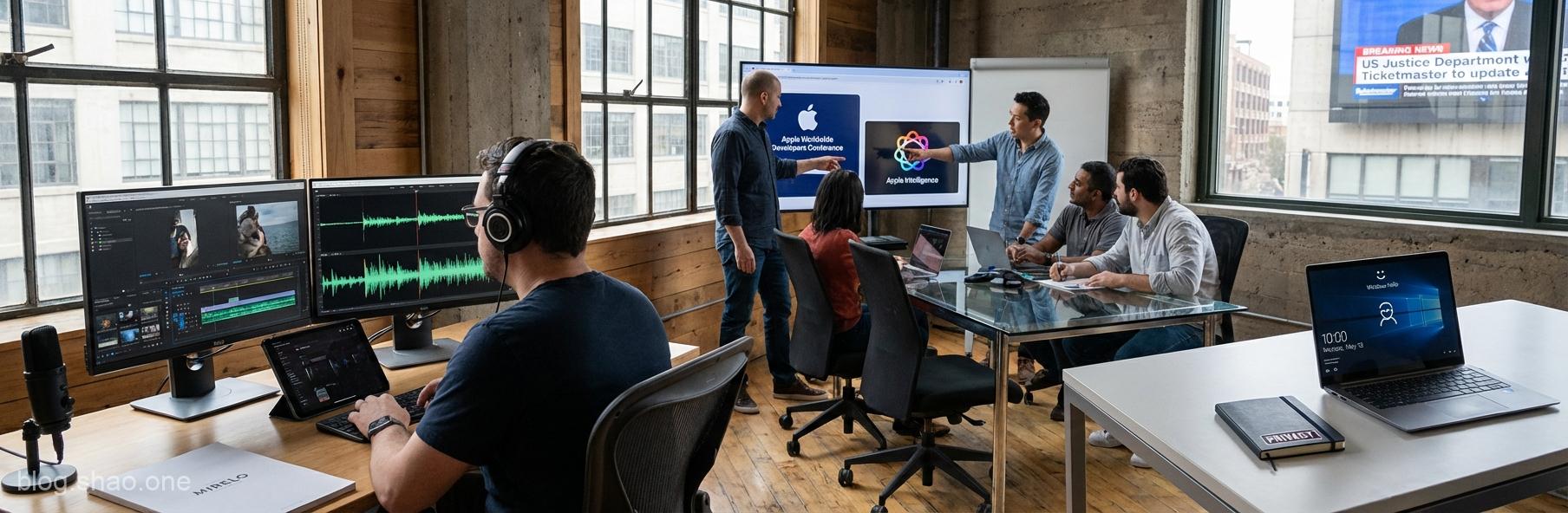
“Welcome to this week's Digital World Highlights Briefing.This week's tech landscape presents stark contrasts: on one hand, bold startups successfully raised massive funding to tackle nuanced yet critical challenges; on the other, industry giants paid steep prices for lessons on privacy and power. From the emerging voices shaping the AI-generated world to the deafening echoes of regulatory actions, here are this week's must-read tech stories.
The Sound of Progress: AI Video's "Silent" Challenge Finds $41 Million Solution
Despite the stunning visuals generated by AI tools like Sora and Runway, they share a common and uncanny flaw: utter silence. A bustling street scene without the roar of traffic, or crashing waves without the sound of the sea, always feels hollow and incomplete.This is precisely the multi-million-dollar core problem German startup Mirelo aims to solve—and it has successfully secured $41 million in seed funding led by venture giants Index Ventures and Andreessen Horowitz (a16z).This isn't just about adding generic sound effects; Mirelo is building a highly sophisticated AI sound engine that analyzes video content to automatically generate a complete soundscape perfectly synchronized with the visuals and equipped with contextual understanding.Think of it as algorithmic Foley artistry. The system distinguishes between a gentle breeze and a howling gale, the difference between footsteps on gravel versus asphalt, and composes a complete audio environment based on the action unfolding on screen.Why it matters: This investment represents one of the largest seed rounds in European history, casting a significant vote of confidence in the future of AI-generated media. Sound accounts for over 50% of the viewing experience, serving as a crucial source of emotion, immersion, and authenticity.As the barriers to AI video creation continue to lower, tools like Mirelo are no longer mere "nice-to-haves." They are transforming AI video from a novelty into the foundational infrastructure for compelling narrative content. For creators, filmmakers, and marketers, this technology promises to drastically reduce post-production time and costs, ushering in a new era of richer, more credible synthetic media.
Amid privacy backlash, Microsoft hits the rewind button on "Recall"
Microsoft recently unveiled its new Copilot+ PC series of AI laptops, with one feature immediately sparking controversy in the cybersecurity community: Recall. Designed to capture screenshots of the user's display every few seconds, this function builds a searchable "visual memory" that records every action taken on the computer.Its vision is a powerful personal search engine; but to critics, it's a privacy nightmare and a hacker's treasure trove.Cybersecurity researchers quickly pointed out that this unencrypted screenshot database was highly vulnerable to malware access, describing it as a potential disaster. The ensuing backlash was swift and fierce, forcing the Redmond giant to publicly reverse course—a rare move for the company.Our View: Microsoft has now announced that Recall will be changed to an "opt-in" feature rather than being enabled by default. Users must authenticate via Windows Hello to view timeline content, and enhanced data encryption mechanisms will also be added. This incident serves as a critical cautionary tale in the AI era: while pursuing innovation, user trust and cybersecurity cannot be afterthoughts.The community's strong reaction prompted a necessary course correction, highlighting the persistent tension between powerful AI capabilities and fundamental privacy rights.
The world's eyes are on Cupertino: Will "Apple Intelligence" impress or disappoint?
The tech world is holding its breath for Apple's annual Worldwide Developers Conference (WWDC) next week. It's widely expected that Apple will officially unveil its long-awaited AI strategy at the event. Over the past year, Google, Microsoft, and OpenAI have dominated the generative AI conversation, putting significant pressure on Apple.Market rumors suggest the new wave of features will center around the "Apple Intelligence" brand, emphasizing on-device computing to prioritize user privacy. The highlight is expected to be a comprehensively upgraded Siri, enhanced by large language models, alongside deep integration of AI capabilities across core apps like Mail, Messages, and Photos. Additionally, the possibility of collaborating with OpenAI to introduce ChatGPT as a more powerful conversational option within the ecosystem is widely discussed.The critical moment: This is Apple's defining moment to prove it is not a follower but a thoughtful leader in the AI race. By leveraging its ecosystem advantages and building on its consistent emphasis on user experience and privacy protection, Apple has the opportunity to redefine the look and feel of mainstream consumer AI for hundreds of millions of users. The WWDC announcements will set the course for Apple's next decade.
Headline: U.S. Department of Justice Sues Live Nation–Ticketmaster, Demanding Breakup of Monopoly Empire
In a move that could reshape the entire live entertainment industry, the U.S. Department of Justice, joined by 30 states, has formally filed a major antitrust lawsuit against Live Nation Entertainment (parent company of Ticketmaster). The complaint alleges the company abused its market dominance to illegally monopolize the live events market, stifling competition and driving up ticket prices for consumers.Impact Scope: This is not merely about concert tickets, but a significant signal of broader regulatory action, symbolizing the government's comprehensive counterattack against big tech companies and their surrounding monopolistic forces.For years, musicians and fans have consistently criticized Ticketmaster's exorbitant fees and exclusive venue contracts. This lawsuit aims to fundamentally dismantle this control, fostering greater competition, innovation, and fairer pricing in the market. This high-stakes showdown is bound to become a landmark case closely watched by other tech industry giants.
That wraps up this week's tech news, which once again highlights the industry's dramatic shifts—creating new digital realities with one hand while being forced to take responsibility for old problems with the other. Join us next week for an in-depth analysis of Apple's WWDC announcements and all the latest developments.”