“
⚠️ Introduction: Sudden ‘Measles’ Trouble, Public Health System Faces Challenges
In today’s era of rapidly advancing technology, we often focus on AI computing power or 6G communications, but sometimes it is the return of ‘old rivals’ that catches people off guard. According to the latest news from the New Jersey Department of Health, an out-of-state measles patient visited a local medical facility last week, which undoubtedly dropped a bombshell into the quiet pool of public health. In this era where global travel means ‘a single move affects the whole web,’ this is not just an epidemic prevention issue for one state, but a real-world test for the modern technological prevention network.
📍 The Incident: Who Dropped the ‘Bombshell’ in New Jersey?
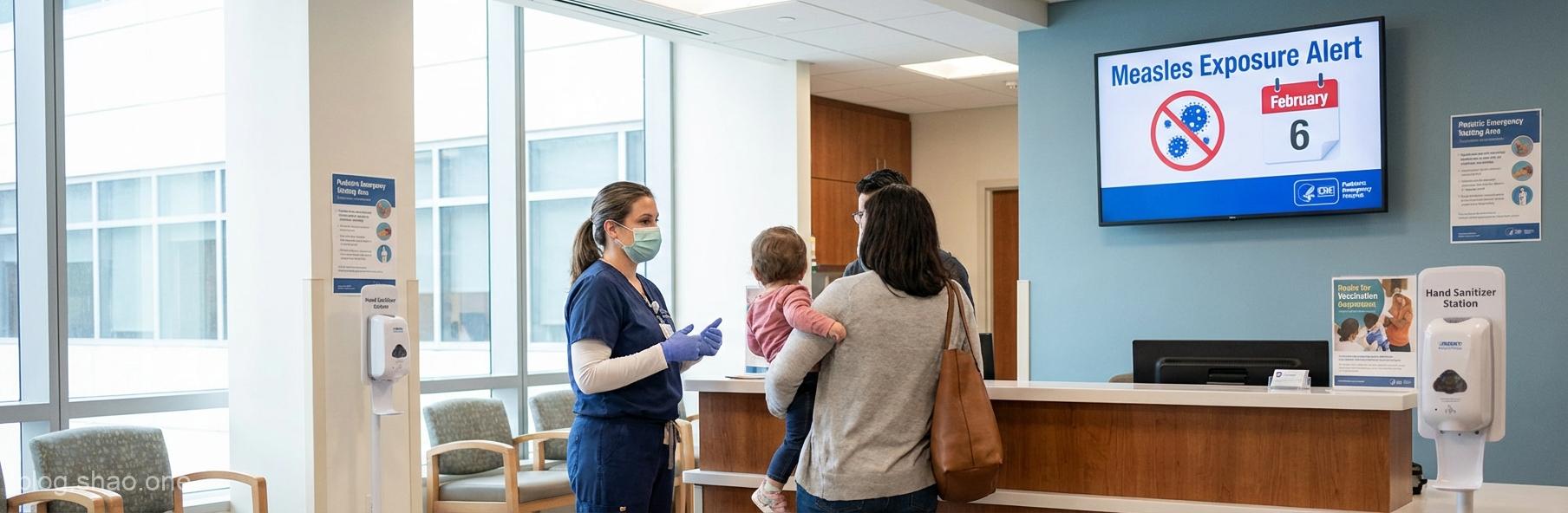
According to reports from NJ.com, the incident occurred on February 6 (Friday). An out-of-state individual confirmed to have measles appeared in the pediatric emergency room of Robert Wood Johnson University Hospital. Health officials pointed out that because measles is highly contagious, anyone who had contact with them during that time, or entered the space shortly after, faces a risk of infection.
- Location: Pediatric Emergency Room, Robert Wood Johnson University Hospital, New Jersey.
- Exposure Time: February 6. Although the patient has left, the viral threat has not yet been eliminated.
- Observation Period: Health departments remind that symptoms in those exposed may not appear until February 28 at the latest.
This incident truly came out of nowhere, leaving local hospital administration and epidemic prevention units overwhelmed. For a medical system accustomed to handling routine diseases, the emergence of a highly infectious disease like measles is a wake-up call that the ‘screws have loosened.’
💻 Tech Perspective: Why is this not just a medical issue, but a data race?
As technology news curators, we must think deeply: what role do ‘medical technology’ and ‘big data’ play in such emergencies?
- Automation of Contact Tracing:Traditional epidemiological investigation is like ‘finding a needle in a haystack,’ relying on manual phone calls one by one. But in digital hospitals, Electronic Health Records (EHR) can precisely identify all registered patients and accompanying family members who entered the emergency room during a specific timeframe. The intervention of technology allows investigations to ‘get to the root of the matter,’ significantly reducing labor costs.
- Application of AI Prediction Models:Many prevention units now use AI to simulate viral spread paths. Considering the frequent population flow between New Jersey and New York, data analysis can help officials determine the next potential outbreak point; this is the ‘foresight’ brought by technology.
- Integration of Vaccination Databases:To deal with measles, ‘one must first sharpen one’s tools to do a good job.’ A sophisticated cloud-based vaccine passport system allows medical staff to quickly determine which patients belong to high-risk groups, preventing epidemic prevention work from becoming a case of ‘mending the fold after the sheep are lost.’
🔍 Expert Commentary: The Unignorable ‘Butterfly Effect’
Although this incident occurred in the United States, it is a profound lesson for readers in Taiwan and around the world. The contagiousness of measles is far higher than that of COVID-19; once a loophole appears in the prevention network, the entire community can fall into chaos.The deeper meaning of this event lies in:1. The Importance of Information Transparency: The health department’s immediate release of information is the best remedy to prevent panic. Spreading information through digital media and social platforms achieves the effect of ‘prevention is better than cure.’2. The New Normal of Epidemic Prevention under Globalization: The movement of people across states and borders means that pathogens have no boundaries. Modern technology must achieve more real-time cross-border and cross-state data sharing.
🛡️ Practical Guide: What should you do if you are worried about being affected?
Facing infectious diseases, we cannot just sit and wait for death. As the saying goes, ‘it is better to believe it exists than not,’ and being a bit cautious is never wrong:
- Confirm Vaccination Records: Check your yellow card or health insurance APP; are your MMR vaccines fully completed?
- Monitor Symptoms: If a high fever, cough, runny nose, or red rash appears before the end of February, please ‘stay put,’ call the epidemic prevention hotline first, and do not rashly rush into a clinic.
- Enhance Personal Immunity: Although technology can save lives, a healthy lifestyle is the ‘only way’ to fight viruses.
📢 Conclusion: Preventing trouble before it happens, technology is our strongest backup
The measles incident in New Jersey reminds us once again of the vulnerability of the public health system. Although we now possess more powerful tracking technology and medical data, the most important factor is still human alertness. As the saying goes, ‘prevention is better than cure’; only when we combine advanced tracking technology with mature public health concepts can we truly ensure that nothing goes wrong.In this era where even the air can transmit crises, let us remain vigilant and use the power of technology to protect each other. Don’t forget, data is not just cold numbers; they are our most important ‘protective amulets’ on the battlefield against viruses.”