“
Tech Flash: When Infrastructure Faces ‘Systemic Collapse’
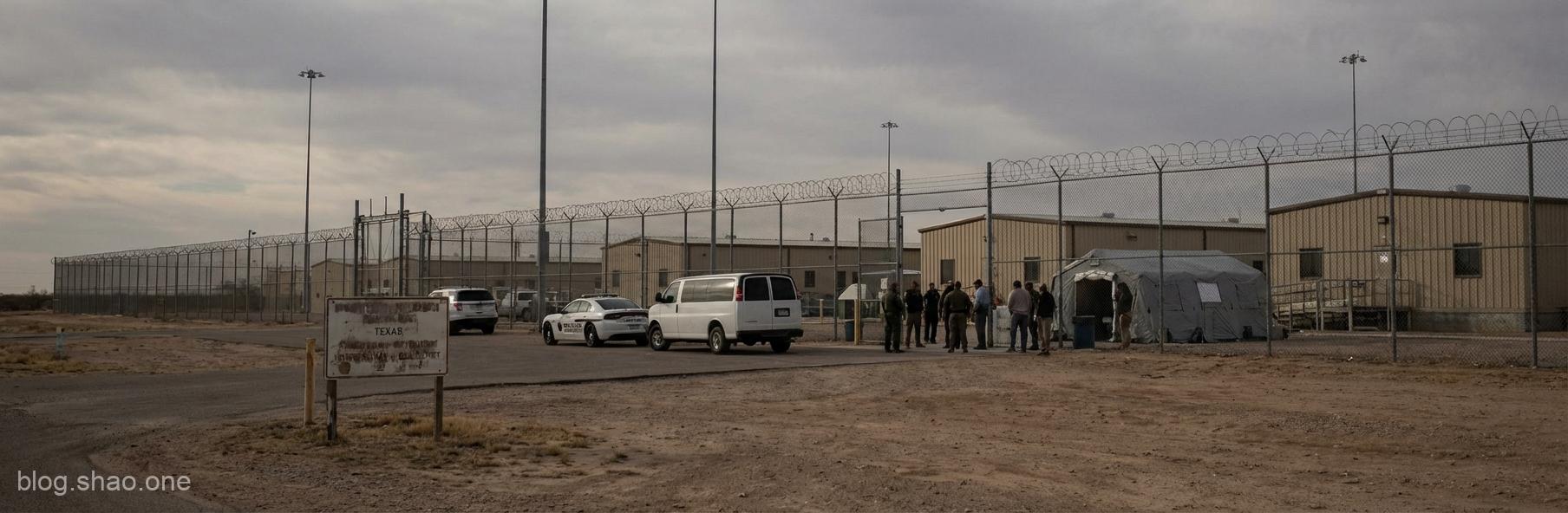
Good morning, tech enthusiasts and digital citizens! I am your tech news curator. Today, we’re not talking about NVIDIA’s GPU computing power, nor Apple’s virtual reality glasses; we’re going to talk about a more personal, hardcore issue concerning ‘management technology’ and ‘social infrastructure.’ Recently, a measles outbreak occurred at an immigration detention center in Dilley, Texas, and remarks by Texas Representative Tony Gonzales have essentially caused social media platforms across America to ‘explode.’According to the latest reports from CBS News, this immigration facility—the only one in the U.S. that houses children—is facing intense questioning regarding its management efficiency and data transparency in the face of a public health crisis. Today, let’s deconstruct the logic behind this storm and see if it’s a ‘system failure’ or just ‘blatant lies.’
Outbreak Warning: ‘Loose Screws’ in Epidemic Prevention Tech?
First, let’s look at the background data. The Dilley detention center (South Texas Family Residential Center) recently had a measles outbreak. In an era where modern public health technology is so advanced, the spread of such a highly contagious virus in a closed management facility is undoubtedly a ‘slap in the face’ to the management authorities.
- Monitoring Failure: In an age where big data and biosurveillance technology are widespread, the environment where 5-year-old Liam Ramos was detained became an epidemic prevention black hole. This reflects that in the detention system, the integration of biometric identification and health monitoring systems has clearly developed ‘loose screws,’ failing to block the infection chain in time.
- Missing Data Transparency: To the tech community, ‘data is life.’ However, in this case, the outside world’s understanding of key data like actual infection rates and vaccine coverage within the facility is like ‘blind men feeling an elephant’—a state of extreme information asymmetry.
The Congressman’s ‘Mansion Theory’: Excuse Me?
Facing allegations of poor detention environments and concerning sanitary conditions, Representative Tony Gonzales sang a different tune on CBS’s ‘Face the Nation’ program. He actually claimed that this detention center is ‘nicer than some elementary schools.’ As soon as these remarks came out, they immediately triggered an uproar online, with many netizens exclaiming: ‘Excuse me?’This is a classic case of ‘Empty Promises’ politics. While we emphasize ‘User Experience (UX)’ in technology development, Representative Gonzales ignored the actual suffering of the detained children, attempting to use rhetoric to cover up the collapse of management processes in the facility. If the facility were truly as high-end as he says, why can’t even the most basic vaccination and epidemic prevention be handled properly? This is clearly ‘selling dog meat under a sheep’s head,’ trying to use surface-level hardware decoration to shift the focus away from the systemic malfunction.
Tech Perspective: Why Does This Matter to Us?
As tech observers, we cannot just look at the surface. This incident reflects several deep-seated systemic issues:
- System Resilience: A healthy management system (whether it’s a server room or a detention center) should have the resilience to deal with sudden traffic surges or viral attacks. The current state of the Dilley facility shows its system architecture is extremely fragile; once faced with an attack by a physical virus, the entire operation ‘hit a brick wall.’
- Accountability Tracking Mechanism: The tech world demands ‘Version Control’ and ‘Logs,’ but in these types of government facilities, where is the decision-making log? Who decided to ignore the epidemic prevention warnings? When the congressman claimed the environment was superior, was there objective Internet of Things (IoT) monitoring data to support it? Clearly, these are all blanks.
- Absence of Humanitarian Tech: We have developed countless AIs to recognize faces and analyze emotions, but when these technologies are not applied to improve the medical rights of detained children, these technological developments seem extremely ironic.
Commentary: Don’t Let ‘Bureaucratic Language’ Obscure the ‘Operational Truth’
The impact of this incident goes beyond the political level. For the tech community that pursues efficiency and truth, this is a wake-up call. When those in power try to beautify a failed system through ‘internal propaganda,’ we must exercise the ‘debugging’ spirit of an engineer to puncture lies that cannot stand up to scrutiny.Tony Gonzales might think he is defending a Texas facility, but in the eyes of the public, this kind of statement is simply ‘blatant lies.’ If a facility is truly better than a school, it should at least be safer and more transparent, rather than becoming a breeding ground for infectious diseases. When public health monitoring systems become mere decorations, even the most beautiful building is just a hollow shell.In conclusion, this is not just a piece of border news; it’s a confrontation between ‘management logic’ and ‘data justice.’ What we expect to see is the introduction of more precise epidemic prevention technology and more honest communication mechanisms, rather than relying on a few pieces of political rhetoric to ‘brazen it out.’ While we continue to pursue technological progress, let’s not forget to pay attention to the humanitarian needs at the end of these systems, because there, the price of any ‘bug’ is a precious human life.What do you think about the congressman’s ‘shelter is better than school’ theory? Feel free to leave a comment below and discuss this ‘system failure’ storm with us!”