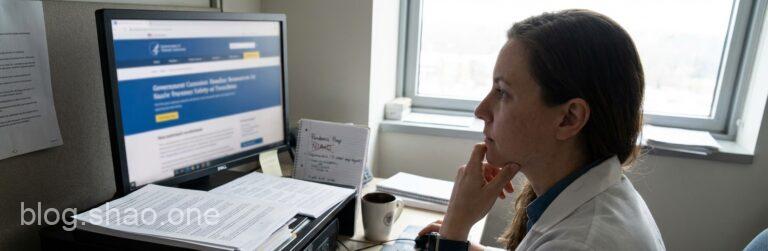
Dear readers who follow technology trends, we usually discuss the latest chip performance, AI computing power, or the ‘black tech’ of foldable phones, but today I want to change the subject and talk about the most important piece of ‘hardware’ we have—our bodies. Recently, Business Insider reported a heartbreaking and shocking news story: a 26-year-old woman, Mariana Tata, initially thought she just had common bloating and hemorrhoids, but was eventually diagnosed with stage 4 colorectal cancer. This is not just a medical case, but a ‘wake-up call’ for all digital nomads, tech geeks, and high-pressure workers.
💡 Event Review: The Ignored ‘Tiny’ Signals
Mariana Tata’s experience is a microcosm of many modern people. For about a year, she suffered from bloating. At first, she ‘took it lightly,’ thinking it was just a normal reaction to her menstrual cycle or common gastrointestinal discomfort. Since a friend had Crohn’s disease, she even once thought she was just allergic to certain foods.
When she noticed changes in her bowel habits and even blood in her stool, she simply thought it was ‘hemorrhoids’ caused by sitting for long periods. It wasn’t until her symptoms worsened that she realized after an examination that it wasn’t some insignificant minor ailment, but stage 4 colorectal cancer that had already spread to her liver. This news was undoubtedly a ‘bolt from the blue’ for her in the prime of her youth.
📉 The Concern Behind the Data: Colorectal Cancer is ‘Getting Younger’
The reason this news has sparked heated discussions in the tech community and social media is that it reveals a harsh trend: colorectal cancer is no longer exclusive to the elderly. According to medical research in recent years, the incidence of Young-Onset Colorectal Cancer is rising globally. For those of us ‘tech newcomers’ who sit in offices for long periods, rely on food delivery, and stay up late for projects, this is definitely a ‘ringing alarm bell.’
- High concealment: Early symptoms such as bloating, fatigue, and changes in bowel habits are easily categorized as ‘civilization diseases.’
- Risk of misdiagnosis: Young patients often have an age advantage that makes both doctors and patients feel that ‘it can’t be me.’
- Environment and Diet: Highly processed foods and a sedentary lifestyle are considered the culprits behind the scenes.
🚀 Tech Perspective: How Can AI and Detection Technology Help?
As a technology observer, I believe this tragedy actually reflects that there is still room for improvement in current medical screening mechanisms. In the future, how should technology intervene to prevent tragedies like Mariana’s from happening again?
- AI-Assisted Endoscopic Image Diagnosis (Computer-Aided Detection, CADe):
In traditional colonoscopies, even the most experienced doctors may miss tiny polyps due to visual fatigue. There are now AI systems that can scan images in real-time, catching those ‘telltale signs,’ significantly increasing the detection rate of early adenomas. This is what we call ‘technology saving lives.’ - Next-Generation Sequencing (NGS) and Liquid Biopsy:
In the future, we may no longer need to wait for symptoms to appear. By testing for circulating tumor DNA (ctDNA) in the blood, we hope to ‘nip it in the bud’ when cancer is just starting. This is a huge boon for young people with a family history. - Wearable Devices and Smart Monitoring:
Although current Apple Watches or Garmins cannot yet diagnose cancer, by long-term tracking of activity levels, sleep quality, and heart rate variability, technology can help us establish physiological baselines. When data shows abnormal fluctuations, it reminds users to seek medical attention early, rather than ‘avoiding the doctor.’
🧐 Author’s Commentary: Prevention is Better Than Cure, Don’t Let Your Body ‘Overheat and Crash’
After reading this news, I can’t help but feel that we often spend a lot of money upgrading computer configurations and buying top-spec graphics cards, but we often ignore the ‘Error Codes’ sent by our own digestive tracts. Mariana’s story tells us that ‘the body is the capital of revolution,’ and while pursuing career peaks or new technological knowledge, we must not overlook the importance of regular check-ups.
In Taiwan, we have an excellent medical environment, but the concept of ‘early screening’ remains weak among the youth. Don’t think that because you are young you can be ‘stubborn.’ When your body sends out warning signals, even if it’s just minor bloating or fatigue, you should consult a professional doctor instead of just searching on Google for a self-diagnosis.
📌 Summary: Three Pieces of Sound Advice for Tech Professionals
- Do not ignore small signs: If bloating, constipation, or blood in the stool lasts for more than two weeks, please see a doctor directly; do not try to be your own doctor.
- Know your family history: Understanding if anyone in your family has had cancer can help you formulate a more precise screening strategy.
- Make good use of health technology: Although technology is not omnipotent, maintaining exercise habits and recording body data is a mandatory course for modern people.
I hope this article allows everyone to stop and care for their gastrointestinal health amidst their busy lives. After all, no matter how powerful an AI is, it cannot replace a healthy you. We’ll see you in the next Technology Trends Weekly!