“
Preface: A Techie’s Overseas Dream Awakened by an Infectious Disease?
Hello, tech enthusiasts and digital nomads! Is everyone recently planning to fly to Seattle to visit the headquarters of Microsoft or Amazon? But before you pack your bags, there is some ‘nail-biting’ news. According to the latest report from Seattle-Tacoma International Airport (Sea-Tac Airport), a traveler confirmed with measles was spotted here, triggering a chain reaction in the public health system. In today’s era of rapidly advancing technology, it’s worth reflecting on how such an ancient virus can still ‘swagger’ through international hubs and the technological applications and challenges reflected behind it.
📍 Event Recall: The ‘Uninvited Guest’ at Seattle Airport
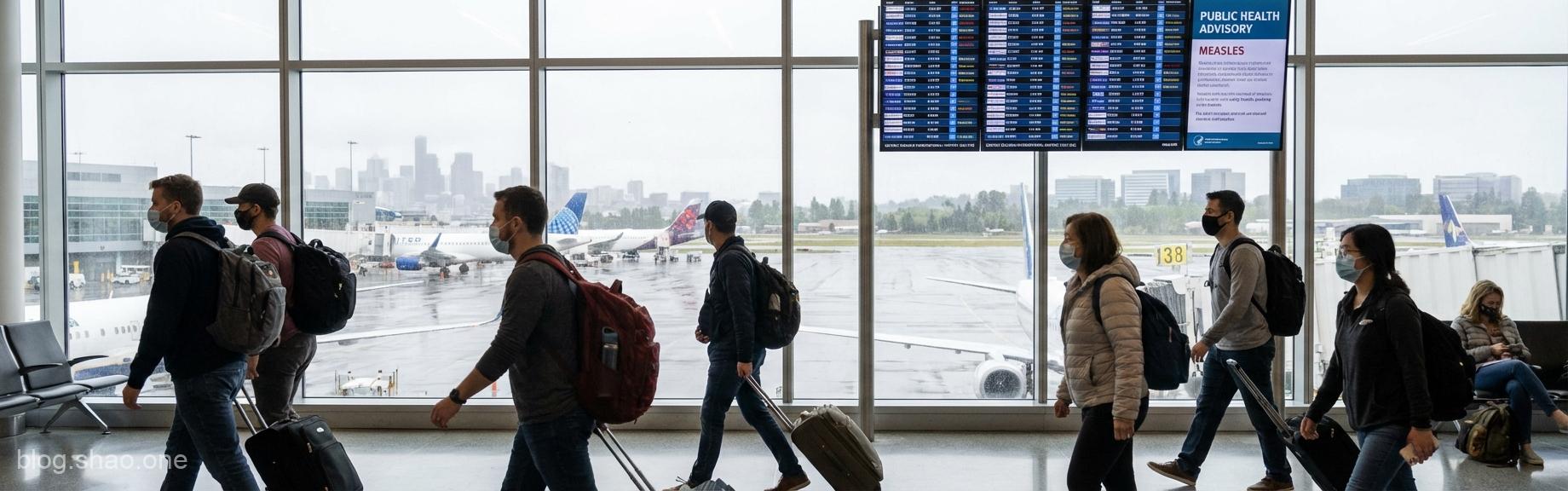
According to reports from KOMO News, health officials confirmed that a traveler with measles passed through Seattle-Tacoma International Airport. This is not an isolated incident; the measles outbreak in Snohomish County has also shown an expanding trend recently. For this transportation hub where ‘pulling one hair moves the whole body,’ this is undoubtedly a wake-up call.
- Infection Path: The traveler was at the airport terminal during specific times, and the number of contacts could be as high as thousands.
- Transmissibility: The airborne transmission capability of the measles virus is extremely strong, simply ‘omnipresent.’
- Official Response: The health department has urgently activated the tracking mechanism and urged the public who were present during the relevant periods to pay attention to their own health conditions.
🌐 Tech Perspective: Why Haven’t AI and Big Data Been Able to ‘Nip It in the Bud’?
In the eyes of techies, we might ask: In today’s world of highly developed 5G, AI, and big data tracking technology, why do we still let this happen? This involves several key technical bottlenecks:
- The Tug-of-War Between Digital Footprints and Privacy:Although we can achieve precise positioning through telecommunication signaling or Google Maps data, in the post-pandemic era, public vigilance against ‘digital surveillance’ has significantly increased. How to achieve ‘seeing the small to know the large’ in epidemic prevention while protecting personal data privacy has always been a battle between technology and ethics. Currently, most tracking still relies on manual epidemiological investigation, which seems somewhat ‘half the result with twice the effort.’
- Sensing Limitations of Wearable Devices:While Apple Watch or various smart bracelets can detect heart rate and body temperature, measles often has no obvious symptoms during the incubation period. Current sensing technology cannot yet ‘see through at a glance’ the viral load in the blood, making early warning feel somewhat ‘beyond its reach.’
- Limits of Aviation Filtration Systems (HEPA):Although modern aircraft air filtration technology is ‘like a tiger with wings,’ capable of filtering 99% of viruses, the open spaces of airport halls and waiting areas are loopholes in prevention. How to apply aerospace-grade filtration technology to public buildings is a major challenge for future ‘smart cities.’
💡 In-depth Analysis: Warnings and Response Strategies for Tech Hubs
As a global tech hub, the significance of this event for the tech industry goes far beyond the public health level:
- Flexibility Testing for Work From Anywhere (WFA):For employees of Amazon or Microsoft, this type of sudden outbreak could restart ‘work from home’ mode at any time. Tech companies need more perfect virtual collaboration tools to ensure that R&D progress can still be ‘steady and sure’ during a ‘chaotic’ epidemic.
- Integration of Biometrics and Digital Vaccine Certificates:In the future, blockchain technology might provide a set of digital vaccine passports that are both secure and tamper-proof. If they can interface with the airport’s biometric identification system, it might reduce the risk of infection from the source, achieving a ‘once and for all’ effect.
- Optimization of Big Data Prediction Models:This outbreak spread reminds us that current epidemiological prediction models are not yet precise enough. In the future, more ‘micro-trend’ data should be incorporated, such as cold-related search volumes on social media or pharmacy purchasing data, to truly ‘save for a rainy day.’
Conclusion: Stay Vigilant, Technology and Health Go Hand in Hand
This measles case at Seattle Airport is not just a piece of news for us, but also a ‘midterm exam’ for the modern tech epidemic prevention system. Although technology is advanced now, we can never ‘let our guard down’ when facing viruses.As tech citizens, in addition to expecting more powerful tracking and medical technology, the most basic protection—such as vaccination—is still the only way for ‘prevention is better than cure.’ I hope the next time we discuss Seattle, it’s because a tech giant has launched a landmark product, rather than because of this ‘terrifying’ infectious disease. Everyone, when going out, remember to take good precautions, and I wish you all smooth work and good health!”