“
The "Sprite" Descends in Gaming History: A Spectacular Transformation from Pixel to Motion
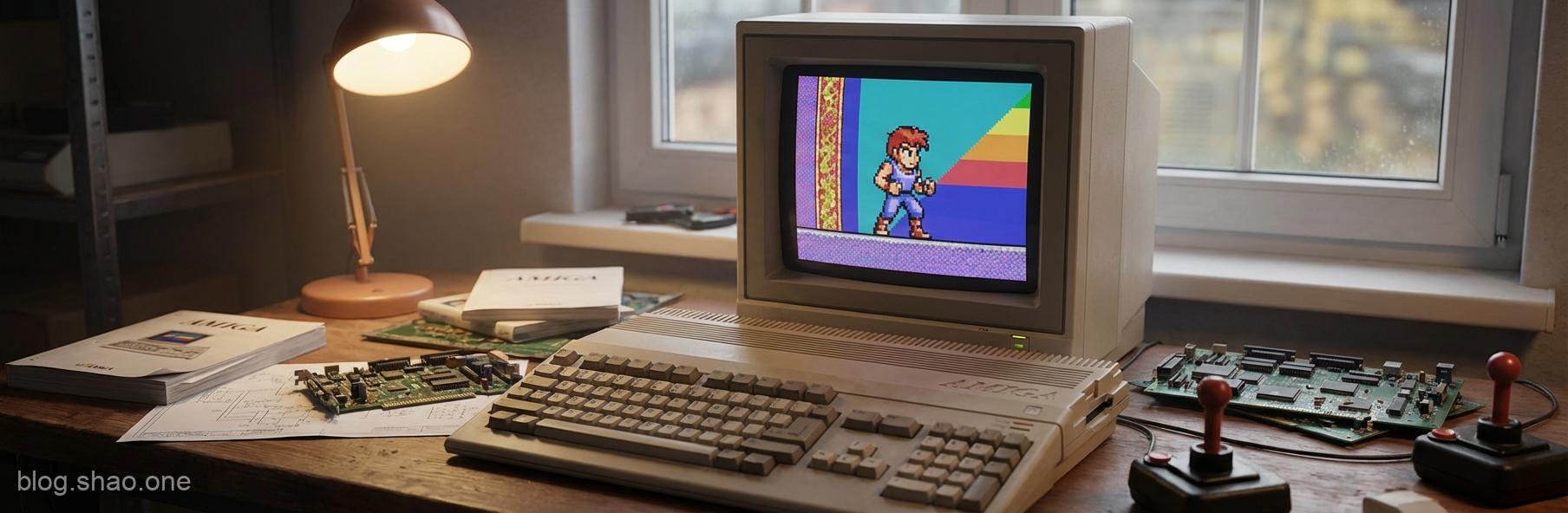
In an era dominated by modern 4K resolution and ray tracing technology, it's hard to imagine how early computer engineers managed to "work magic" with such limited hardware resources.Recently, the renowned tech site Hackaday revisited the hardware mechanisms of the Amiga computer, particularly its astonishing "sprite" design. The invention of this technology was nothing short of a transformative revolution for the gaming industry of its time.Before the advent of sprites, nearly every pixel on the game screen had to be handled directly by the CPU.Imagine asking a chef to stir-fry dishes while simultaneously serving plates in the dining area—inefficiency would inevitably arise. Sprites revolutionized this by enabling hardware to independently handle moving objects, separating them from the background. This breakthrough allowed early game developers to deliver richer, smoother visuals without slowing down the system.
💡 Technical Spotlight: Why Are Sprites a "Lifesaver"?
- Hardware-level acceleration: Sprites are essentially hardware-level layering technology. Hardware can directly "overlay" specific layers during screen refreshes, completely eliminating the need to consume valuable VRAM write time.
- Maximum Resource Efficiency: In an era when memory was measured in kilobytes, this design allowed developers to pack more enemies, bullets, and animations into limited space.
- Independent collision detection: Many hardware platforms (such as the Amiga) even provide hardware-level sprite collision detection, which makes handling game logic much more manageable.
Amiga's Hardware Black Magic: More Than Just Graphics, It's the Ultimate Resource Utilization
When discussing sprites, one cannot overlook the Amiga computer. This groundbreaking machine that burst onto the scene in the late 1980s boasts an architectural design that still exudes engineering elegance even today. An article on Hackaday delves into how the Amiga handled these "sprites," with its most jaw-dropping design being its custom chipset (such as the Denise and Copper).Although Amiga sprites have a hardware limit on quantity (typically 8), clever developers employed "sprite multiplexing" technology. By precisely controlling the screen scan lines, they could command the hardware to "instantly switch" and reuse sprites in the lower half of the screen after exhausting the 8 allotted in the upper half.This clever trick allowed players to see mountains and valleys of enemies on screen, completely unaware that the hardware was already operating beyond its limits.
Author's Commentary: This embodies the romance of early engineers—building a temple in a bowl of snail noodles, creating infinite possibilities within extremely limited space. This kind of squeezing every last drop from hardware fundamentals is precisely the craftsmanship lacking in today's developers, who are overly reliant on middleware.
Why are we still talking about these "antiquated relics" today?
Some might think that discussing technologies from 30 or 40 years ago is just rehashing old ideas. But that's not the case. Delving into the Amiga's Sprites mechanism offers profound insights for modern software architecture and performance optimization—a reminder of where we came from.
- Training in Low-Level Thinking: Understanding how hardware operates empowers developers to write more efficient code, rather than simply stacking hardware specifications.
- Creativity thrives on constraints: Many classic game mechanics were born out of the need to circumvent hardware limitations. When resources are scarce, those who think on their feet truly shine.
- The Rise of Retro Aesthetics: Modern indie games extensively utilize pixel art. Understanding the fundamental logic of sprites allows creators to imbue their work with an authentic retro charm.
🚀 Conclusion: "Those who plant trees will be the first to enjoy their shade."
The Amiga's "multi-sprite interpretation method" is not merely a chapter in hardware history; it stands as an ode to engineering ingenuity. In that era of fierce competition, every engineer wrestled with hardware limitations, trading ingenuity for smooth frame rates. Even today, when graphics cards possess enough computational power to simulate reality, we must never forget these pioneering "sprites" that paved the way.For readers interested in the historical context of these technologies, I strongly recommend revisiting the original Hackaday article. It will undoubtedly deepen your appreciation for these "digital relics." After all, understanding the past allows us to navigate the technological path toward the future with greater confidence.”