“
【Foreword: As the Flu Season Peaks, Healthcare System Stands Ready】
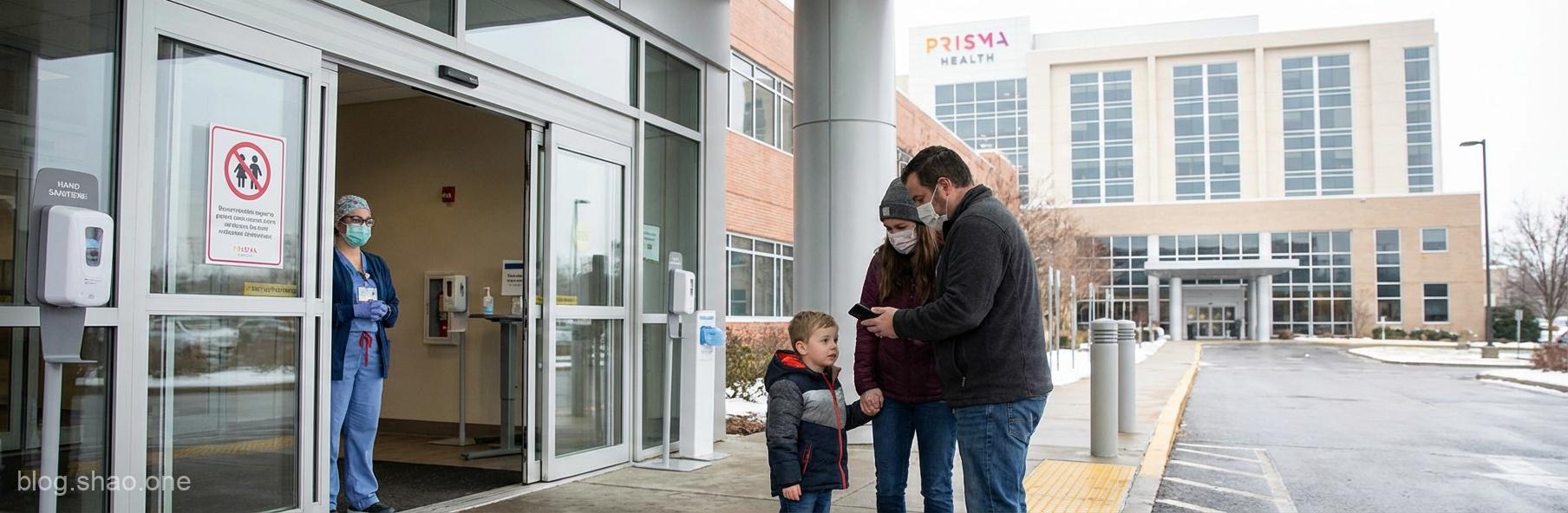
As winter approaches, people are concerned not only about the cold temperatures but also about the various respiratory infections that are beginning to spread.Recently, Prisma Health—one of South Carolina's largest healthcare providers—unexpectedly implemented a strict policy that caught many parents and patients' families off guard. The policy temporarily prohibits children aged 15 and under from visiting patients in the hospital. What's behind this decision? In times like these, when human connection is forcibly isolated, what role can technology play?
【News Summary: Prisma Health Issues Emergency Restriction Order】
According to the latest report from The State, Prisma Health announced that starting the week of December 26, it will restrict all adolescents and children aged 15 and under from visiting its hospitals in South Carolina and Tennessee. This decision is not arbitrary but stems from several critical realities:
- Multiple epidemics converging: Influenza (Flu), respiratory syncytial virus (RSV), and COVID-19 infection rates are surging rapidly in the region, placing immense strain on the healthcare system.
- Protecting Vulnerable Groups: Children often act as "super-spreaders" of viruses and have developing immune systems. Restricting visits is intended to safeguard both hospitalized patients and the children themselves.
- Broad Scope: This restriction order covers all acute care hospitals under the medical group.
【Tech Commentary: How Can Digital Bridges Be Built When Physical Distances Grow?】
As technology observers, we must look beyond superficial healthcare policies to the underlying demand for "smart" transformation. Prisma Health's initiative has undoubtedly thrust HealthTech into a real-world test of its capabilities. Here's how this incident highlights the critical importance of technology:
1. Telehealth is no longer an option—it's the new standard.
When hospital doors close to children, remote video systems become a lifeline for family connections. Current video technology offers low latency, high definition, and even integrates physiological monitoring data. For elderly patients in hospital beds, seeing their grandchildren "bouncing around" on the other side of the screen can sometimes provide healing effects as powerful as medication.
2. Big Data Prediction and Precision Epidemic Prevention
Prisma Health's bold decision to issue restrictions at the turn of the year was undoubtedly backed by data. By analyzing emergency room registration volumes and virus test results through AI models, hospitals can "prevent problems before they arise." If such early warning systems become widespread, we may one day be able to implement patient triage before outbreaks occur, preventing hospitals from becoming overwhelmed.
3. The Role of Smart Wearable Devices
Since hospital visits are restricted, the integration of technology for "home care" and "remote monitoring" becomes particularly crucial. If children can wear devices to monitor their health data in real time at home, linked to hospital systems, it would reduce unnecessary visits and further lower the risk of hospital-acquired infections.
【Author's Perspective: This is not merely a ban, but a catalyst for technological evolution】
To be honest, seeing news like this inevitably leaves people feeling a bit "cold-hearted."After all, in Taiwanese culture, visiting patients is a vital way to show care. But speed is crucial in battle, and decisive isolation is indeed necessary when facing viral spread. This also prompts tech developers to consider: how can technology be made more "warm"? For instance, could there be more realistic virtual reality (VR) hospital visit experiences? Or interfaces that let children interact with hospitalized loved ones in more intuitive ways?Prisma Health's decision serves as a sobering lesson, revealing the fragility of physical spaces. In the post-pandemic era, we must increasingly rely on technology to build a healthcare ecosystem that is resilient, intelligent, and human-centered. As hospitals are forced to "declutter," are the technological tools at our disposal truly ready to step up and take the reins?
【Conclusion】
During flu season, remember to wash your hands frequently and wear masks when out and about. While technology can bridge distances, physical health remains the ultimate priority. To overcome the challenges posed by pathogens, we must rely not only on our healthcare system's safeguards but also on technological support. Only then can we weather the winter storm and prevent viruses from gaining a foothold!”