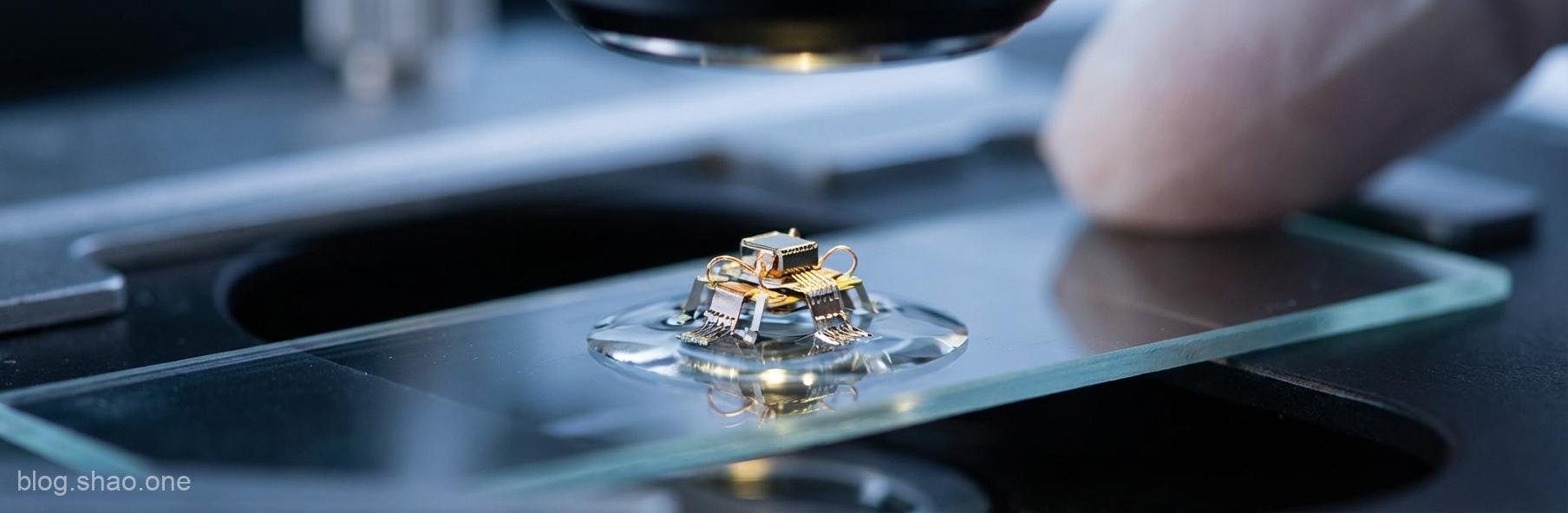
“Do you remember the breathtaking scenes in movies like Ant-Man or Fantastic Voyage, where humans shrink down and enter the microscopic world? In the past, this might have been nothing more than wild imagination in sci-fi films. But now, scientists are dead serious about bringing this vision to life!Recently, according to ScienceAlert, engineers have successfully developed the world's smallest "programmable robot." This tiny device is so small it's nearly invisible to the naked eye—possibly even less noticeable than a speck of dust on your desk. But don't let its diminutive size fool you: it possesses autonomous capabilities to "perceive, think, and act," making it a miniature marvel in the tech world!
🔬 Miracles invisible to the naked eye: Small as a sparrow, yet fully formed.
The birth of this micro-robot officially heralds a new era for microrobotics technology. Previously, most miniature devices we observed could only be passively controlled by external magnetic fields or light, like puppets with broken strings. But this time is different—this robot possesses a "soul"!Here are several key highlights of this robot:
- Autonomy: It incorporates a microelectronic circuit that can receive environmental signals and make judgments based on pre-programmed instructions. This means it no longer needs to constantly "answer calls" for commands but can independently decide its next course of action.
- Ultra-miniaturization: So small that a microscope is required to see the details. The development team claims this is undoubtedly the world's smallest device of its kind to date, boasting technical prowess that's "unmatched."
- Integration Capability: Integrating sensors, processors, and actuators within such a confined space represents a challenge so immense it's akin to threading a needle at the atomic level.
🧠 Core Technology: It doesn't just "move"—it also "thinks."
What gives me the creeps most about this technology is how engineers manage to imbue an almost invisible object with "logic."This robot possesses a complete closed-loop system of "perception, thinking, and action." This means it can detect environmental changes—such as chemical concentrations, temperature, or light—through tiny sensors, then process this data via a microprocessor, and finally activate its miniature "legs" or drive components to move.This highly integrated design was once deemed an "impossible mission." To think it's now a reality—the development team truly deserves a huge round of applause!
🚀 Future Blueprint: Micro-Doctors Entering Blood Vessels?
You might be wondering: "What's the point of building such a tiny robot besides showing off?" Hey, if that's what you're thinking, you're seriously underestimating the potential of this technology! This invention could very well become a game-changing application in both the medical and industrial sectors.Here are several highly promising application scenarios:
- Precision Medicine: Imagine a future where instead of undergoing major surgery, you simply swallow a capsule containing thousands of micro-robots. These robots would navigate your bloodstream, pinpointing cancer cells or blood clots for "precision strikes"—truly curing diseases with minimal side effects.
- Environmental Monitoring: When dispersed into water sources or contaminated soil, these tiny robots act like "micro-detectives," autonomously seeking out pollutants and neutralizing them—their efficiency far surpasses traditional methods.
- Advanced Material Repair: Within the intricate interiors of precision instruments inaccessible to humans or large machinery, these tiny robots can enter to inspect and repair microscopic cracks, embodying the principle that "prevention is better than cure."
💡 Author's perspective: Is this a live-action version of Ant-Man?
Upon seeing this news, I had only one thought: "Wow, my tech!" Although this robot is still in the lab phase and has a long way to go before large-scale commercialization, the technological leap it represents is highly significant. It proves that humanity's control over the microscopic world has now reached the cellular level.However, such technology also raises some thought-provoking questions. For instance, how can we prevent these tiny robots from being used for malicious purposes, such as surveillance or intrusion? Furthermore, when thousands of robots operate in an environment, their recycling and environmental impact pose significant challenges. Regardless, this invention undoubtedly marks a milestone in technological history, filling people with "pink bubble" fantasies about the future.In short, this technology shows us that size doesn't determine power. This "stealth" robot is quietly preparing to turn our world upside down. If you still think robots have to look like Transformers to be cool, you're seriously behind the times!
What feature of these micro-robots excites (or concerns) you the most? Share your thoughts in the comments below—let's explore this "small yet extraordinary" future together!“