“
⚡️ Lead-in: What you consider common sense might just be a technical bottleneck.
Hello to all my friends who've been in the tech scene for a while! If you've been following the e-bike industry for years like me, you've surely heard manufacturers repeatedly emphasize this point: "Geared hub motors simply can't do regenerative braking."For a long time, this has almost become an "ironclad rule" within the industry. Everyone believed that to achieve kinetic energy recovery, one simply had to endure bulky, inefficient direct drive motors. But recently, the authoritative tech media outlet Electrek dropped a bombshell, suggesting we might have all been "duped"!It turns out that with one ingenious design, lightweight gear motors can transform into "power-recovery marvels." Today, let's dive into this game-changing black tech and uncover its hidden tricks!
🚲 Why were we always told "it can't be done" in the past?
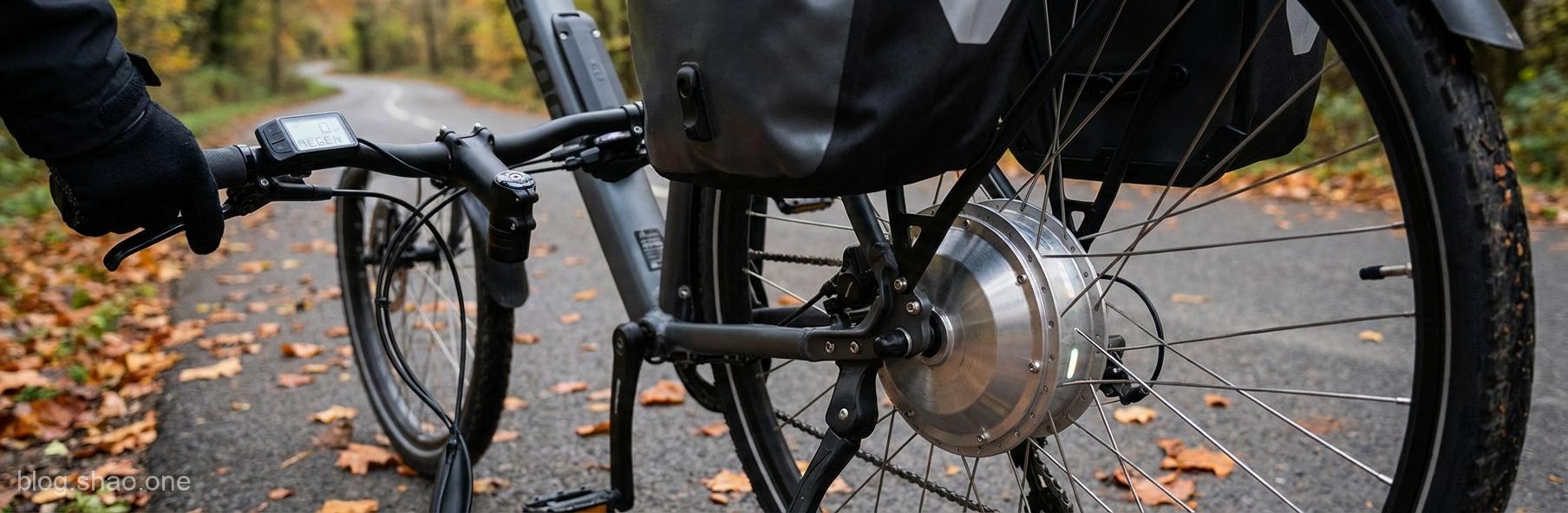
To understand this breakthrough, we must first grasp the construction of traditional electric bicycles. Most commercially available lightweight e-bikes utilize geared reduction motors for one simple reason: they are compact, deliver high torque, and incorporate a critical component—the one-way clutch/freewheel.
- Function of the clutch: When coasting without pressing the throttle, the clutch disengages the motor from the axle, allowing you to ride as smoothly as a regular bicycle without any resistance from the motor.
- The Crux of the Problem: Since it's "one-way," the motor can only exert force to drive the wheels, but the rotational energy from the wheels cannot be fed back to the motor. It's like a pocket that "only lets out, never takes in"—wanting to recover kinetic energy? Forget about it!
💡 A Genius Reversal: Can Motors "Turn the Tables"?
This Electrek report indicates that a new motor design—such as the one being developed by Grin Technologies—utilizes an improved "locking mechanism" or "electromagnetic clutch" to make this breakthrough possible. The essence of this technology lies in temporarily "disabling" the one-way clutch when needed.In short, this technology offers the following key features:
- Smart Lock-On: When the sensor detects the rider pressing the brake or entering downhill mode, the controller issues a command to re-engage the motor with the axle. At this point, the rotational force of the wheel continuously feeds back into the motor, generating electricity.
- Software-Defined Hardware: This is not merely a mechanical structural change, but relies on extremely precise controller algorithms. How to ensure a smooth, jerk-free joining process—that is the true "cutting-edge technology."
- Having your cake and eating it too: Glide effortlessly with zero drag during normal cruising, yet when braking is needed, the kinetic energy recovery kicks in instantly. This is the perfect embodiment of "wanting your horse to run fast but not eat grass"!
🧐 What tangible benefits does this offer us knights?
This technology isn't just a lab toy; it's a real game-changer for everyday commuters or long-distance cyclists:
- Significantly Extended Range: While e-bike regenerative braking doesn't add hundreds of kilometers like electric vehicles (EVs) do, it can boost range by approximately 5% to 10% on hilly terrain. For riders running low on power, this extra charge often becomes the lifeline for that "last mile."
- Brake pads are no longer consumables: Through regenerative braking (Regen Braking), the motor itself provides powerful deceleration force, significantly reducing wear on physical brake pads. This not only saves on maintenance costs but also makes long descents safer by preventing catastrophic brake fade due to overheating.
- Upgraded Riding Experience: Traditional brakes often feel abrupt, while electromagnetic brakes deliver exceptionally linear and refined control. That sense of "total command" will absolutely make even the most discerning riders exclaim, "What a thrill!"
🖋️ Commentary and Conclusion: Technology always stems from a refusal to accept the status quo.
To put it plainly, when manufacturers told us "it can't be done" in the past, it was largely due to cost considerations and simplifying the technology. But the emergence of this technology proves that with enough effort, no technology is truly "set in stone."My View: This combination of "geared motors + kinetic energy recovery" will be the battleground for the e-bike market in the coming years. It addresses the pain points of direct-drive motors being too heavy and geared motors lacking recovery capabilities, delivering a straight-up solution that directly meets consumer needs. While motors equipped with this technology may currently carry a slightly higher cost, I believe that as production scales up, prices will inevitably become more "affordable."This isn't merely a mechanical tweak—it's a complete shift in thinking. In an era where energy conservation and carbon reduction are paramount, even the slightest waste of energy is a luxury we can't afford. Imagine if your next electric bike could charge while you ride—environmentally friendly and cost-effective. Who could resist such a great deal?What do you all think? Do you find regenerative braking appealing for your riding habits? Or are you more concerned about the bike's weight? Feel free to share your thoughts in the comments below. See you next time!”