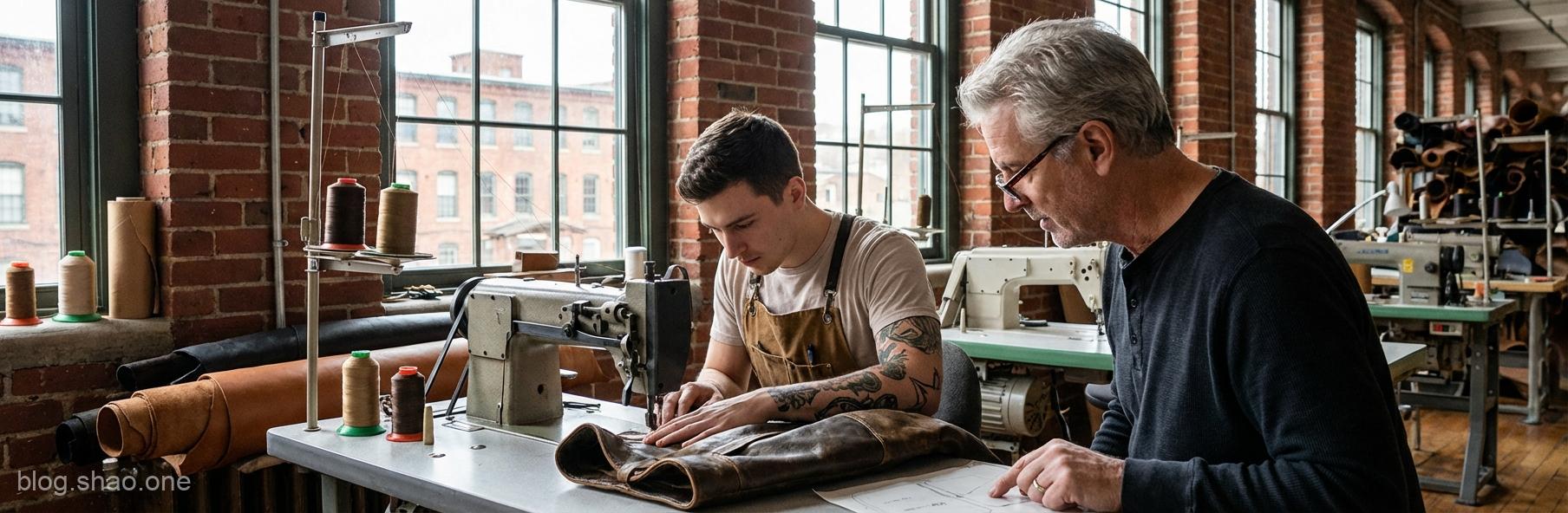
“Amid this wave of digital transformation, when people mention manufacturing, what often comes to mind is a "sunset industry" filled with oil-stained workers and harsh environments.Yet in Fall River, Massachusetts, a quiet revolution is underway—one where traditional craftsmanship meets the new generation. This isn't just about sewing machines humming; it's about how Generation Z is using "artisan spirit" to inject new life into American manufacturing.
Qiuhe City: A Metamorphosis from Textile Hub to Creative Workshop
Qiuhe City was once a renowned textile hub in the 19th century. The red-brick factory buildings standing tall throughout the town tell tales of America's industrial glory days. Though many production lines have long since relocated overseas with the tide of globalization, these spacious facilities now welcome unexpected new tenants.Within these historic mill buildings, seasoned artisans deftly sew thick leather jackets destined for celebrities and professional race car drivers. This is no longer monotonous assembly-line work, but a high-end craft where demand far outstrips supply.
The Generation Z Addition: Not "By Accident," But "By Shared Purpose"
We used to think Gen Z (those born from the late 1990s to the early 2010s) were only interested in becoming influencers or coding, but it turns out they have an unexpectedly strong passion for "creating physical products with their own hands." Here are several core reasons why Gen Z is drawn to manufacturing:
- Pursuing the Spirit of Craftsmanship: For the younger generation, the sense of accomplishment from creating a high-quality leather jacket from scratch far surpasses the satisfaction of tapping away at a screen. They seek the quality of "slow work produces fine results," not cheap fast fashion.
- The Fusion of Technology and Tradition: Modern manufacturing is no longer purely manual labor. Digital management, precision laser cutting, and 3D modeling applications allow digitally savvy Gen Zers to "show their skills," bringing new technologies into old workshops.
- The Shift in Workplace Values: Working as a corporate drone in an office cubicle no longer holds appeal. Generation Z increasingly prefers environments that foster creativity and deliver tangible results.
Expert Commentary: The Far-Reaching Significance of Manufacturing Transformation
This news story warrants our attention because it highlights a bottleneck facing global manufacturing: a talent gap. For years, young people have been reluctant to enter the industry, making it difficult to pass down skills. The case of Qiuhé City offers an insight: manufacturing revival cannot rely solely on subsidies; it must also depend on rebranding the industry's image.If we can link "manufacturing" with "high-end craftsmanship" and "technological applications" rather than merely low-wage labor, attracting top talent to the industry will come naturally. This holds equal relevance for Taiwan. Beyond our renowned precision machining and semiconductor industries, traditional manufacturing could potentially reach new heights by incorporating the creativity of Generation Z.
Challenges and Prospects: The road ahead is still long.
Although the experiment in Qiuhé City is encouraging, numerous hurdles remain to be overcome before the nation's manufacturing sector can be fully revitalized. These include:
- Training costs are prohibitively high: It takes years to cultivate a craftsman capable of sewing professional leather jackets. Do companies have the patience to make such a long-term investment?
- Salary Competitiveness: Faced with the talent war waged by the service and technology industries, can the manufacturing sector offer compensation sufficient to provide a stable livelihood?
- Generational Communication: How can the communication gap between seasoned craftsmen and millennials be bridged to prevent the loss of expertise?
In summary, Generation Z truly possesses the potential to become the savior of the manufacturing industry. They are intelligent, passionate, and possess a resilience that refuses to follow the crowd. Given the right supportive environment, these young people can absolutely stand on their own two feet, revitalizing the once-glorious "manufacturing" brand within the walls of aging factories.We stand at a pivotal moment in history, witnessing how traditional craftsmanship and the next generation will spark new innovations. This transformation is one worth watching unfold.”