“
Foreword: The Great Disruption of Technology and Healthcare Policy
In today's era of rapid technological advancement, the utilization of public health data has become inextricably linked to policy decision-making. Yet a recent policy U-turn in American politics has left the global public health community and technology commentators stunned.Robert F. Kennedy Jr.'s (RFK Jr.) much-anticipated plan to align the U.S. vaccination schedule with the "Danish model" abruptly hit the brakes at the last minute due to legal and political pressures. What power struggles lie behind this political storm that made a lot of noise but delivered little impact?
The Originally Planned "Big News": What Is the Danish Model?
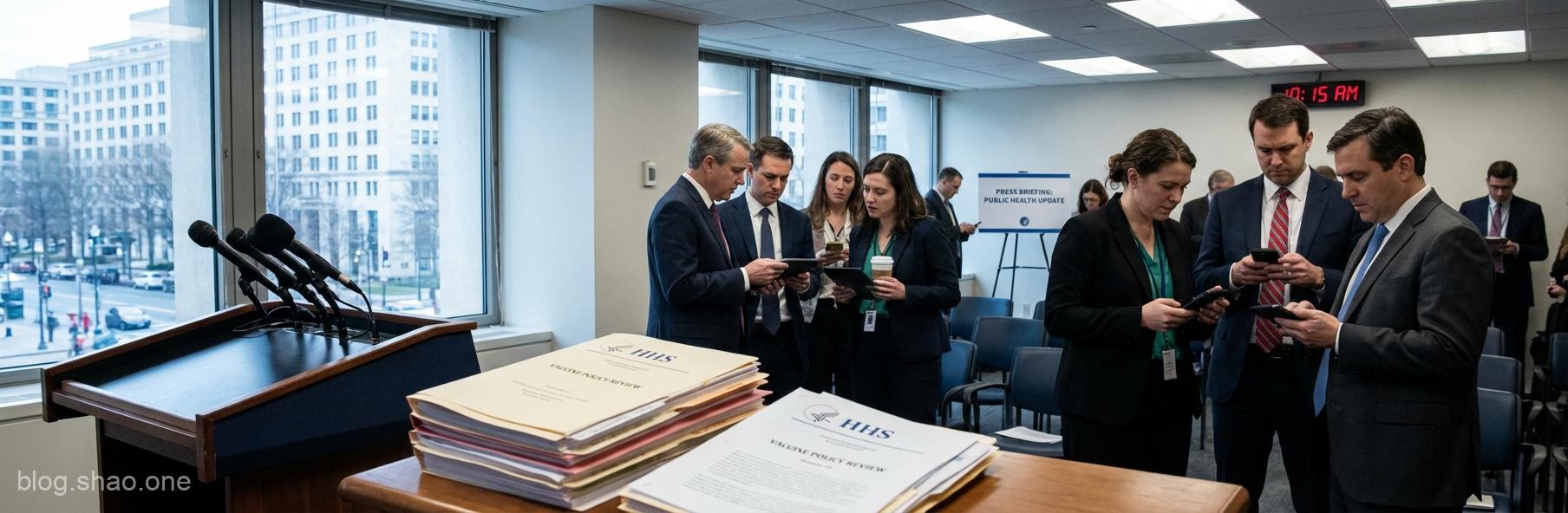
According to an exclusive report by Politico, Kennedy Jr., the nominee for Secretary of Health and Human Services (HHS), had planned to hold a major press conference last Friday billed as "Protecting Children's Health." His central appeal was to endorse Denmark's childhood vaccination program.
- Reduced Vaccination Schedule: Compared to the current intensive vaccination schedule in the United States, Denmark's model is more lenient or involves fewer doses for certain vaccines.
- The Practice of MAHA: This is a crucial component of Little Kennedy's "Make America Healthy Again" (MAHA) vision, aimed at challenging the existing healthcare system.
The news immediately sparked heated debate within the tech and biomedical communities. Supporters see it as a challenge to bureaucratic systems, while opponents fear it could lead to a complete collapse of the public health system.
Plans can't keep up with changes: Why back out at the last minute?
However, this launch event, which was originally intended to be a grand affair, hit a snag at the last minute. It is understood that the Ministry of Health's legal team and political advisors urgently intervened, arguing that pushing such a drastic policy shift by government officials before officially taking office and without scientific data to back it up could trigger disastrous legal litigation.This incident has exposed the classic Rashomon effect in American politics:
- Legal Risk: Attorneys are concerned that modifying vaccine recommendations without due process would violate existing administrative procedure laws.
- Political Maneuvering: There exists significant disagreement among internal officials regarding whether to ignite such a highly sensitive powder keg during the early stages of a regime transition.
- Scientific Integrity: While some senior officials at the Food and Drug Administration (FDA) support re-examining the data, they remain cautious about directly adopting the Danish model.
Key Player: Tracy Beth Høeg and the Future of the FDA
Another prominent figure in this controversy is Tracy Beth Høeg.She was promoted by Kennedy Jr. to a senior drug regulatory position at the FDA. Høeg has consistently expressed skepticism toward traditional pandemic prevention measures and has publicly praised Denmark's approach to vaccinating children during the COVID-19 pandemic. Her appointment signifies a shift in the authority to interpret scientific data, leaving observers uncertain about the FDA's future standards for reviewing digital health data.
In-Depth Analysis: What Does This Mean for the Tech and Public Health Sectors?
This "withdrawal incident" is not merely political gossip; it reflects several deep-seated crises in technology and governance:
- Polarization in Data Interpretation: The same clinical trial data yields starkly divergent interpretations among decision-makers with opposing viewpoints. Moving forward, the "neutrality" of digital healthcare data will face severe challenges.
- The Turbulence of Regulatory Technology: If the FDA's guidance undergoes a series of twists and turns, it would be akin to building on quicksand for biotech giants developing vaccines and drugs, potentially undermining their willingness to invest in research and development.
- Crisis of Public Trust: Frequent policy reversals, much like the principle that "medicines should not be taken indiscriminately," foster deep distrust in the public health system among citizens. This ultimately leads to more severe breaches in epidemic prevention efforts.
Conclusion: Is it a "pragmatic adjustment" or a "political compromise"?
Little Kennedy's current "evasion"—whether it's a strategic retreat to build momentum for a grand show of force, or a reluctant compromise after realizing reality is too entrenched to shake—remains an open question. Yet in this power struggle, we see that even with the ticket to power in hand, any reform risks becoming a hollow victory without comprehensive legal backing and scientific consensus.For us tech observers, the most critical issue isn't who wins or loses, but whether future health decisions will return to "data-driven decision-making" rather than becoming tools for political propaganda. This drama, it seems, is only just entering its second act!”