“
💡 Tech Outlook: When Your Body Clock Meets the Treadmill
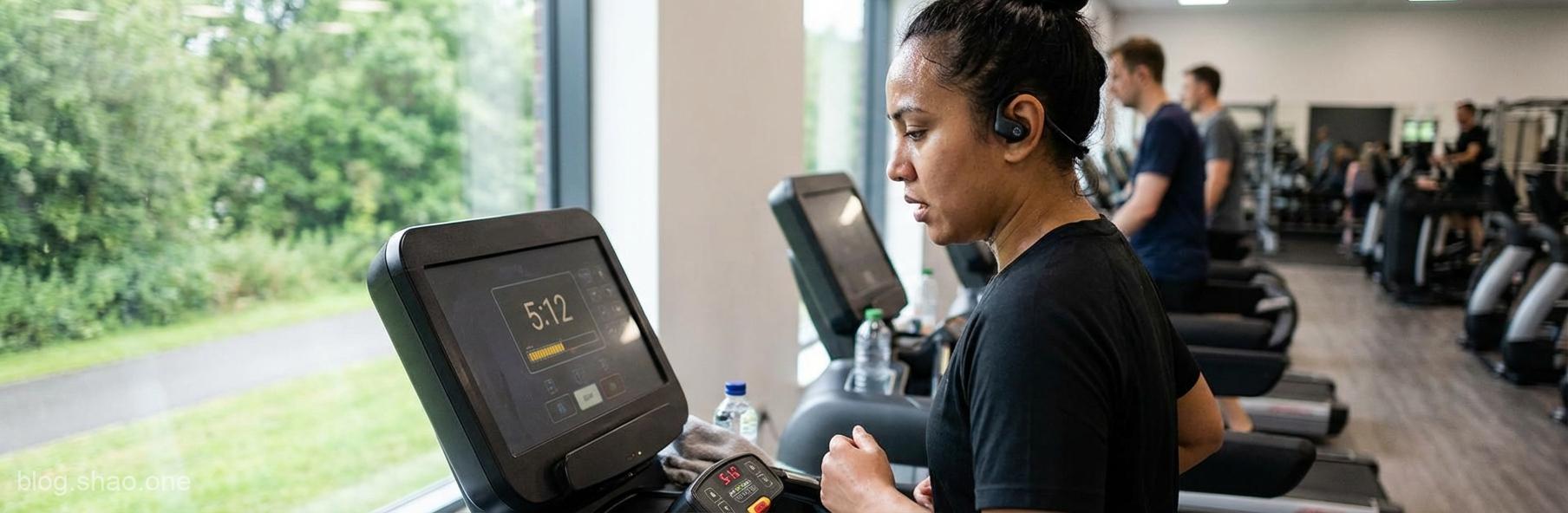
Hey tech enthusiasts and fitness buffs! Have you ever pushed yourself to the limit on the treadmill, feeling like you've been running forever—or even that "time drags on like a lifetime"—only to glance down at your smartwatch and realize a mere five minutes have passed? That crushing sense of time stretching endlessly—is it really just because we lack willpower?According to a recent intriguing study published in Scientific Reports, scientists offer a novel explanation: it's not that you're physically exhausted, but rather your brain automatically "slows down" time while running. Today, we'll explore this brain mechanism that has puzzled fitness enthusiasts for so long.
🏃♂️ Research Reveals: Why Does Time "Slow Down"?
In the past, we often believed that the perception of time slowing down during exercise was an illusion caused by accelerated heart rate, elevated body temperature, and the resulting increase in physiological metabolism. However, this study points out that the real key lies in "the burden on the brain." Here are the core highlights of the research:
- Mental strain outweighs physical exertion: Researchers have discovered that while running, we must precisely coordinate limb movements, maintain balance, and monitor our surroundings—even on indoor treadmills. This demanding cognitive activity heightens our sensitivity to the passage of time.
- Attention is time's enemy: When you fixate intently on the mileage displayed on your running monitor, your brain allocates more resources to monitor your current state. Scientific experiments prove that the more humans focus on time, the slower it seems to pass—just like the common saying, "Waiting for water to boil takes forever."
- Side effects of self-monitoring: During exercise, the brain continuously scans various bodily signals (muscle soreness, breathing rate, posture). This intensive data processing causes our internal clock to run faster than the actual clock, leading to an overestimation of time.
🧠 Tech Perspective: What Does This Mean for Wearable Enthusiasts?
As tech enthusiasts, we always have a "firm grasp" on the data displayed on our Apple Watches or Garmins. Yet this study reminds us of a counterintuitive truth: over-reliance on data might actually make your runs more painful.The significance of this study lies in:1. Interface Design Optimization: Should future fitness apps hide the "remaining time" and instead adopt more gamified or immersive goals?2. Strategies for Attention Allocation: Since the brain slows down our perception of time when focused on movement, "distraction strategies" become crucial. This also explains why the combination of wearable devices with high-frequency music and immersive videos represents such a powerful, hard-coded need.
🛠 How to Counter Your Brain's "Time Games"?
Now that we've got this mechanism "down pat," next time you hit the gym, try these tips to avoid giving up halfway:
- Cover the timer: While we're fascinated by workout data, try covering the time display on the treadmill if possible. When you stop checking the time so often, your brain's stress naturally eases.
- Immersive Entertainment: Slip on noise-canceling headphones and dive into a gripping TV series. As your attention shifts to the virtual world, your sense of real-world time contracts, leaving you with a delightful surprise at how quickly your run flew by.
- Changing pace and environment: Compared to the monotony of a treadmill, outdoor running offers constantly shifting surroundings. The brain gets distracted by new sights, making time pass much faster than when staring at a wall while running.
📢 Summary and Commentary
This study reveals how profoundly intricate the physiological and psychological mechanisms of the human body truly are. Even with the most precise atomic clock technology at our disposal, the brain remains capable of redefining "time" in its own unique way.For tech developers, this presents an excellent entry point. Future wearable tech shouldn't just coldly display "how long you've run"; it should explore how biofeedback can regulate users' mental strain, transforming exercise from an "unattainable" chore into an enjoyable experience.Next time you're suffering on the treadmill, remind yourself: it's not your body holding you back—it's your brain working too hard!What's your secret to running? Share your time-saving tips in the comments below!“