“
🌟 Foreword: Is the much-anticipated green energy savior truly flawless?
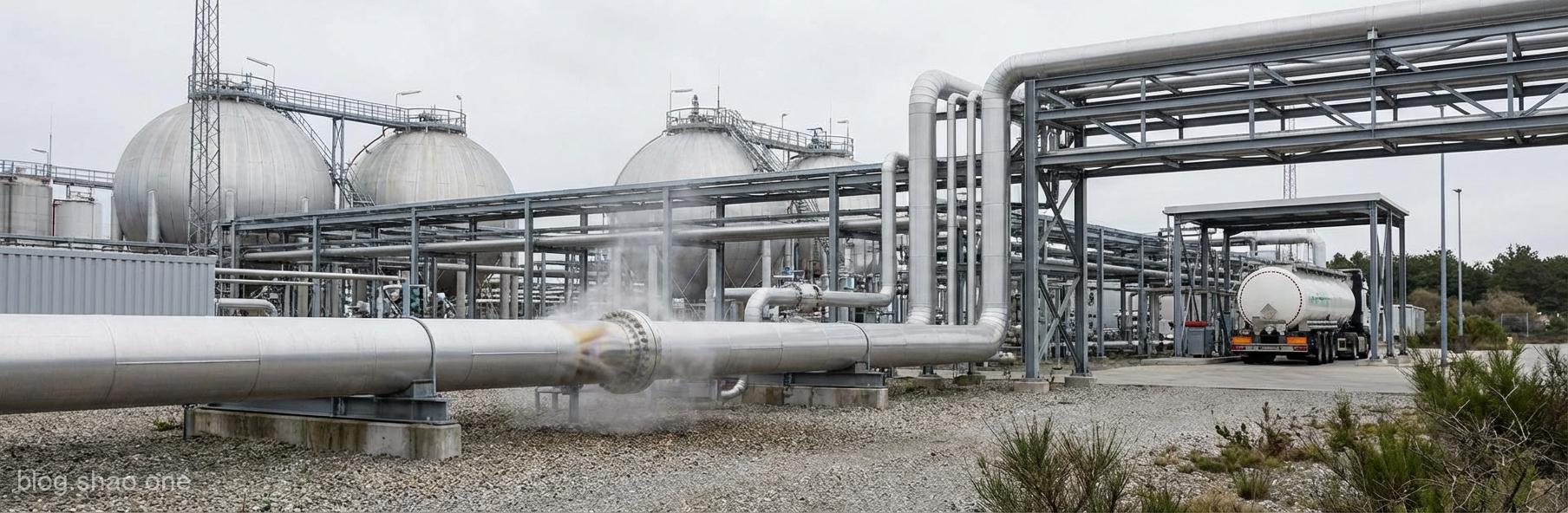
On the path toward achieving net-zero carbon emissions, hydrogen energy has long been regarded as the "lifeline" of the energy transition.For years, governments and corporations have poured massive investments into hydrogen, touting it as a truly clean energy source that produces only water vapor when burned. Many even envision hydrogen as the decarbonization solution for steel, chemical, and heavy-duty transportation industries—addressing the challenge of sectors where electricity cannot directly replace fossil fuels.However, as the saying goes, "unexpected events can occur at any time." According to a recent scientific study published in ScienceAlert, this green energy technology, long held as a benchmark, may not be as pure as we imagined.The study warns that hydrogen leaks themselves could inflict greater-than-expected damage on the climate—a sobering reality check for those eagerly anticipating the hydrogen transition.
🔍 Key Finding: How Does Hydrogen Become an "Invisible Accomplice"?
Why is hydrogen, touted as a clean energy source, linked to global warming? This study does not accuse hydrogen combustion of producing carbon dioxide, but rather warns of the chain reaction triggered by "hydrogen leaks." Here are the core arguments of the research:
- Indirect greenhouse effect: Although hydrogen is not a direct greenhouse gas, when it escapes into the atmosphere, it reacts with hydroxyl radicals (OH radicals) present there. These radicals act as "cleaners" responsible for breaking down potent greenhouse gases like methane.
- Extended methane lifespan: When hydroxyl radicals are occupied with processing leaked hydrogen, methane concentrations in the atmosphere rise due to a lack of "cleaners" to break it down. This prolongs methane's residence time in the atmosphere, intensifying global warming.
- Impact on the Ozone Layer and Water Vapor: Hydrogen leaks into the stratosphere may also increase stratospheric water vapor content and disrupt the chemical equilibrium of the ozone layer, thereby further altering the Earth's radiative forcing.
This study has made us realize that hydrogen energy is not invulnerable to all threats. If the infrastructure is not sufficiently robust, it could lead to a situation where we lose both the battle and the war.
💡 In-Depth Analysis: Why Is This Research So Important?
This discovery serves as a stark warning for current energy policies and industrial development. While we previously promoted hydrogen energy as a fundamental solution to carbon emissions, neglecting technical details risks creating a mere band-aid fix that fails to address the root cause.
- The Rigorous Challenges of Infrastructure: Hydrogen molecules are the smallest molecules in the universe and are extremely prone to leakage. To convert existing natural gas pipelines or transportation equipment for hydrogen delivery, sealing technology must achieve an absolutely leak-proof standard. Otherwise, the environmental benefits will be significantly diminished.
- Reassessing the Value of "Green Hydrogen": While "green hydrogen" produced through water electrolysis using renewable energy is theoretically the most environmentally friendly, its "green label" becomes meaningless if production, storage, and transportation processes are poorly managed.
- Scientific Basis for Policy Formulation: When mapping out hydrogen energy plans, governments must not merely offer pie-in-the-sky promises. They must incorporate leakage risks into climate models for realistic assessments.
🚀 Future Outlook: Rather than blind optimism, it's better to keep our feet firmly on the ground.
In light of this research, we should not despair about hydrogen energy but instead adopt a proactive approach. Hydrogen energy still holds immense potential to replace fossil fuels, but the key lies in how we address these "side effects."
- Enhanced Monitoring Technology: Developing more sensitive hydrogen gas sensors to ensure leaks are detected and repaired immediately.
- Optimize localized production: Produce hydrogen as close as possible to the point of use to minimize leakage risks from long-distance transportation and avoid "going out of your way."
- Technical Standardization: The global community must establish unified standards for leak prevention in hydrogen transportation to ensure this energy source truly provides timely relief for the planet rather than adding to its burdens.
📝 Conclusion
The development of hydrogen energy technology stands at a critical crossroads. This research reminds us that on the path toward a green future, we must look beyond the surface and delve into core issues.As the saying goes, "Water can carry a boat, but it can also capsize it." The same holds true for hydrogen energy. Only by adhering to the principle of "seeking truth from facts" and properly addressing every gram of hydrogen leakage can we ensure this technology truly becomes a powerful weapon against climate change—rather than a hidden threat lurking in the shadows.It's not too late to mend our ways now. Scientists are sounding the alarm precisely so we can correct our course before mistakes escalate, allowing hydrogen energy to realize its true potential.”