“
🔍 Foreword: It's not just the "rat's" fault!
When it comes to the most devastating disasters in human history, the 14th-century Black Death undoubtedly ranks among them. For centuries, history textbooks have taught us that this plague was spread by fleas carrying Yersinia pestis bacteria, decimating Europe's population by half.However, modern scientists, utilizing big data analysis and climate modeling techniques, have unexpectedly discovered that the trigger for this tragedy may not have been on the ground, but beneath it—volcanic eruptions were the "hidden hand" that toppled the first domino.According to the latest report from Earth.com, medieval climate shifts and volcanic eruptions may have paved the way for the plague that claimed tens of millions of lives. Today, we'll explore how this centuries-long scientific investigation unfolded.
🌋 Core Discovery: When the Ice Age Met the Plague
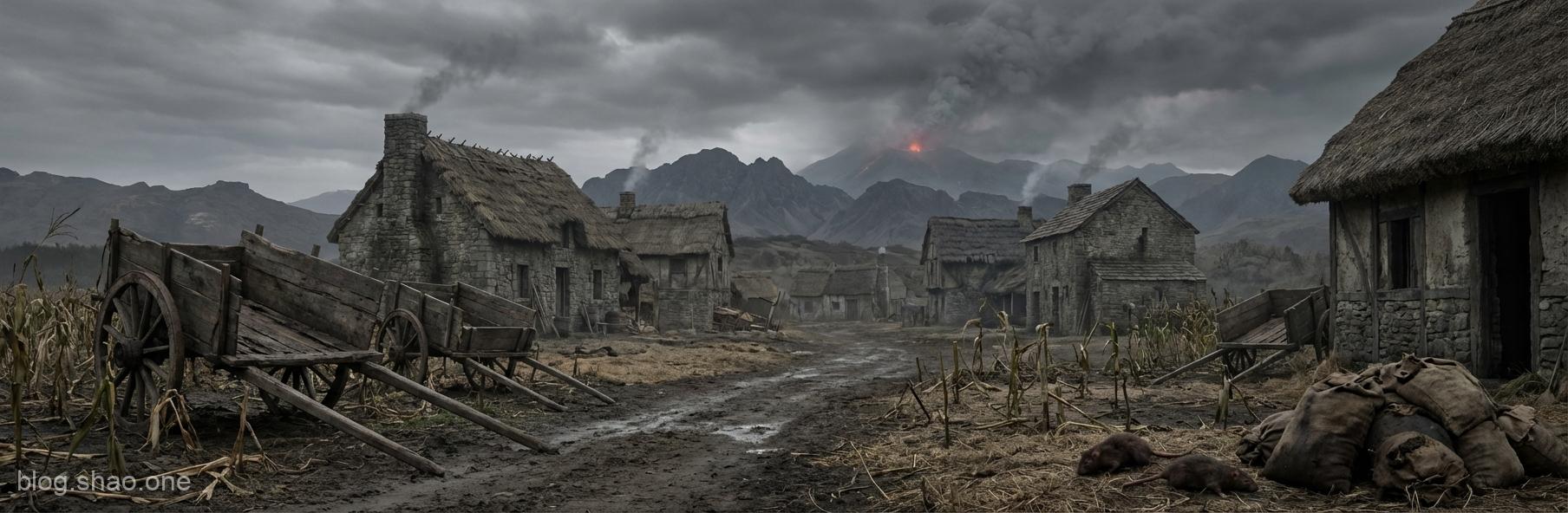
Scientists have discovered through ice core data and tree ring analysis that in the 1340s, just before the Black Death pandemic, Earth experienced a series of extreme volcanic eruptions. These eruptions injected vast amounts of volcanic ash and sulfur dioxide into the atmosphere, triggering what is known as a "climate shock."The following are the critical turning points in this chain of disasters:
- Climate Shock: Volcanic eruptions blocked sunlight, causing temperatures to plummet. This sudden "Little Ice Age" caught the previously stable agricultural society completely off guard.
- Crop Failures and Famine: Temperature fluctuations directly caused total crop failures. In that era of "living at the mercy of the weather," years of poor harvests triggered widespread famine, causing people's immune systems to "shut down" and become extremely vulnerable.
- Migration of Rats and Parasites: Climate change in habitats is forcing carrier rats and wild rodents to migrate toward human settlements in search of food scraps. This is like delivering a "ticking time bomb" right to our doorstep.
💡 Tech Insights and In-Depth Analysis
As a technology news curator, what struck me most about this report wasn't the cruelty of history, but the power of interdisciplinary research. While traditional historians study documents, modern scientists have redefined history using the following technologies:
- Climate Modeling: Using computer simulations to recreate atmospheric circulation patterns from centuries past, we can now glimpse the "gray skies" invisible to ancient peoples.
- Genetic Archaeology: Extracting residual bacterial DNA from skeletal remains and cross-referencing it with contemporary environmental data to piece together the complete disaster puzzle.
The significance of this event lies in its reminder that global catastrophes are rarely caused by a single factor. As the saying goes, "Rome wasn't built in a day." The Black Death outbreak was the extreme outcome of the interplay between environmental stress, social vulnerability, and biological evolution. This bears striking parallels to the threats we face today—global warming and emerging infectious diseases.
🚀 Why should we care about this now?
This study isn't merely digging up old issues; it serves as a mirror. Against the backdrop of increasingly severe climate change, this news offers us three hard-hitting insights:
- The Importance of Resilient Architecture: Europe's overly monolithic food system in the past led to its collapse when faced with climate shocks. Modern societies require more resilient supply chains and digital infrastructure to survive sudden disasters.
- Environmental Data as Early Warning: Scientists are leveraging AI to analyze satellite imagery and geological data, striving to establish public health defenses ahead of the next volcanic eruption or climate upheaval. This aims to prevent a repeat of the tragedy where misfortunes pile up.
- Interdisciplinary collaboration is the way forward: The integration of history, geography, biology, and big data enables us to predict future risks with greater precision.
✍️ Conclusion: Echoes of History
People in the Middle Ages, witnessing the Black Death ravage their communities, might have viewed it as divine punishment or an unavoidable force of nature. Yet modern science has revealed the underlying mechanisms. While the cooling effect of volcanic eruptions is indeed a natural disaster, the vulnerability of social systems and society's sluggish response to environmental shifts constitute a man-made catastrophe.In this era of rapidly advancing technology, are we truly prepared to confront the next "volcanic eruption"-like climate challenge? Or will we repeat past mistakes? This is a question that deserves deep reflection from each and every one of us.
💬 Reflections: Do you believe today's technological capabilities would enable us to handle the next global "climate + pandemic" dual crisis better than medieval people did? Share your thoughts on social media!#TechArchaeology #BlackDeath #VolcanicEruption #ClimateChange #BigDataAnalysis #HistoricalTruth #TechNews”