“
Introduction: When Controversy Becomes a Double-Edged Sword to Fame
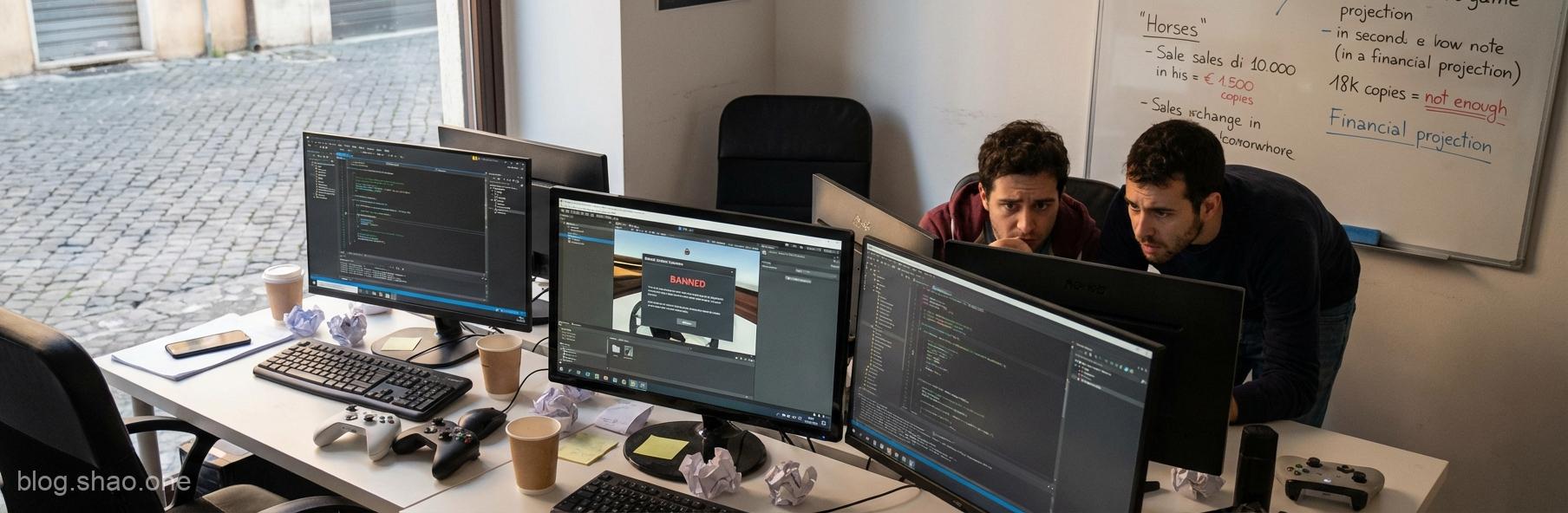
In the world of game development, there's an old saying: "Fortune favors the bold." But for Italian indie studio Santa Ragione, the stakes of this gamble may prove far heavier than anticipated.Recently, the studio's controversial new horror title Horses sold over 18,000 copies in a remarkably short time—a feat that, without major platform backing, can only be described as "carving a path through adversity." Yet despite this impressive achievement, the veteran studio still faces the threat of closure. How did this happen?
Story Background: A horror masterpiece that was "kicked out" by mainstream platforms.
Horses is not your run-of-the-mill horror game; from the moment it was born, it was destined to become a target of widespread criticism. Due to its highly provocative content and inclusion of sensitive sensory experiences, the game was swiftly removed from both Steam and the Epic Games Store—the two global giants of digital distribution—shortly after its release.For independent developers, losing these two platforms is tantamount to cutting off the very source of their livelihood. Without visibility, Santa Ragione can only rely on itch.io and its own channels for sales. Here is the current situation facing this game:
- Sales Surpassed Expectations: Despite being banned, the game still attracted 18,000 players to purchase it, drawn by its distinctive style.
- Challenges to Censorship: Steam's removal decision has reignited heated industry debate over the boundaries between "artistic expression" and "platform regulations."
- Divergent Opinions: Admirers hail it as a "stroke of genius," while detractors deem it "utterly sacrilegious."
In-Depth Analysis: Why Are 18,000 Units Sold Merely a Drop in the Bucket?
To the average gamer, selling 18,000 copies might seem like a modest achievement for a low-budget indie game. Yet in the harsh reality of business, it's often like "water far away can't quench a nearby fire."Santa Ragione stated that while Horses' performance exceeded their pessimistic expectations following the removal, the revenue still falls short of covering the long-term development costs, let alone sustaining the studio's ongoing operations.This highlights several pain points in the indie game industry:
- Waste of marketing costs: When a game is taken down, all prior marketing investments are virtually "down the drain."
- Pressure of Maintenance and Updates: Even with decent sales, developers must invest funds in ongoing maintenance. However, without platform commission subsidies, profit margins remain extremely limited.
- Damage to brand value: For investors or partners, being "blacklisted" by mainstream platforms undoubtedly compounds the difficulties, making subsequent financing even more challenging.
Industry Significance: How Can Indie Games Keep Playing the "Survival Game"?
This news caused an uproar in the tech and gaming communities because it exposed the excessive concentration of "life-and-death power" on digital platforms. When Steam decides the fate of a store, developers are often left with no choice but to accept whatever terms are imposed.Editor's Comment:Santa Ragione's predicament reveals how modern indie game development has become a do-or-die gamble. If you settle for mediocrity, you risk sinking without a trace; if you pursue extreme artistic expression, you may face the censorship axe.This "damned if you do, hell if you don't" dilemma is precisely the culprit that continually stifles budding creativity. While sales of 18,000 copies prove the market still craves "heretical works," they also brutally remind us: without platform traffic support, even the finest artistry is doomed to a "struggling existence."
Conclusion: The Price of Art—Where Lies the Dawn of the Studio?
Santa Ragione is still fighting for survival. Their story is not merely a piece of gossip about a "horror game being banned," but a wake-up call for all digital creators: under a highly centralized distribution system, how can one balance "individuality" with "market survival"?We hope this studio, which brought us masterpieces like Saturnalia, will see the light at the end of the tunnel. If this game truly becomes their swan song, it would be a great loss to the art of gaming. After all, if an industry cannot accommodate a wild horse that challenges the status quo, what remains is likely to be nothing but a mediocre circus.Reader Interaction: Do you believe platforms have the right to ban games for content deemed "too provocative"? Or should age-based rating systems handle such filtering? Share your thoughts in the comments section!”