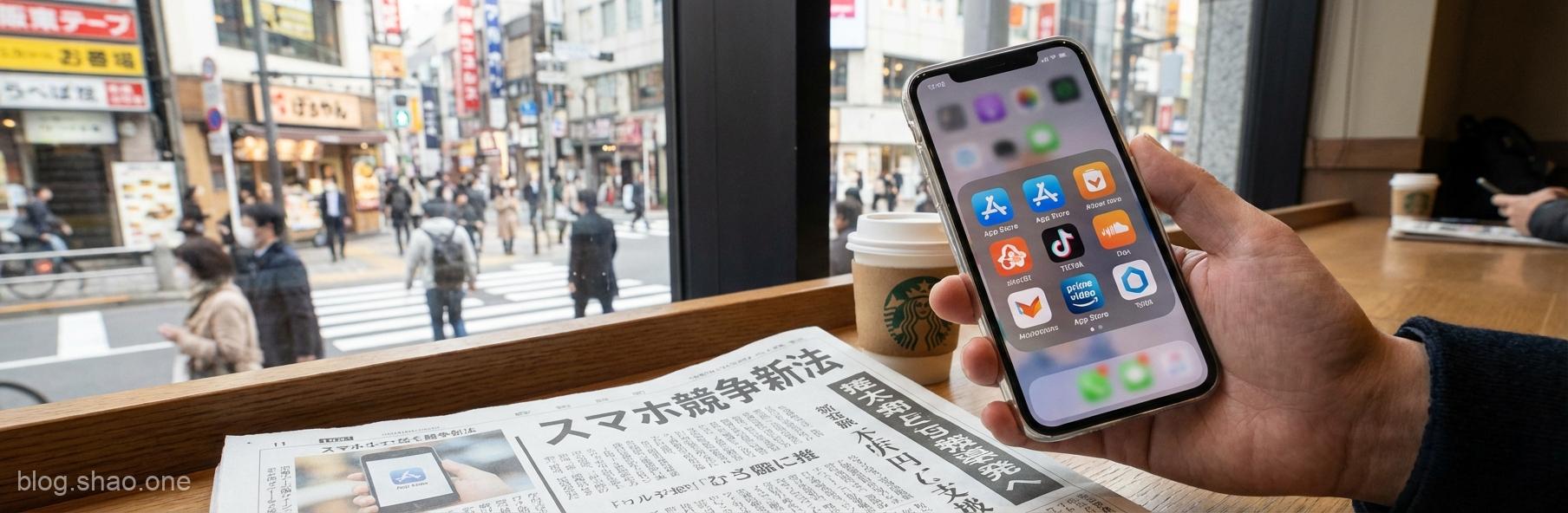
“Tech enthusiasts, take note! Apple's impregnable "walled garden" is about to lose another wall.After the EU's Digital Markets Act (DMA) gave Apple a run for its money, Japan's government has now introduced the Mobile Smartphone Software Competition Act (MSCA). This forces Apple to "adapt to local customs," announcing seismic-level reforms to iOS specifically for the Japanese market.This transformation isn't just about tweaking the interface—it strikes at the heart of Apple's monopoly: the App Store.Today we'll dissect this major news story to see whether it's a long-awaited blessing for developers and everyday users—or a poison wrapped in sugar.
🌍 Background Analysis: A mighty dragon cannot suppress the local powerhouse.
Apple has long profited handsomely from the App Store's 30% "Apple tax," but this business model has drawn scrutiny from regulators worldwide as an outright monopoly.The Japanese government is getting serious this time. The core purpose of the MSCA legislation is to break monopolies and provide competitors with a level playing field. The changes Apple announced this time, set to take effect by the end of 2025, essentially replicate the "passive reform" approach implemented in the EU.The following are the four core focal points of this adjustment:
- Third-party app stores officially gain a foothold: In the future, Japanese iPhone users will no longer be limited to downloading software exclusively from the official App Store. Developers can establish their own application marketplaces, meaning "troublemakers" like Epic Games can finally make a legitimate return to iOS.
- Payment systems are no longer "exclusively dominated by one provider": Developers can now choose to use third-party payment processing systems without being forced to pay Apple's commission. For developers, this is undoubtedly a timely relief that eases their burden.
- More Transparent Protection and Warnings: While Apple has opened the door, it hasn't forgotten to "lay down the ground rules." Future iOS updates will include more warnings alerting users to potential security risks when downloading third-party software or using external payment methods. This "precautionary measure" is both precise and shrewd.
- Choice of Default Browser and Search Engine: Users will have greater control over which browser becomes the "primary browser" on their phones, no longer forced to use Safari as the default.
💡 In-Depth Commentary: Is the Bullish Momentum Exhausted, or Is a New Battlefield Emerging?
The significance of this matter is immense. First, Apple has always maintained a tough stance in the Asian market, but faced with the Japanese government's legal crackdown, it can only lament that "circumstances are stronger than man." This signifies that global regulatory bodies have formed a united front, making it exceedingly difficult for Apple to sustain its previous ecosystem where "those who comply thrive, while those who resist perish."1. For developers: Singing the song of emancipated serfs?In the short term, this is undoubtedly a major boon. With a 30% reduction in commissions, developers' profit margins expand, freeing up more budget for development. But "there's no such thing as a free lunch." Apple will likely introduce another form of "core technology fee," similar to its approach in the EU. This is a classic case of "same wine, different bottle." Whether developers truly save money will depend on the final details of the policy.2. For the average user: The price of freedom?Users can finally break free from being locked into a single app store—this development deserves applause. But "where there's an advantage, there's a drawback." Once third-party downloads are permitted, iOS's vaunted security net will inevitably develop vulnerabilities.For tech-unsavvy seniors or children, this is akin to "letting the wolf into the house." The risk of accidentally downloading malware or falling into phishing payment traps will significantly increase. So this freedom comes with a "thorn."
🧐 In summary: The door is wide open, and the best is yet to come.
Apple's concessions in Japan once again prove that "the era of monopolies is gone forever." While Apple insists these changes are to comply with the law, they also reveal a sense of helplessness and concern over the erosion of user privacy and security. Does this truly foster an "open and competitive" industry, or does it turn the once orderly ecosystem into a "chaotic mess"?It's too early to tell.But one thing is certain: the tug-of-war between Apple and regulators is far from over. As consumers, while we enjoy greater choice, we must also keep our eyes wide open. After all, in the world of technology, the more dazzling the options, the more we need to tread carefully.What do you think? Do you support opening up iOS to third-party app stores? Or do you believe the pure Apple experience is best? Share your thoughts below—let's get the conversation started!“